2026 Toyota C-HR
A familiar name returns to the lineup, but this time it’s all electric and has a twin over at Subaru.
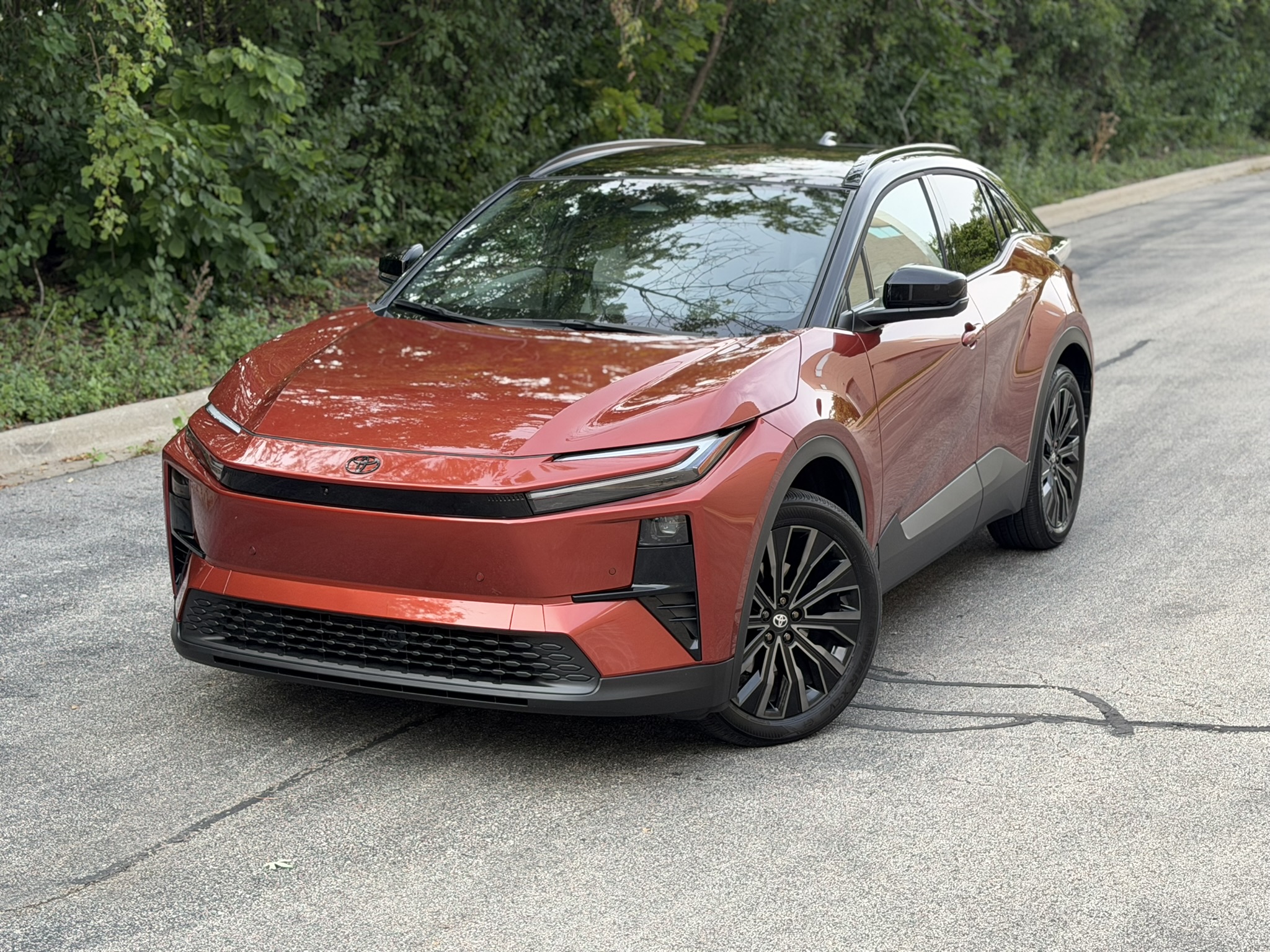
Test Vehicle:
2026 Toyota C-HR XSE AWD
Powertrain: Dual Electric Motors 167kW & 88kW
Exterior Color: Tandoori W/Midnight Black Metallic Roof
Interior: Boulder Synthetic Suede/Softex
Options: Cold Weather Package ($450), JBL Premium Audio ($600), Panoramic Roof ($1,000), Two-Tone Color ($500), Carpet Floor Mats ($339), Wheel Locks ($90)
MSRP as tested: $43,429 (With Destination & Delivery)
Pros: Standard AWD, strong acceleration, fast-charging capability, standard safety features, useful cargo space
Cons: Tight rear seating, digital-cluster visibility may vary by driver, less range on XSE than SE
The 2026 Toyota C-HR returns to the U.S. as an all-electric subcompact crossover, developed alongside the Subaru Uncharted. The two share much of their electric-vehicle foundation, while Toyota gives the C-HR its own styling, equipment lineup, and driving character. It continues as a compact 5-passenger, 4-door crossover that slots just below the Toyota bZ which has been around a few years longer. Rounding out their EV lineup is the bZ Woodland which is currently the largest EV Toyota offers as a 4-door wagon. Coming in 2028 will be the new Highlander BEV as a 7-passenger crossover.
Unlike the similar Subaru Uncharted which is available with two powertrains and FWD or AWD, the C-HR has one offering. It comes in two grades known as SE and XSE. Both have dual electric motors and standard all-wheel drive, producing a combined 338 horsepower. The SE has an EPA-estimated driving range of 287 miles, while the XSE is rated at 273 miles.
For 2027, starting MSRPs are $37,080 for the SE and $39,080 for the XSE, before applicable delivery and other charges. Key competitors include the Chevrolet Equinox EV, Ford Mustang Mach-E, Tesla Model 3, Nissan Leaf, and Subaru Uncharted. I spent a week in the C-HR XSE that checked in at $43,429 and here’s what stood out…
Exterior Style
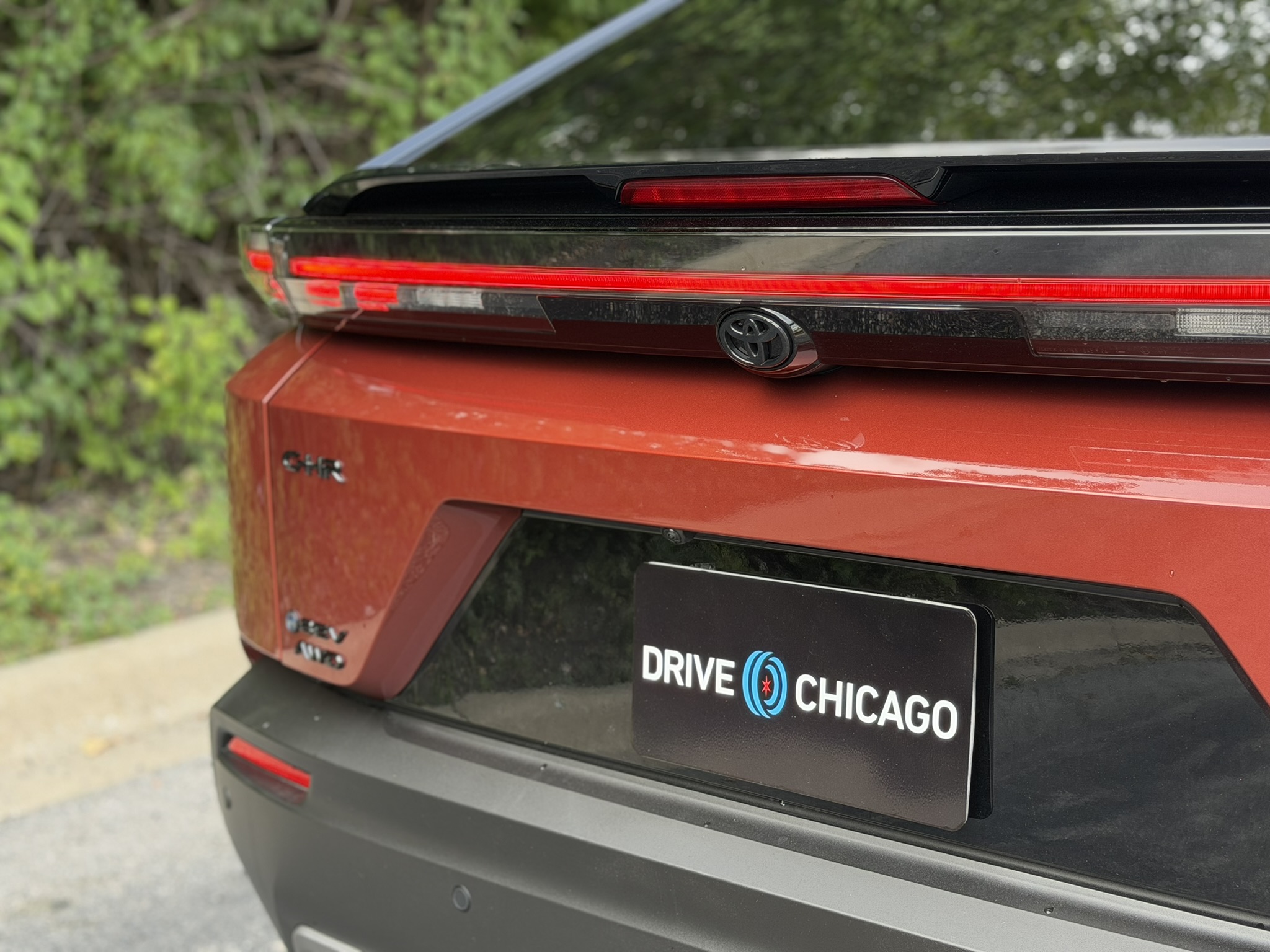
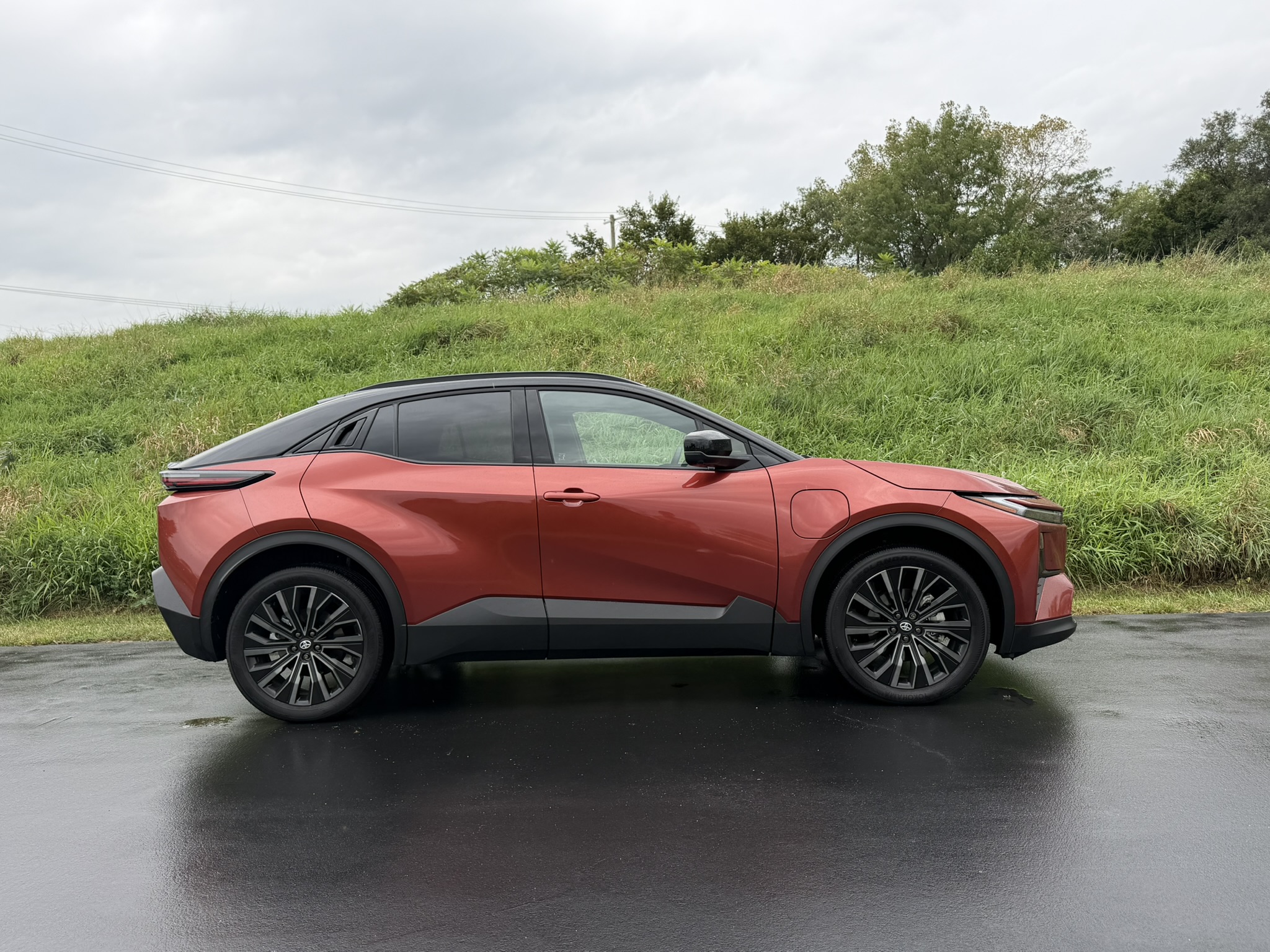
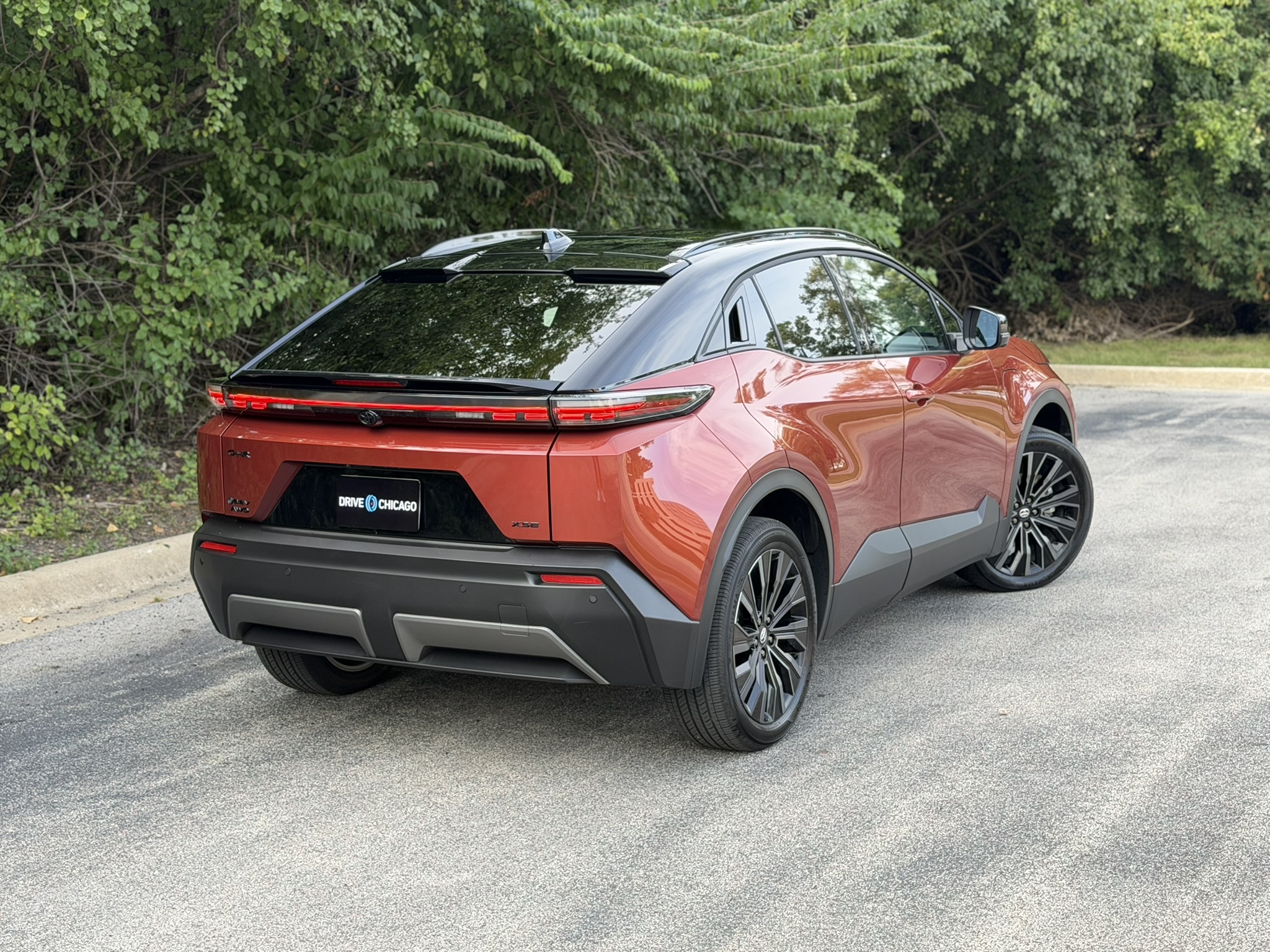
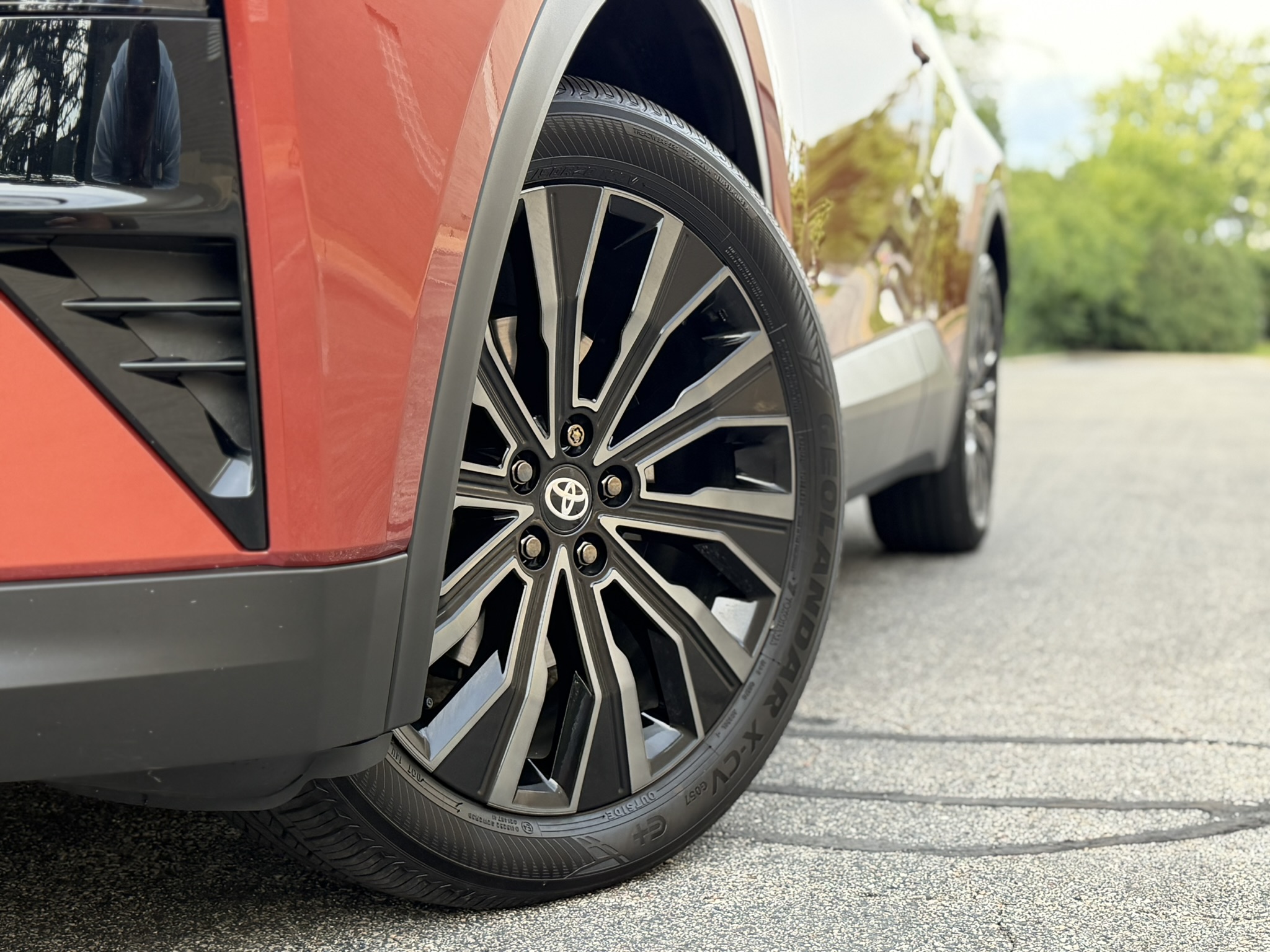
Sharing a platform with the Subaru Uncharted the two vehicles look very similar. The C-HR has a sleek, coupe-like profile, with a sloping roofline and an angular front end. A full-width rear light bar and dark lower-body trim give it a sporty, modern look. Its shared development with the Subaru Uncharted is apparent in the overall proportions, but Toyota’s own front lighting design and rear styling details give the C-HR a distinct identity. The SE rides on 18-inch wheels, while the XSE gets 20-inch gunmetal-finished wheels. Available exterior colors include Tandoori, Overcast, Cement, Midnight Black Metallic, and Wind Chill Pearl; two-tone paint is available on the XSE. Low-profile roof rails and a power liftgate add some everyday utility to the design.
Performance
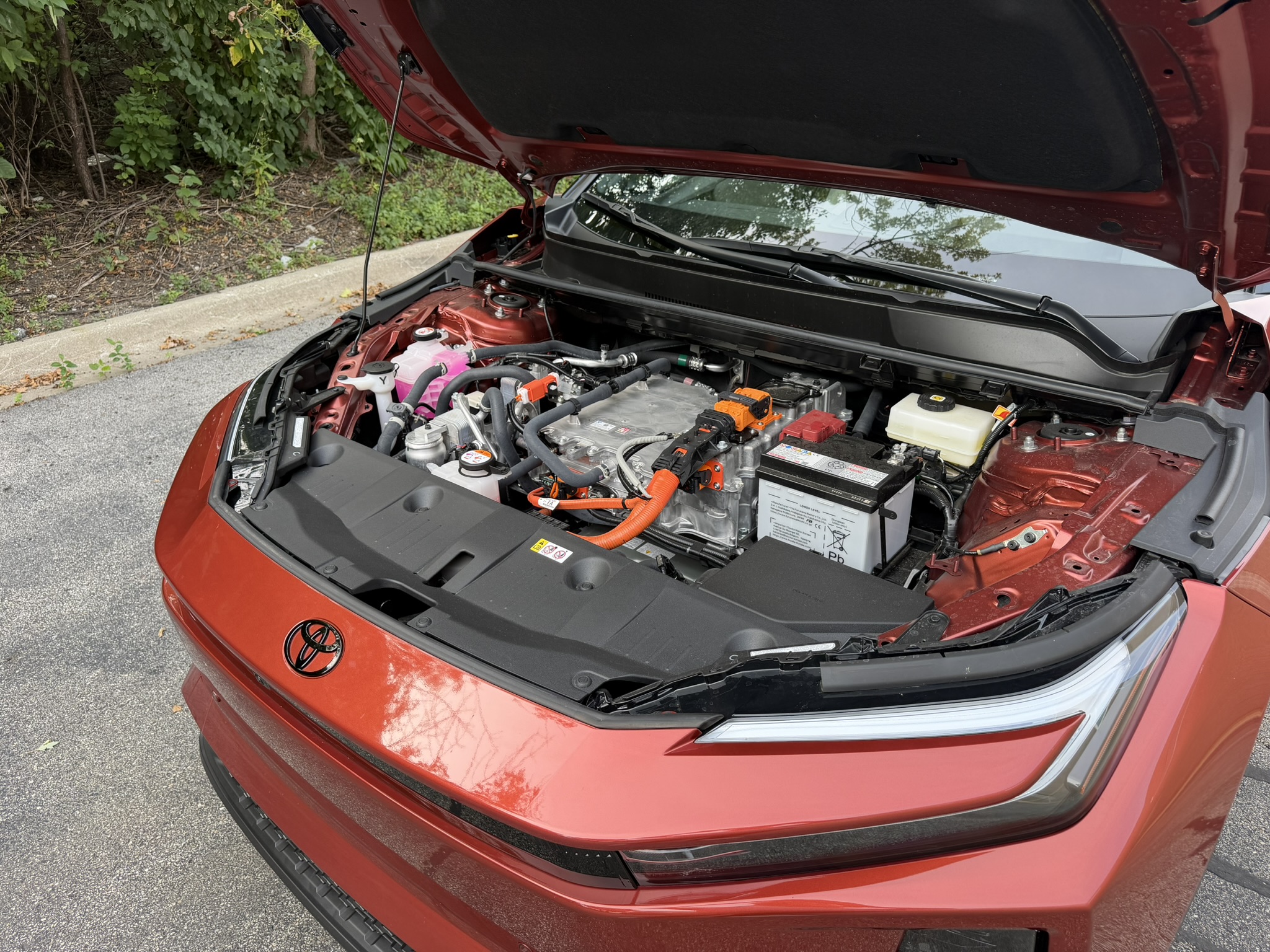
The C-HR comes standard with AWD using electric motors housed in the front and rear eAxles. It produces 338 net combined system horsepower and 198/125 lb.-ft. of torque from the front/rear electric motors. The vehicle has a manufacturer estimated 0 to 60 mph time of 4.9 seconds. That’s brisk performance for a small crossover, with ample power for merging, passing, and getting up to speed on the highway. Acceleration tapers off at higher speeds, though, so the C-HR feels more quick than truly sporty. The low-mounted battery helps keep the vehicle’s center of gravity low, while the suspension has been specifically tuned for the C-HR.
The C-HR also has selectable drive modes and steering-wheel paddle shifters to adjust regenerative braking. Eco, Normal, and Snow modes are available on both trims. It doesn’t have a Sport mode, but Normal mode does deliver lively acceleration for everyday driving and passing. Eco dials back the response for a more efficiency-minded drive. It’s a sensible choice for routine commuting, though the C-HR remains quick even without a sportier setting. Normal should be your everyday setting and likely the best default for most drivers. It balances responsiveness and smoothness without making the car feel subdued. Snow is intended for slippery surfaces and will come in handy for Chicago winters. It’s a useful traction-focused option, but it doesn’t replace appropriate winter tires or careful driving.
Ride & Handling
The C-HR feels compact and willing in corners as it zips comfortably through turns with a well-balanced position. Steering gives limited road feedback and there is some body roll and understeer when pushed too much. It is enjoyable to drive, without delivering the precise, sporty handling its styling might suggest.
Ride comfort is comfortable and quiet in everyday driving; It glides over bumps and road imperfections without tossing passengers around. It’s forgiving with pothole season in Chicagoland. It works well as a daily driver and was more engaging than I expected, although still not a “performance” type of ride.
Range / Charging
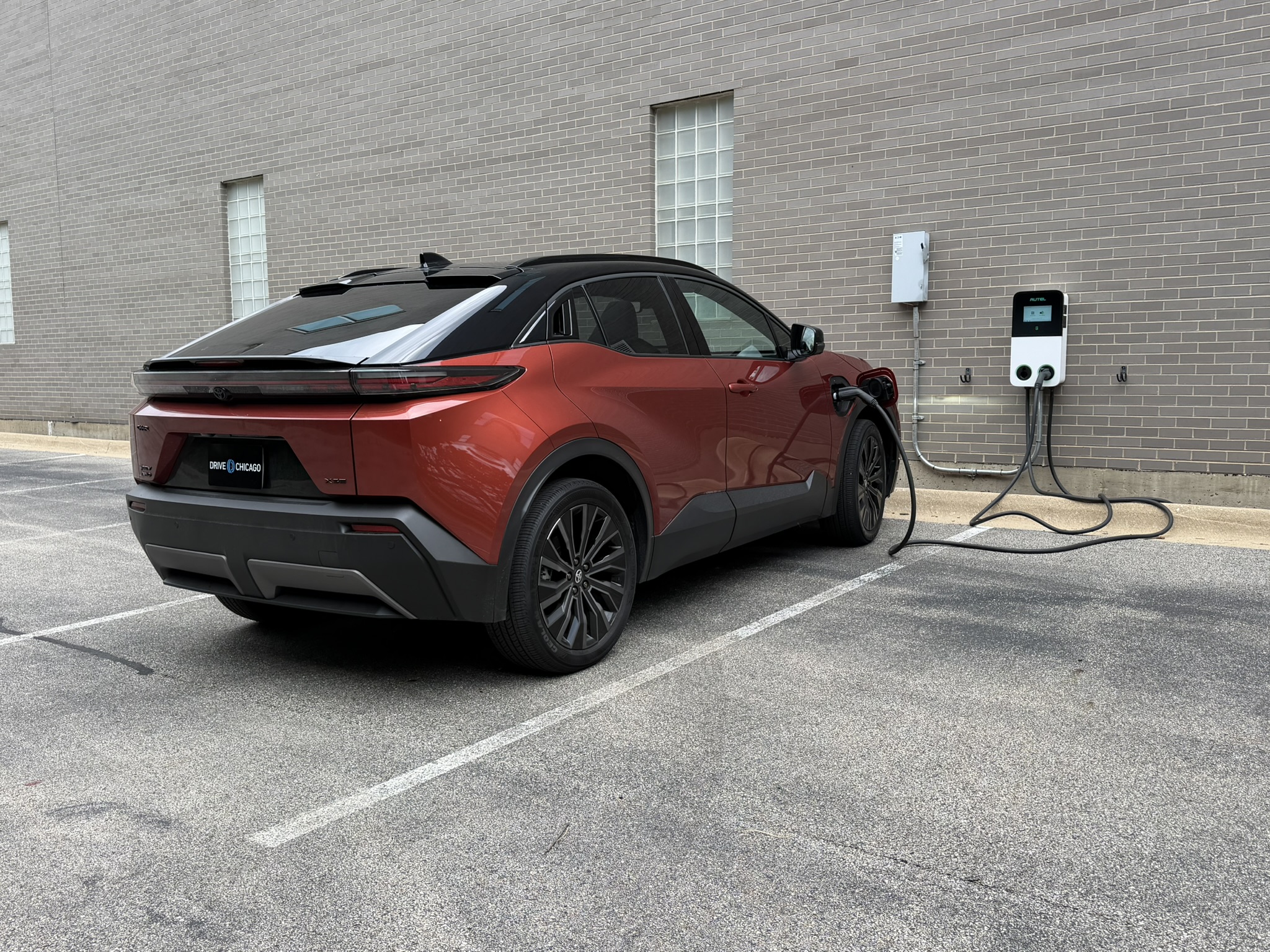
Range depends on trim: the SE gets an EPA-estimated at 287 miles, and the XSE at 273 miles. Both use a 74.7-kWh battery. As with any EV, real-world range can vary with temperature, driving speed, terrain, and use of climate control. During my time in the C-HR I found the range and indicators to be accurate.
The C-HR comes with a North American Charging Standard (NACS) port, providing access to compatible charging stations, including Tesla’s Supercharger network. Toyota lists an 11-kW onboard AC charger and says DC fast charging can take the battery from 10% to 80% in around 30 minutes under ideal conditions. Battery preconditioning is designed to help prepare the battery for fast charging, including in colder weather.
The C-HR also has Plug & Charge capability, which helps streamline the charging experience at supported networks. It can also use Level 1 and Level 2 AC power sources to charge and includes a standard dual-voltage charging cable. Battery Preconditioning is also included. This system is designed to bring the battery to an optimal temperature for DC fast charging, which can enable faster charging. The function can be activated manually in system settings or automatically by setting the navigation destination to a fast-charging station.
Interior
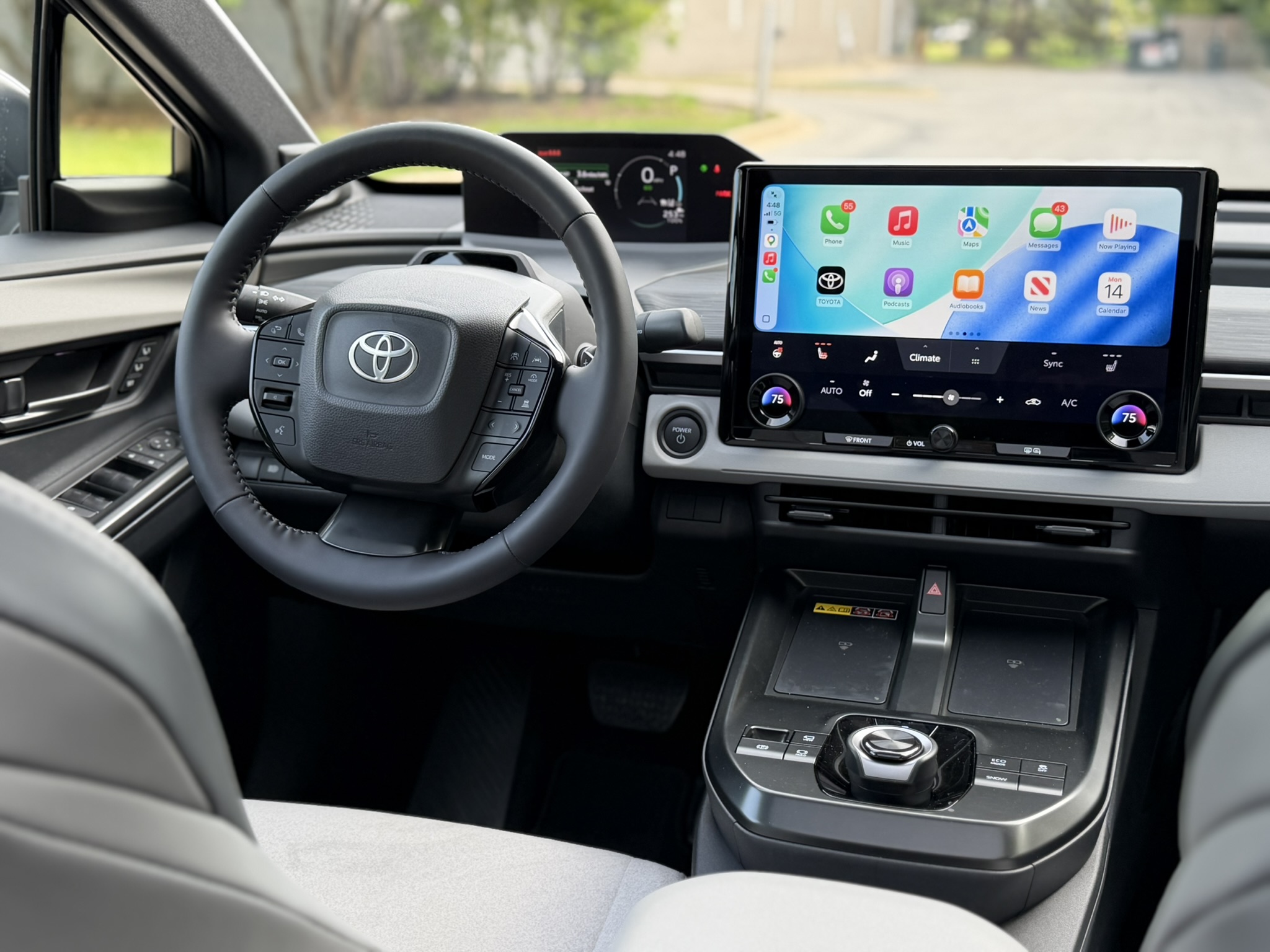
Hopping inside, the C-HR feels modern and practical, with a focus on technology and everyday convenience rather than a luxury-car experience. Material quality is mixed as it is well-built, but hard plastics are noticeable on parts of the doors and dashboard, so it doesn’t feel uniformly premium. It features a 14-inch Toyota Audio Multimedia touchscreen and a digital driver display. The cabin has a clean, contemporary layout, with two wireless phone chargers up front and USB-C ports for rear passengers. The dual wireless charging pads are located side by side for the driver and front passenger, making them genuinely easy to reach and use. Having two wireless chargers standard on the base trim is a class-friendly move that many more expensive vehicles still don't match. The console includes storage underneath, but the C-HR notably lacks a traditional glovebox.
The driver display is mounted high on the dashboard so drivers may want to check that the steering wheel and their preferred seating position don’t obstruct the view. There is an available panoramic glass roof with a motorized sunshade that adds natural light to the interior, but it is fixed and does not open.
Technology
The C-HR offers a generous set of standard tech, especially for safety, phone connectivity, and charging. Every C-HR gets the 14-inch Toyota Audio Multimedia system, with wireless Apple CarPlay and Android Auto that dominates the dash and is the main hub for all vehicle controls. The system is complemented by physical controls for key functions, helping keep everyday adjustments straightforward. A six-speaker audio system is standard, with a JBL premium system available as an upgrade.
Toyota’s cloud navigation and voice features are tied to Drive Connect which is included with a trial, after which continued use may require a subscription. Both trims include dual-zone climate control and 64-color ambient lighting to give the interior the vibe you prefer.
Seating
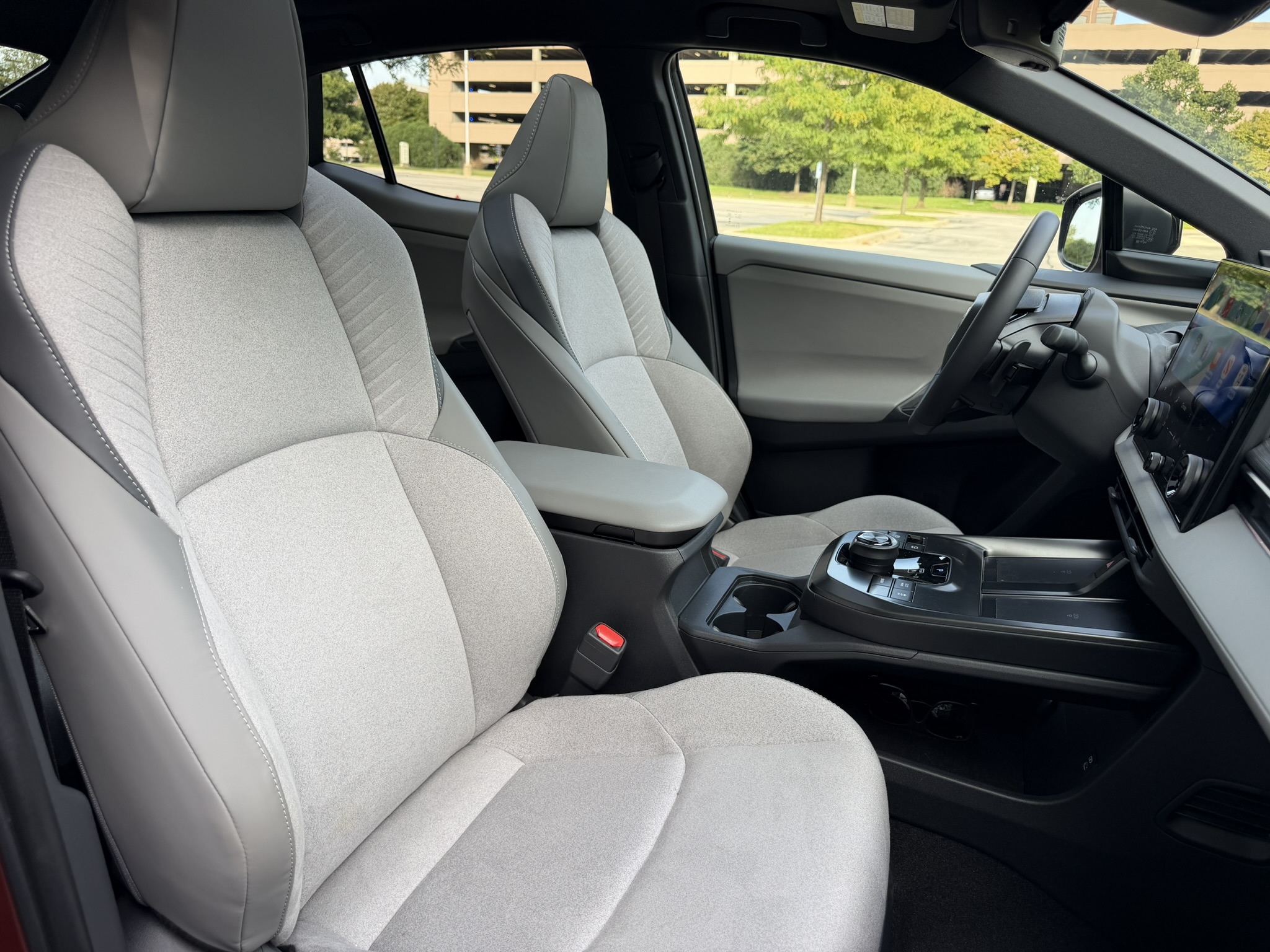
The C-HR seats up to five. Front seats offer plenty of head, leg, and shoulder room. Up front, the driver gets an eight-way power seat, and the front seats and steering wheel are heated. The SE includes fabric/SoftTex-trimmed seating, while the XSE adds SofTex and synthetic-suede trim. The seats are comfortable and electronically adjustable to find an ideal seating position. They provide solid back and shoulder support with plenty of under-thigh support for daily driving.
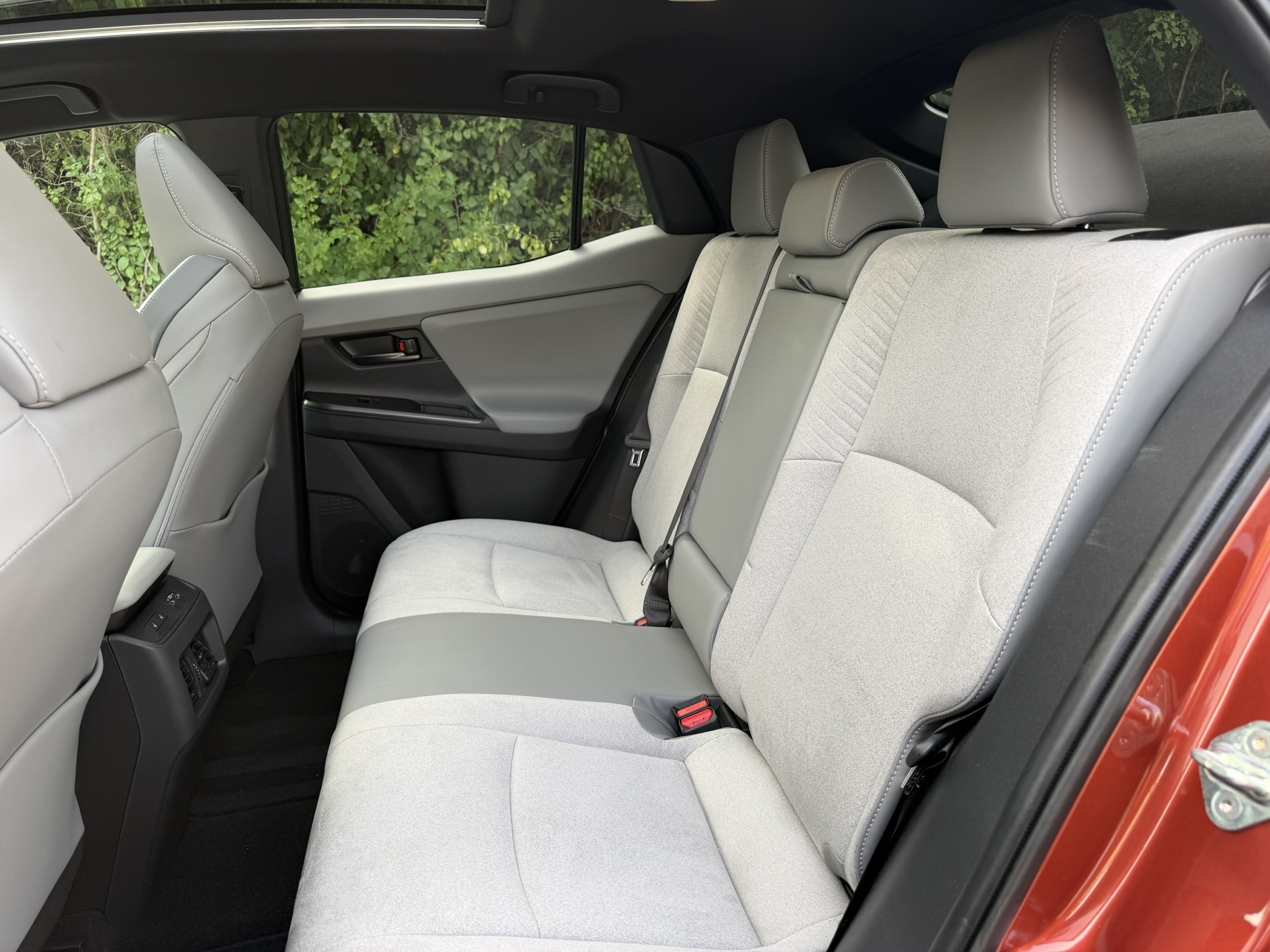
The sloping roofline is a styling highlight but may make the rear seating feel tighter than in a boxier crossover, particularly for taller passengers. My kids fit fine, but they were more cramped with all three in back, in particular the middle seat. Rear passengers get AC vents, two USB-C ports, and a fold-down armrest with cupholders and a phone slot. Rear seats do fold down for access to the rear cargo area and extra storage.
Cargo
It has 25.3 cubic feet of cargo space behind the rear seats and up to 59.5 cubic feet with the 60/40-split rear seatbacks folded flat. That gives the C-HR useful flexibility for grocery runs, luggage, or larger weekend gear, while retaining a compact exterior footprint. Overall space is very competitive among other compact EVs. The underfloor storage is a great space for charging cables or other small items. Unlike some other EVs, there is no frunk (front trunk).
Safety / Driver Assist Features
Every 2026 C-HR includes Toyota Safety Sense 3.0 and standard blind-spot monitoring. The driver-assistance package covers core functions such as forward collision warning and automatic braking, adaptive cruise control, and lane-support features. Higher-grade assistance and parking-camera features are available on the XSE.
Toyota Sense 3.0 includes:
- Pre-Collision System with Pedestrian Detection
- Full-Speed Range Dynamic Radar Cruise Control: Adaptive cruise control that helps maintain a set distance from the vehicle ahead, including in stop-and-go traffic.
- Lane Departure Alert with Steering Assist
- Lane Tracing Assist: When adaptive cruise control is engaged and lane markings are detectable, helps keep the vehicle centered in its lane.
- Automatic High Beams
- Road Sign Assist
- Proactive Drive Assist: Provides gentle braking or steering support in certain situations, such as approaching a curve or a vehicle or pedestrian ahead.
The C-HR offers a strong set of standard safety and driver-assistance features for an entry-level electric crossover.
Final Statement
The 2026 Toyota C-HR is a compelling new entry in the compact EV segment. It combines standard all-wheel drive, strong acceleration, and a useful selection of technology. Overall range is ok with an estimated range of up to 287 miles in the SE, but we are now seeing many EVs exceed 300 miles. The C-HR’s practical cargo capacity and standard equipment make it a well-rounded option for shoppers looking for a compact electric crossover. It’s one to add to your shopping list if an EV fits your daily routine.