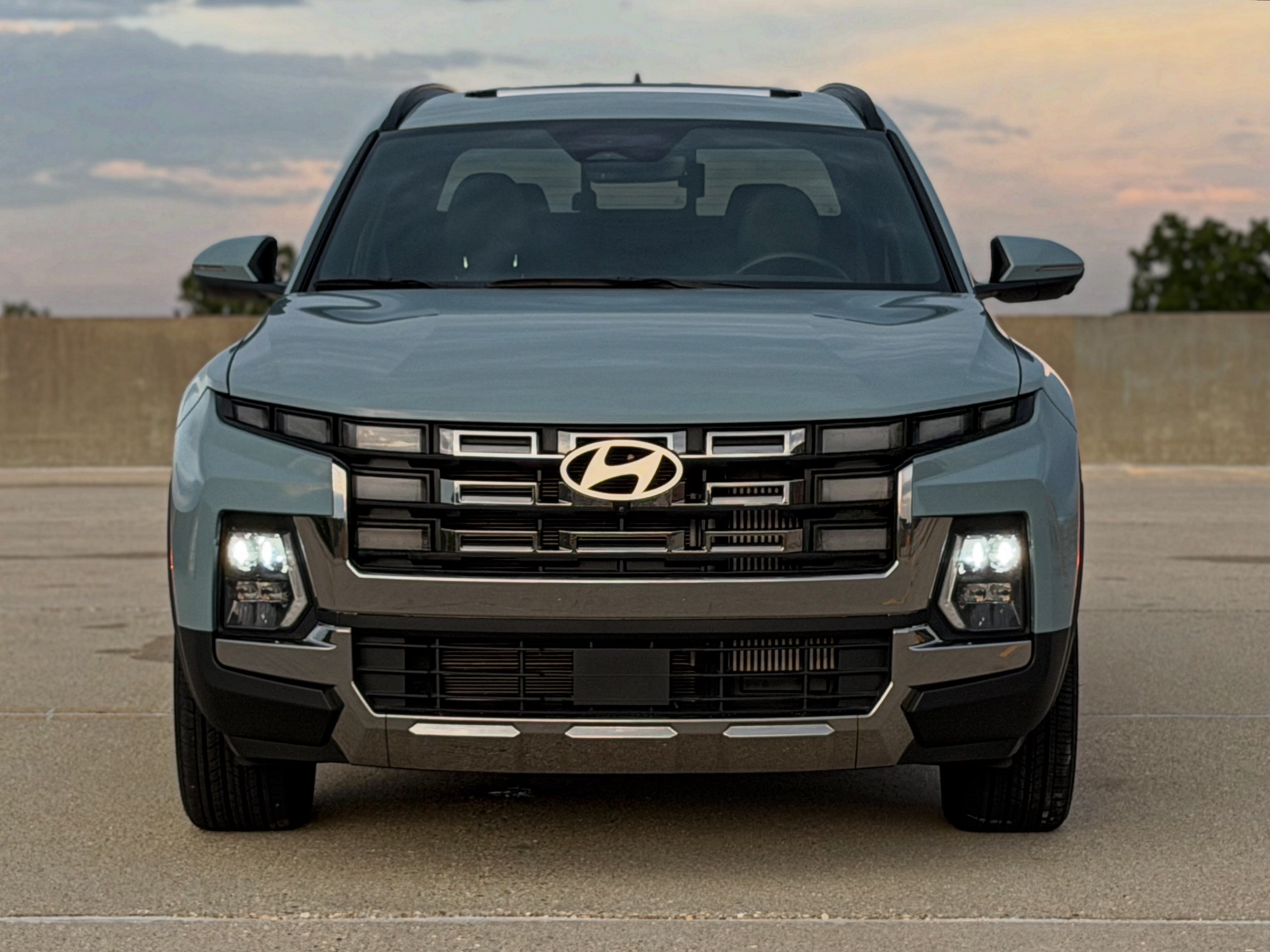
2026 Hyundai Santa Cruz
A Little Truck with a Lot of Personality
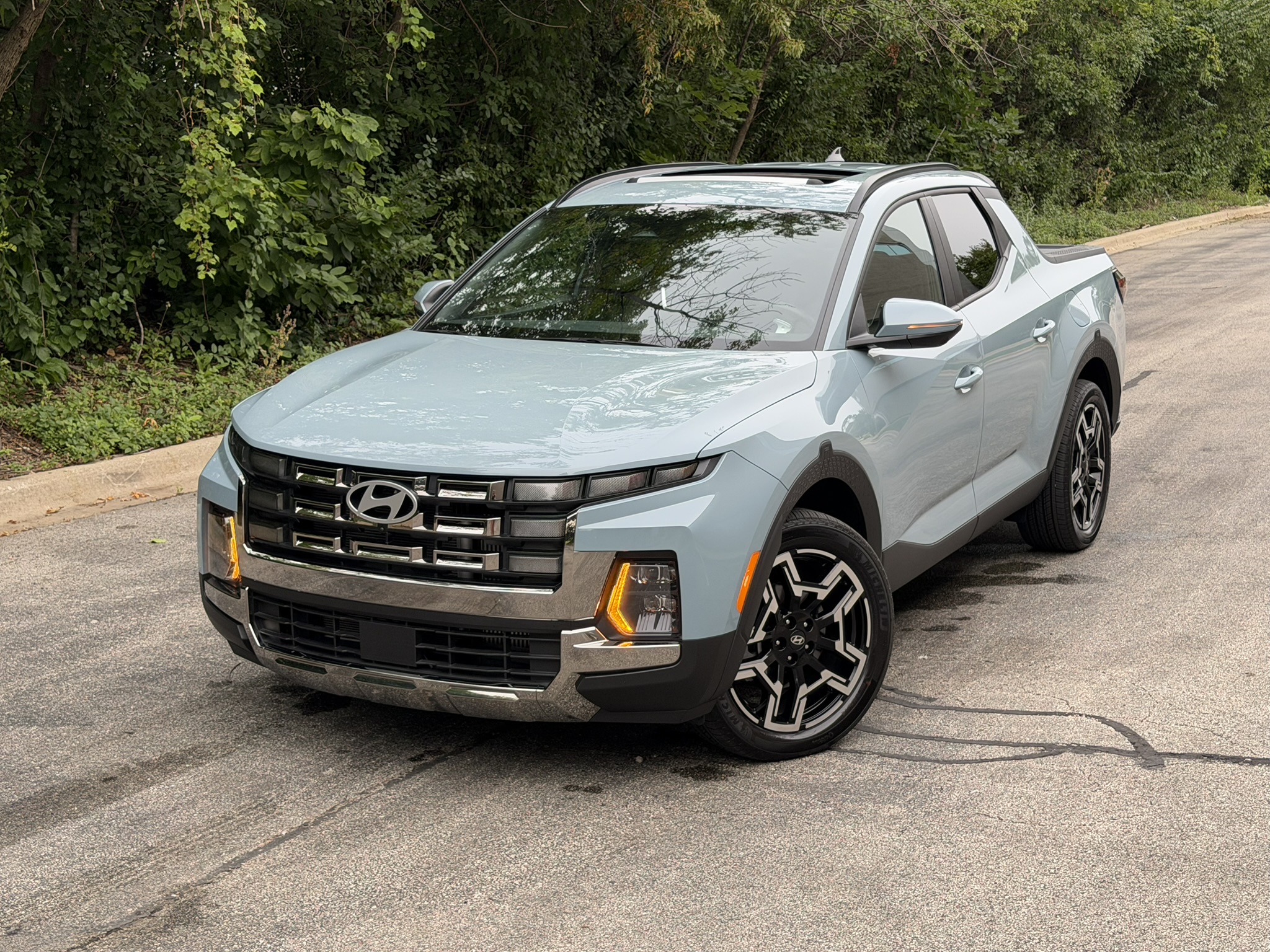
Test Vehicle: 2026 Hyundai Santa Cruz Limited AWD
Powertrain: 2.5-liter turbocharged four-cylinder, 8-speed automatic
Exterior Color: Blue Stone
Interior Color: Black
Notable Options: Paint ($500), Floor Mats ($240)
Price as tested: $45,790 (including destination charge)
Pros: Unique styling, versatile truck bed, comfortable and well-grounded ride, impressive handling, easy-to-use technology, comfortable seating.
Cons: Limited bed length compared with traditional pickups, cargo cover isn't completely waterproof, turbocharged engine sacrifices fuel economy, rear-seat space is limited for larger adults.
The 2026 Hyundai Santa Cruz is one of those vehicles that doesn't fit neatly into any traditional automotive category. Is it a pickup truck? Is it a crossover? Perhaps it's a little of both, Hyundai calls it an Adventure Utility Vehicle. Hyundai has successfully blended the comfort and driving characteristics of an SUV with the versatility of an open pickup bed, creating something that is genuinely unique.
Introduced for the 2022 model year, the Santa Cruz received a substantial refresh for 2025, bringing updated exterior styling, a redesigned dashboard and improved technology. Despite rumors that it was going away, the Santa Cruz returns for 2026 with five trim levels: SE, SEL, SEL Activity, XRT and Limited. The biggest mechanical change is the replacement of the previous dual-clutch transmission with a conventional eight-speed automatic in turbocharged models.
The standard powertrain is a naturally aspirated 2.5-liter four-cylinder producing 191 horsepower and 181 lb.-ft of torque. Buyers looking for additional performance can step up to the turbocharged 2.5-liter four-cylinder, which produces 281 horsepower and 311 lb.-ft of torque. Both engines are paired with an eight-speed automatic transmission, with front-wheel drive standard on the lower trims and Hyundai's HTRAC all-wheel drive available. AWD is standard on the XRT and Limited.
Pricing starts at approximately $29,750 for the SE and climbs to $43,700 for the Limited, before destination and delivery charges. The Santa Cruz competes most directly with the Ford Maverick and Honda Ridgeline, although its unique styling and crossover-like driving experience give it a personality all its own.
After spending time with the Santa Cruz Limited, there were several things that really stood out. I particularly enjoyed its truck versatility, unique West Coast, beach-inspired styling, smooth and well-grounded ride, and impressive handling. It's also surprisingly accommodating for a family vehicle. Three kids comfortably fit across the rear seat, and the truck bed proved useful for hauling baseball equipment and other cargo. It's a vehicle that makes everyday driving enjoyable while providing a little extra utility when you need it.
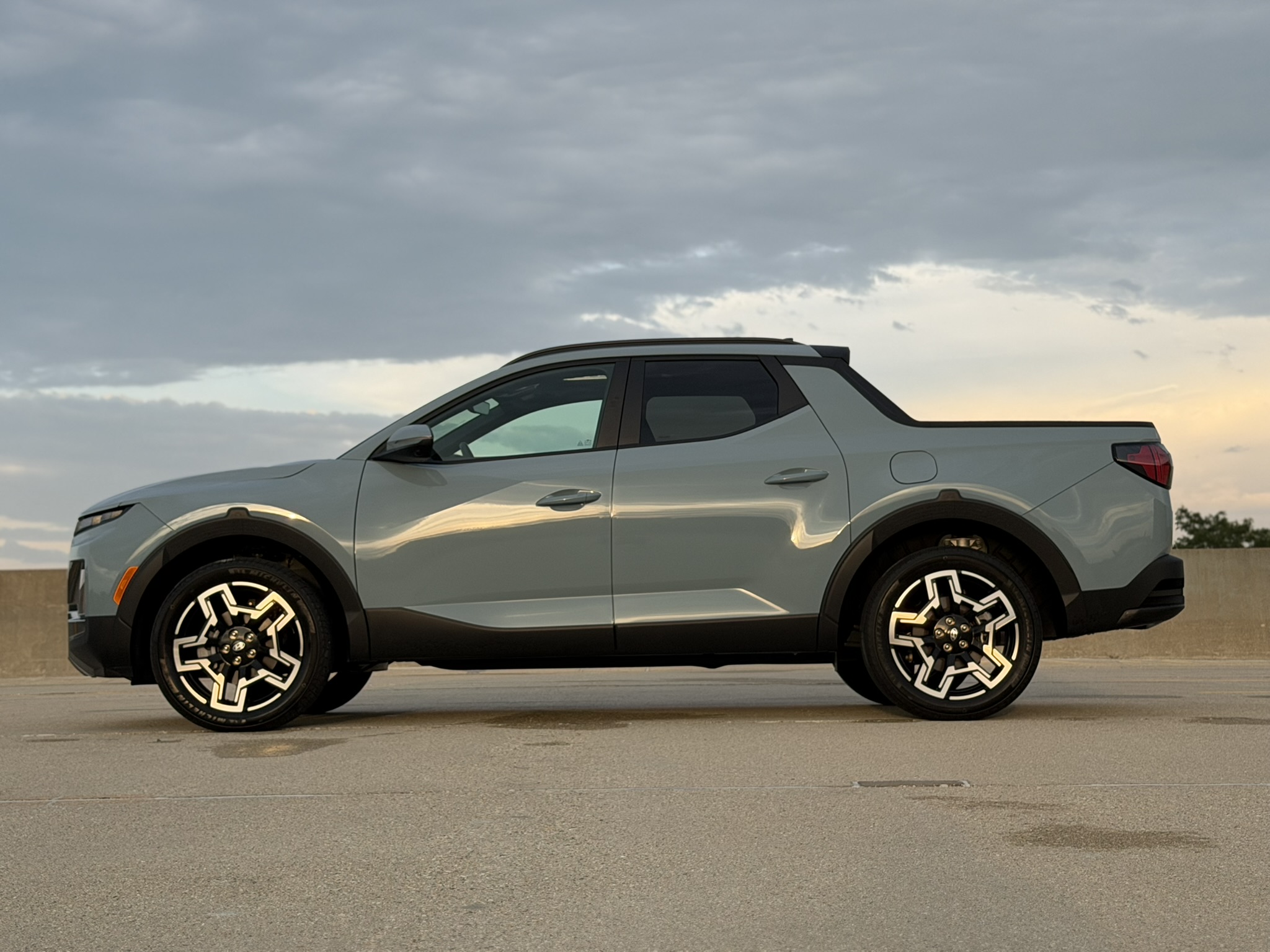
Exterior Styling
The Santa Cruz has one of the more distinctive exterior designs in the automotive market. It doesn't look like a traditional pickup, and that's precisely what I like about it. Hyundai has created a vehicle with a relaxed, almost West Coast beach-town personality. It has a sporty, adventurous appearance that feels right at home near the beach, on a weekend road trip or in the driveway. My teenage girls absolutely loved the style and thought it was different in the best of ways. Additionally. I had several people compliment the truck as it’s not as common on the roads.
The front end features Hyundai's distinctive grille design, integrated LED daytime running lights and an aggressive-looking fascia. The lighting elements blend into the grille, creating a modern appearance without relying on the traditional headlight arrangement found on most pickups.
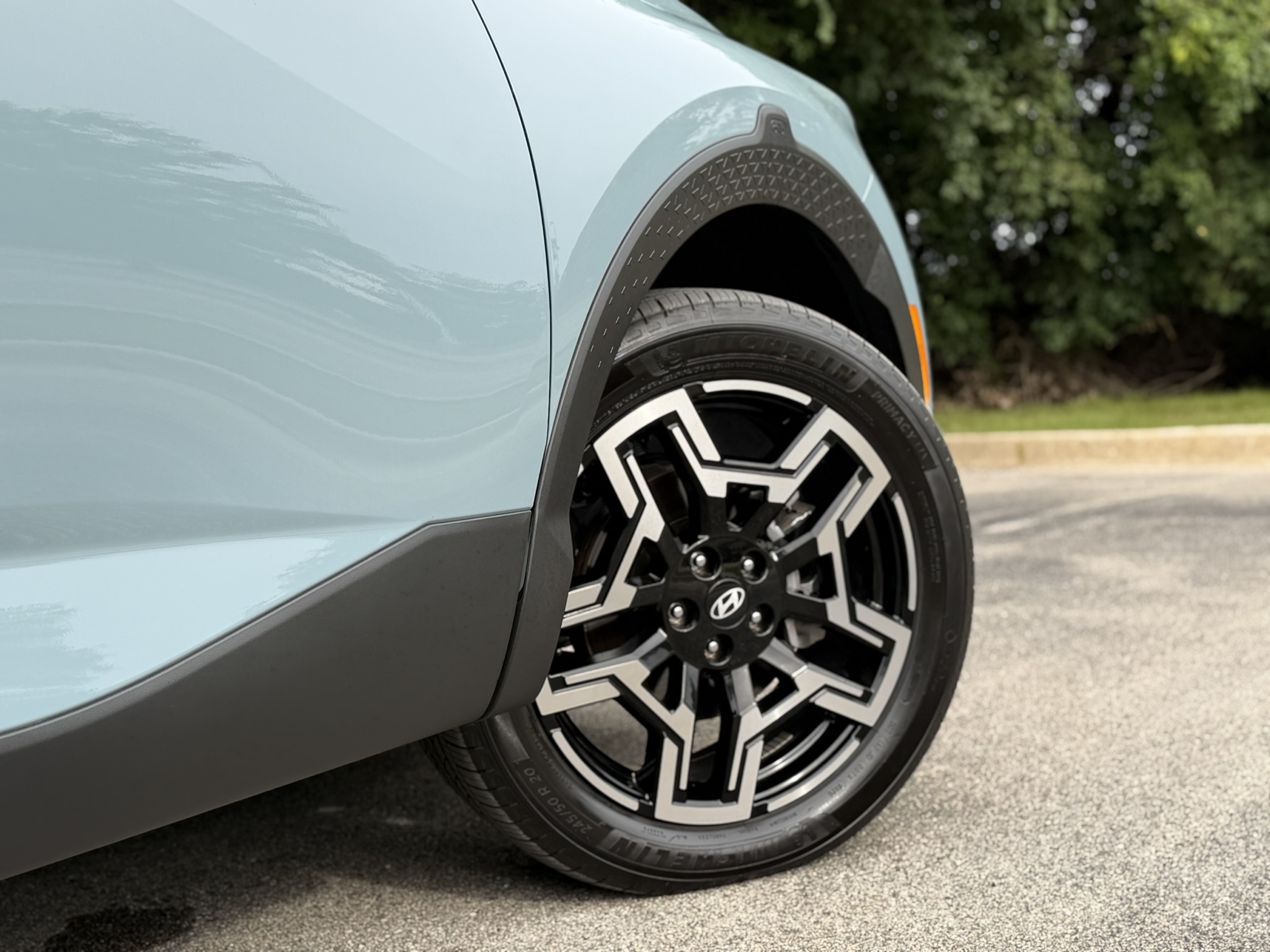
From the side, the Santa Cruz has a sleek, sculpted profile with a relatively short cargo bed, four full-size doors and pronounced wheel arches. Black lower-body cladding adds some ruggedness, while the sloping roofline and compact proportions give it a more crossover-like appearance. Wheel designs vary by trim, with 18-inch alloys on most models and 20-inch wheels on the Limited. The XRT adds all-terrain tires, distinctive exterior accents and exposed front tow hooks for a more adventurous look.
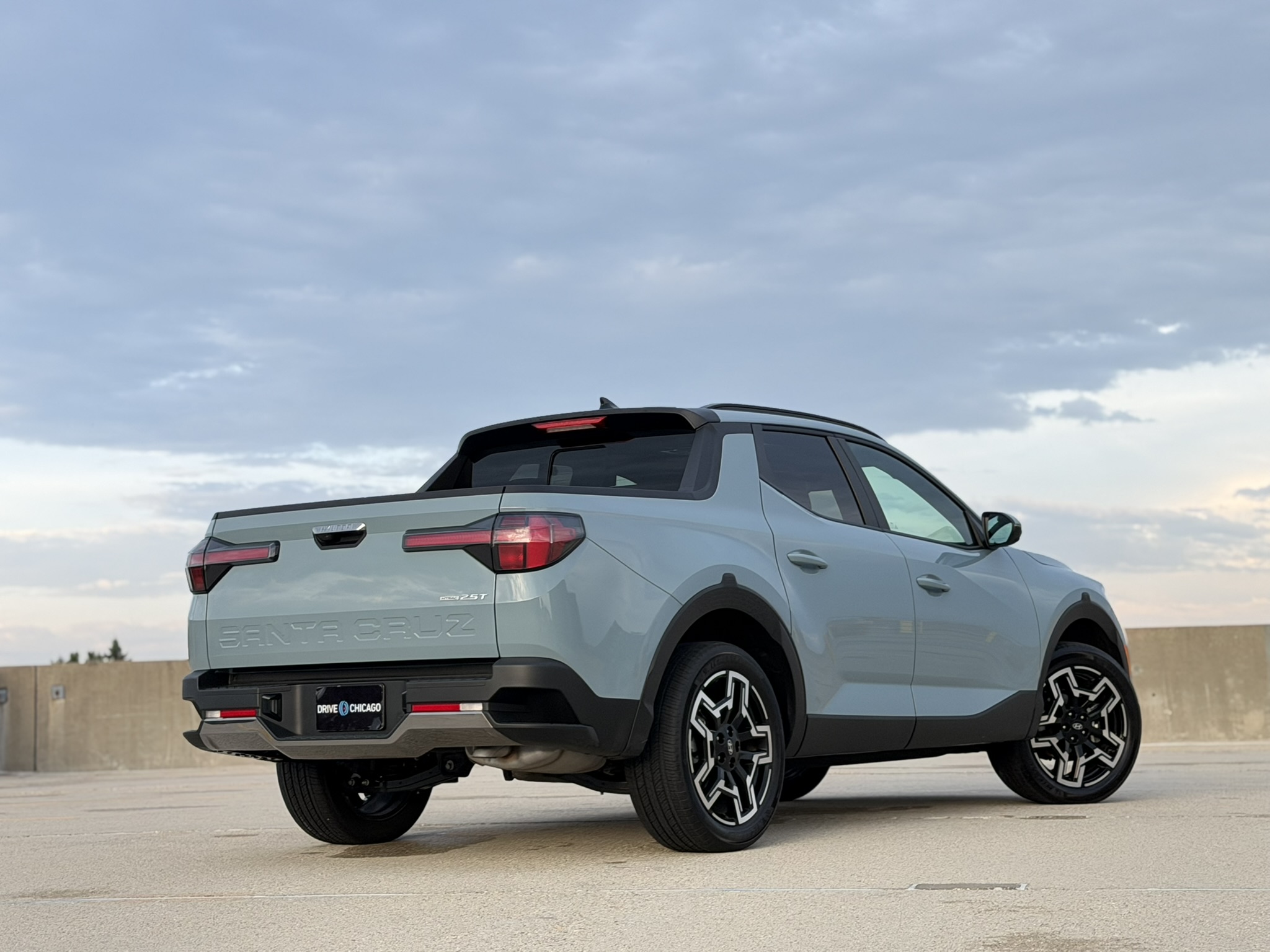
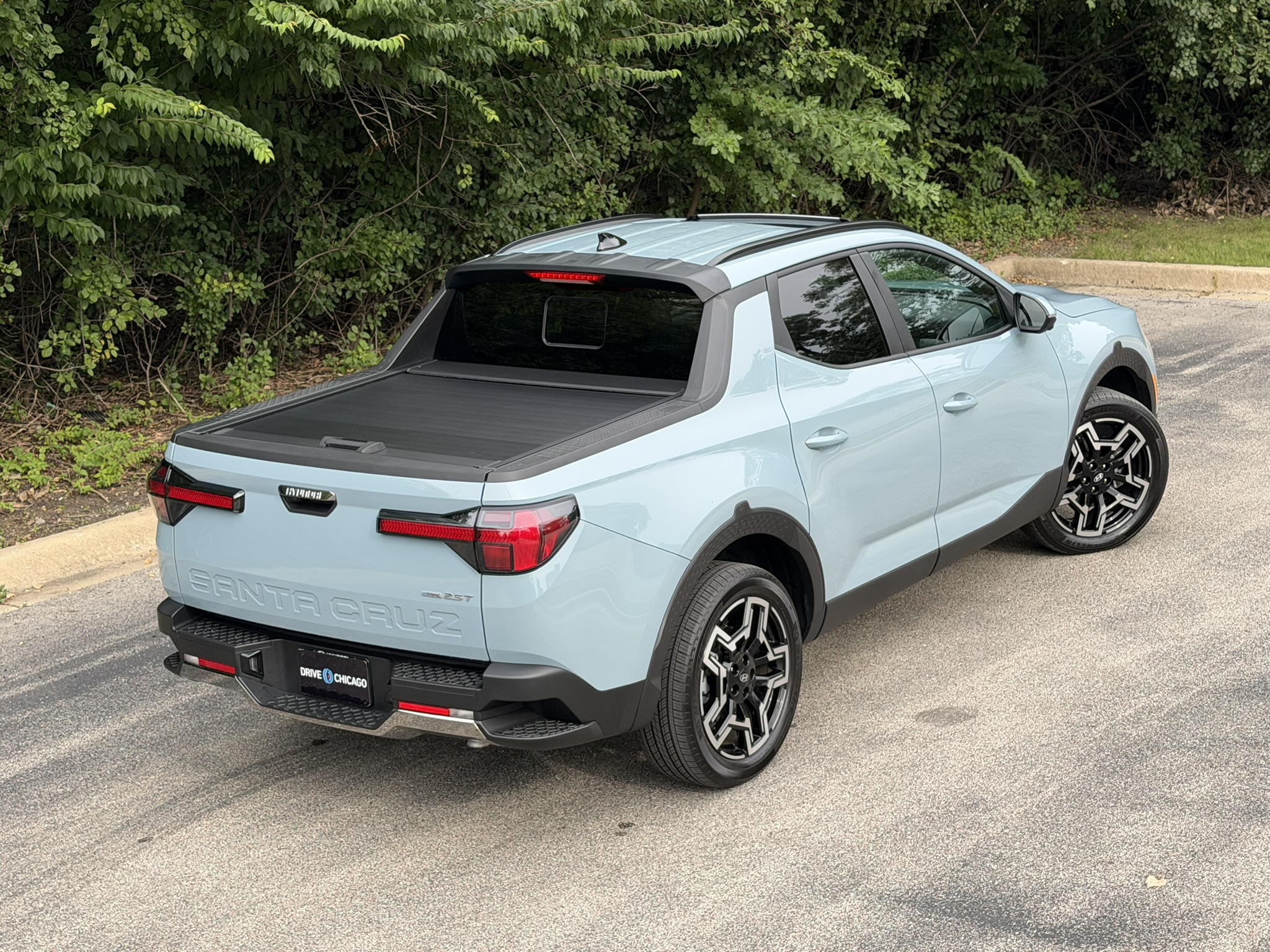
The rear is where the Santa Cruz's pickup identity becomes most apparent. The sculpted tailgate, distinctive LED taillights and integrated bumper steps give it a finished appearance. The overall design is clean and modern without looking overly truck-like.
I really appreciate Hyundai's decision to take a different approach with the Santa Cruz. It has a unique personality, and the styling feels more lifestyle-oriented than work-oriented. It looks like a vehicle designed for someone who enjoys being outdoors, heading to the ballfield or simply having the flexibility to haul things without owning a traditional pickup.
Powertrain
Hyundai offers two powertrain choices in the 2026 Santa Cruz. The standard engine is a naturally aspirated 2.5-liter four-cylinder producing 191 horsepower and 181 lb-ft of torque. It's paired with an eight-speed automatic transmission and comes standard with front-wheel drive, while HTRAC all-wheel drive is available. The standard engine is adequate for everyday commuting and light hauling, but it isn't particularly exciting. When carrying passengers, climbing hills or accelerating onto the highway, it can feel like it needs a little more muscle.
The available turbocharged 2.5-liter four-cylinder is where things get interesting. It produces 281 horsepower and 311 lb-ft of torque, providing a substantial improvement in acceleration and overall responsiveness. The turbocharged engine is particularly enjoyable when merging onto the highway or passing slower traffic. There's plenty of low-end torque available, so the engine doesn't need to work particularly hard to deliver strong acceleration. It will get from 0-60 MPH in around 6 seconds and felt zippy doing so.
For 2026, Hyundai replaces the previous dual-clutch transmission with a conventional eight-speed automatic in turbocharged models. I think this is a welcome change, particularly for a vehicle that is likely to spend considerable time maneuvering around parking lots, backing up to trailers and dealing with everyday stop-and-go traffic.
The turbocharged XRT and Limited models also come standard with HTRAC all-wheel drive. Properly equipped, the standard-engine models can tow up to 3,500 pounds, while the turbocharged models can tow up to 5,000 pounds.

Ride and Handling
This is an area where I was particularly impressed with the Santa Cruz. Its unibody construction and independent rear suspension give it a significant advantage over traditional pickups when it comes to ride quality. The Santa Cruz feels smooth, comfortable and well-grounded on the road. It absorbs pavement imperfections nicely without feeling overly soft or floaty. There's a reassuring sense of stability, and the vehicle feels planted at highway speeds.
What impressed me most was its handling and overall ease of driving. The steering is nicely weighted, and the Santa Cruz responds predictably when changing direction. It feels considerably more agile than a traditional pickup, and its compact dimensions make it easy to maneuver through parking lots, residential streets and tighter urban environments.
I also appreciate that it doesn't feel like you're driving a truck with an empty bed. Traditional pickups can sometimes exhibit a bouncy or unsettled ride when they're not carrying cargo. The Santa Cruz avoids much of that behavior, delivering a ride that feels much closer to a well-sorted crossover.
The XRT adds additional terrain settings for Snow, Mud and Sand, along with all-terrain tires and standard AWD. While it isn't intended to compete with dedicated off-road pickups, it offers some added confidence when venturing onto gravel roads, trails and less-than-ideal surfaces.
Overall, the Santa Cruz strikes an excellent balance between comfort and capability. It feels planted, composed and easy to drive, which makes it particularly appealing for someone who wants truck versatility without giving up the road manners of an SUV.
Fuel Economy
Fuel economy is respectable with the standard engine, although the turbocharged version gives up some efficiency in exchange for its additional performance. The naturally aspirated 2.5-liter engine is EPA-rated at 22 mpg city, 30 highway and 25 combined with front-wheel drive. Adding all-wheel drive changes those estimates to 21 city, 29 highway and 24 combined. Turbocharged XRT and Limited models are rated at 18 mpg city, 25 highway and 20 combined.
All Santa Cruz models feature a 17.7-gallon fuel tank. Based on EPA highway estimates, the front-wheel-drive model has a theoretical highway range of approximately 531 miles, while the turbocharged version offers approximately 443 miles. When mine showed up, it had driving range of around 420 miles on a full tank.
While the standard engine offers reasonable efficiency, the turbocharged model's performance comes with a noticeable fuel-economy trade-off. For someone who prioritizes driving enjoyment and towing capability, I think that's a reasonable compromise.
Interior / Seating
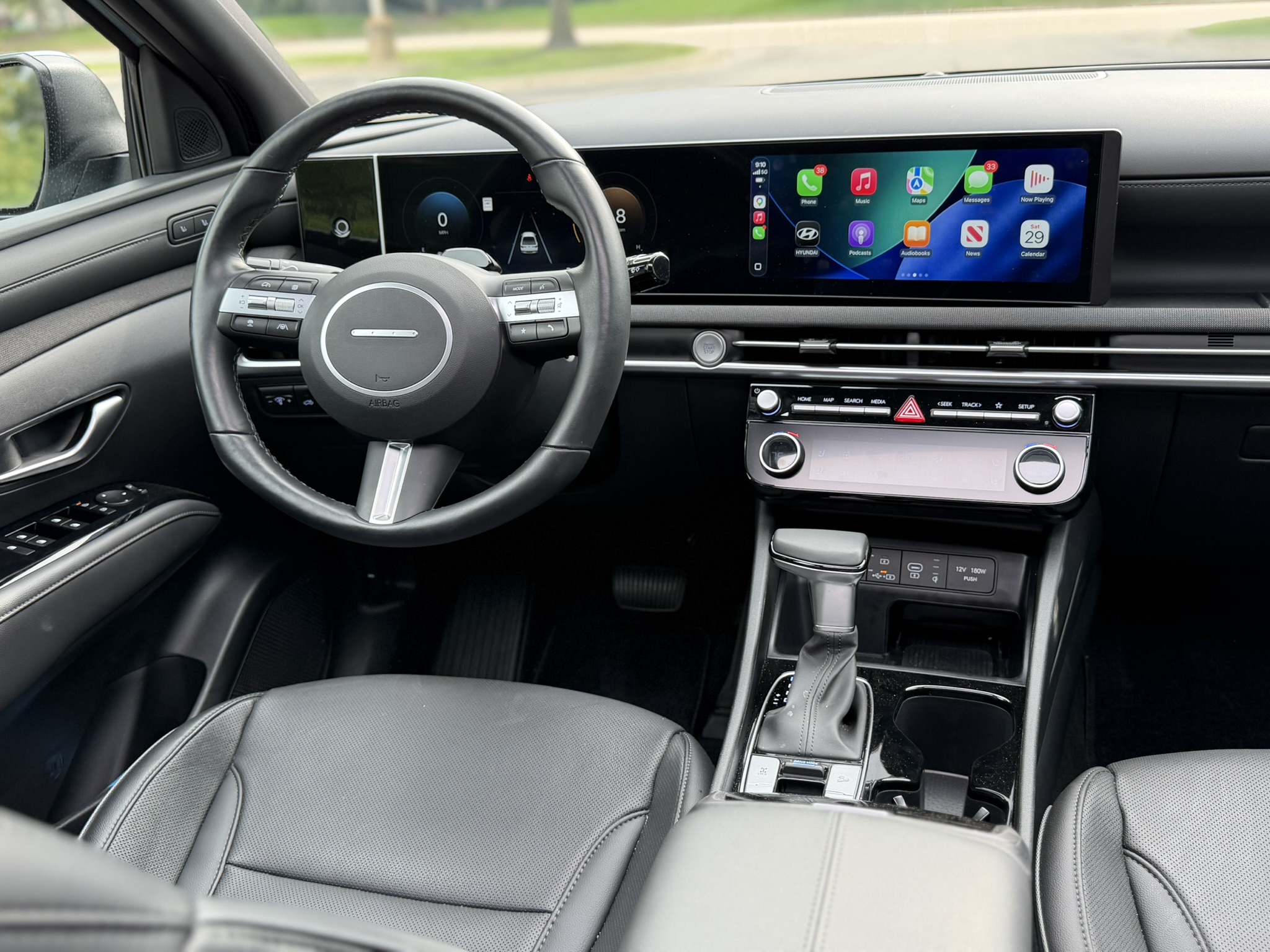
The interior of the Santa Cruz is another area where Hyundai has done a nice job blending the comfort of a crossover with the utility of a pickup. The dashboard has a modern, horizontal layout with a large central touchscreen and an available digital instrument display. The overall design is clean and contemporary, and the materials give the cabin a more upscale feel than you might expect from a compact pickup. Compared to its biggest competitor, the Ford Maverick, the Santa Cruz feels more upscale inside.
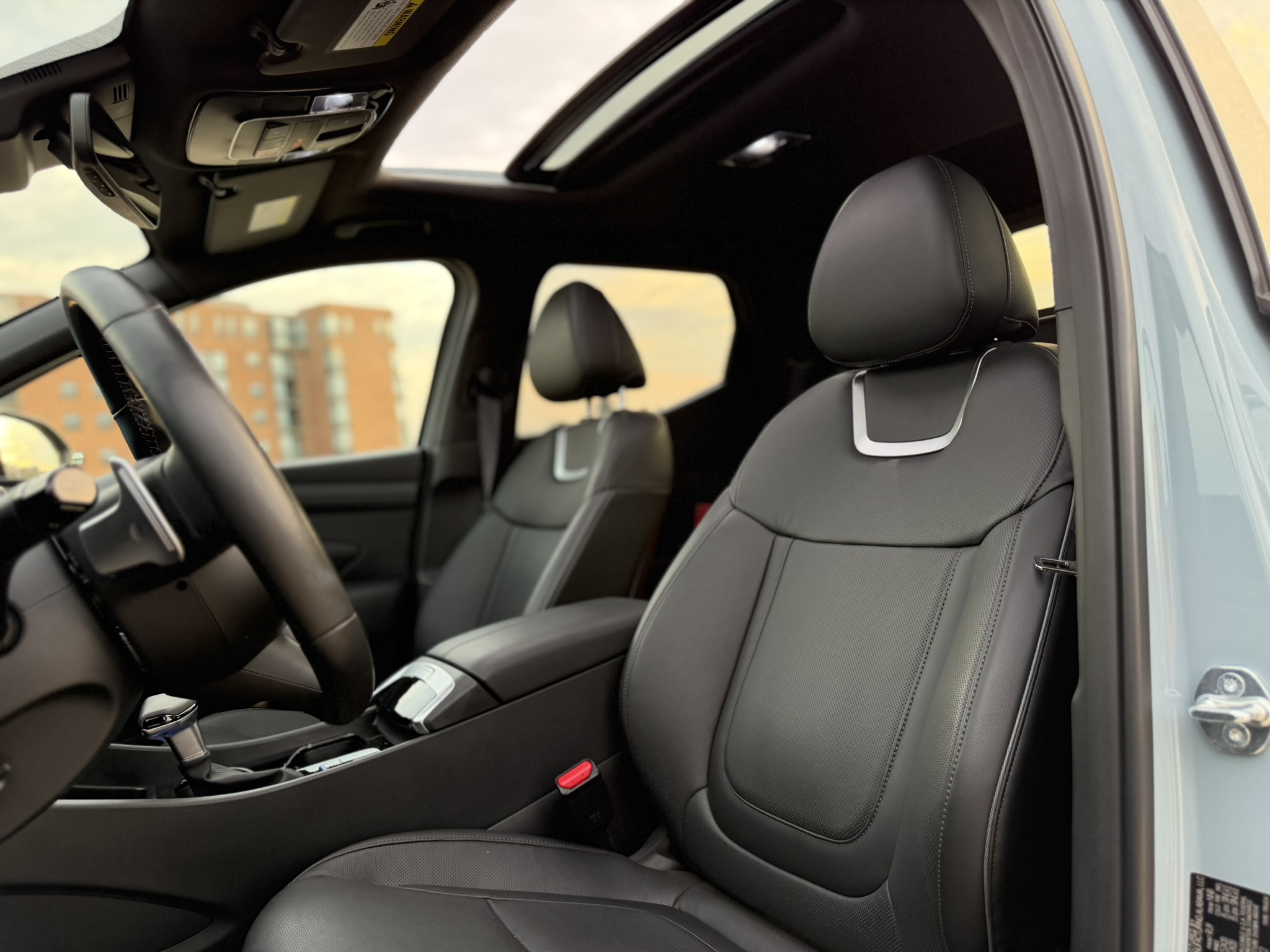
I particularly appreciated how well-designed and functional the interior space felt. The Santa Cruz offers seating for five across two rows. The front seats provide a comfortable seating position with good support, and higher trims offer power adjustments, heating and ventilation. Depending on trim, seating surfaces include cloth, H-Tex leatherette or genuine leather. Higher trims add additional soft-touch materials, contrasting stitching and upgraded interior appointments. The front seats are comfortable, the driving position is natural, and there's plenty of room for everyday personal items. Storage compartments throughout the cabin provide convenient places to keep phones, beverages and other belongings.
The rear seating area is also more accommodating than its compact exterior dimensions might suggest. I was pleasantly surprised by how well my family fit inside. Three kids comfortably fit across the rear seat, making the Santa Cruz a much more practical family vehicle than its pickup styling might initially suggest.
The rear seat cushions also lift upward, revealing additional storage space underneath. It's a clever use of otherwise wasted space and provides another place to store items you would rather keep inside the cabin instead of leaving them exposed in the truck bed.In my experience, three kids fit comfortably across the rear bench. That's an important consideration for families who want the flexibility of a pickup but don't necessarily want to give up the passenger space of an SUV.
Rear legroom measures 36.5 inches, which is respectable for the segment. Taller adults may find it a little tight on longer journeys, but for everyday family transportation, I found the seating area quite accommodating. Overall, the interior is comfortable, thoughtfully designed and easy to live with. It feels much more like a modern Hyundai SUV than a traditional pickup.
Technology
Hyundai has done an excellent job making the Santa Cruz's technology modern, intuitive and easy to use. Every 2026 model includes a 12.3-inch center touchscreen, providing access to infotainment, smartphone connectivity and vehicle settings. Wireless Apple CarPlay and Android Auto are standard, which makes connecting a smartphone quick and convenient.
Higher trims add a 12.3-inch digital instrument cluster, integrated navigation, wireless smartphone charging and Hyundai Digital Key 2 Touch. The Limited also features a Bose premium audio system. I particularly liked the overall simplicity of the technology. The menus are easy to navigate, the display is clear, and the system doesn't require a lengthy learning curve. It's modern without feeling overly complicated.
Hyundai has also retained a conventional gear selector and several physical controls, which I appreciate. While some climate functions use touch-sensitive controls, the overall layout is relatively intuitive. For a vehicle that may be used by multiple family members, I think ease of use is especially important. It delivers a technology package that feels current without making everyday functions unnecessarily difficult.
Safety and Driver Assistance
Hyundai offers a generous collection of standard safety and driver-assistance technologies throughout the Santa Cruz lineup.
Standard features include:
- Forward Collision-Avoidance Assist with Pedestrian Detection.
- Blind-Spot Collision Warning.
- Lane Keeping Assist.
- Lane Following Assist.
- Driver Attention Warning.
- High Beam Assist.
- Rear Cross-Traffic Collision-Avoidance Assist.
- Rear Occupant Alert.
- Rearview camera.
Higher trims add additional features, including Smart Cruise Control with Stop & Go, Highway Driving Assist, Blind-Spot View Monitor and Surround View Monitor.
The Blind-Spot View Monitor is particularly useful, displaying a camera image of the corresponding blind spot in the instrument cluster when activating a turn signal. The available Surround View Monitor provides a bird's-eye view of the vehicle, which is especially helpful when maneuvering around trailers, parking spaces or tight garages. Overall, the Santa Cruz provides a comprehensive collection of safety features, with some of the more advanced technologies reserved for the XRT and Limited trims.
Cargo Space and Utility
This is where the Santa Cruz really separates itself from a conventional crossover. The open cargo bed provides a level of versatility that simply isn't available in a traditional SUV. The bed measures 52.1 inches in length, 53.9 inches at its widest point and 42.7 inches between the wheel wells. It offers approximately 27 cubic feet of cargo volume, with a depth of 19.2 inches.
While it's considerably shorter than the bed of a traditional pickup, I found it surprisingly useful for everyday hauling. One of the things I enjoyed was using the bed to transport dirty baseball equipment in the back. Instead of trying to squeeze larger or dirtier items into the back of an SUV, I could simply toss them into the bed. It was especially convenient for hauling sports equipment, bags and other items that come with having an active family.
Hyundai also incorporates several clever storage features, including integrated tie-down points, sidewall storage compartments, a lockable under-bed storage compartment with a drain, and an assisted tailgate. SEL Activity and higher trims include an integrated retractable tonneau cover, adjustable bed rails and cleats, LED bed lighting and a 115-volt power outlet. The tonneau cover is particularly useful because it provides a more secure, covered area for cargo while giving the bed a cleaner appearance.
However, I did discover one limitation with the cover during my time with the Santa Cruz. After taking the vehicle through a car wash, I found that the cover wasn't completely waterproof. Some water made its way into the bed. It did a sufficient job protecting cargo during a light rain, but I wouldn't trust it to keep everything completely dry during a heavy downpour or an automatic car wash.
Despite that minor disappointment, I really appreciate the versatility the Santa Cruz provides. It offers the convenience of an open bed without requiring the size and bulk of a traditional pickup. For families, weekend projects, sporting equipment and recreational activities, it's a very useful combination.
Final Statement:
The 2026 Hyundai Santa Cruz is one of those vehicles that makes a lot of sense once you spend some time behind the wheel. Its unique styling, comfortable ride, impressive handling and practical truck bed make it an appealing alternative to both traditional pickups and compact SUVs. The technology is modern and intuitive, the interior is thoughtfully designed, and the passenger space proved more accommodating than I initially expected.
The Ford Maverick remains its closest competitor, offering a more traditional pickup design and an available hybrid powertrain. And while I’m still a big fan of the Maverick as well (for different reasons), the Santa Cruz takes a different approach, prioritizing style, comfort and everyday usability.
For my money, the Santa Cruz is an excellent choice for someone who wants a little truck versatility without the compromises of owning a full-size pickup. It has a unique personality, a comfortable family-friendly interior and enough utility to handle many of the things that make weekend life enjoyable. It's not trying to be a traditional truck, and that's exactly why I like it.