2026 Dodge Charger
The Muscle Car is alive and well
Test Vehicle: 2026 Dodge Charger R/T Plus
Powertrain: 3.0L Twin Turbo Sixpack SO
Exterior Color: Triple Nickel
Interior Color: Black Cloth
Notable Options: Exterior Paint ($695), Preferred Package 21A ($4,995), Blacktop Package ($1,295), Performance Handling Group ($2,995), Full Glass Roof ($1,395), Alpine Sound System ($1,795)
Price as tested: $67,160 (with destination charge)
Pros: Strong turbocharged performance, standard AWD, useful liftback cargo access, distinctive styling, feature rich Plus trim
Cons: No HEMI V8, substantial curb weight, thirsty by everyday-car standards, options can push the price well above the starting figure
The Dodge Charger has been around since 1966 and seen many generations, body styles, and powertrains. Early models featured a range of V8 engines, including the legendary 426 Hemi producing 425 hp, and offered both manual and automatic transmissions.The first Charger emphasized luxury and high-trim features, setting it apart from smaller pony cars like the Ford Mustang. The latest Charger represents the boldest evolution yet, transitioning to a fastback liftback with both electric and traditional gas powertrains. The new Charger turns heads, offers useful cargo flexibility and has enough power to feel at home in the muscle-car category. It also marks a real departure from the formula many Charger fans know with the powertrain shift away from the V8.
For 2026, the Dodge Charger has three powertrain choices: two versions of a 3.0-liter twin-turbo inline-six and an all-electric setup. All are offered with all-wheel drive; the gas-powered R/T and Scat Pack can switch to rear-wheel drive.
- R/T: SIXPACK standard-output inline-six nets 420 hp, 468 lb-ft of torque.
- Scat Pack: SIXPACK high-output inline-six nets 550 hp, 531 lb-ft of torque.
- Daytona Scat Pack: all-electric, dual-motor powertrain nets 670 hp, 627 lb-ft of torque.
It is available with two or four doors in a variety of trims. And both versions are available as an R/T, R/T Plus, Scat Pack, Scat Pack Plus, Daytona Scat Pack, and Daytona Scat Pack Plus. Prices start at $49,995 for a 2-Door R/T or $51,995 for the 4-Door R/T. Top end Daytona Scat Pack Plus Models start at $64,990 and $66,990 respectively.
For the 2026 Charger, the closest competitors depend on what you value: it’s an unusually large, powerful four-door liftback with standard AWD, rather than a conventional sports sedan or a two-door pony car. The most likely vehicles one would cross shop include the BMW M340i, Cadillac CT5-V, Ford Mustang GT, and Genesis G70.
I spent a week with the four-door R/T Plus and came away impressed by its versatility. The fastback shape gives it a dramatic profile, while the liftback tailgate makes loading cargo easier than it would be with a conventional trunk. Around town and on the highway, the engine delivered sufficient power. I missed the V8 growl, but the six-cylinder still sounds good and performs well. After a week in the Triple Nickel 4-door that checked in at $67,160, here’s what stood out…
Exterior Styling
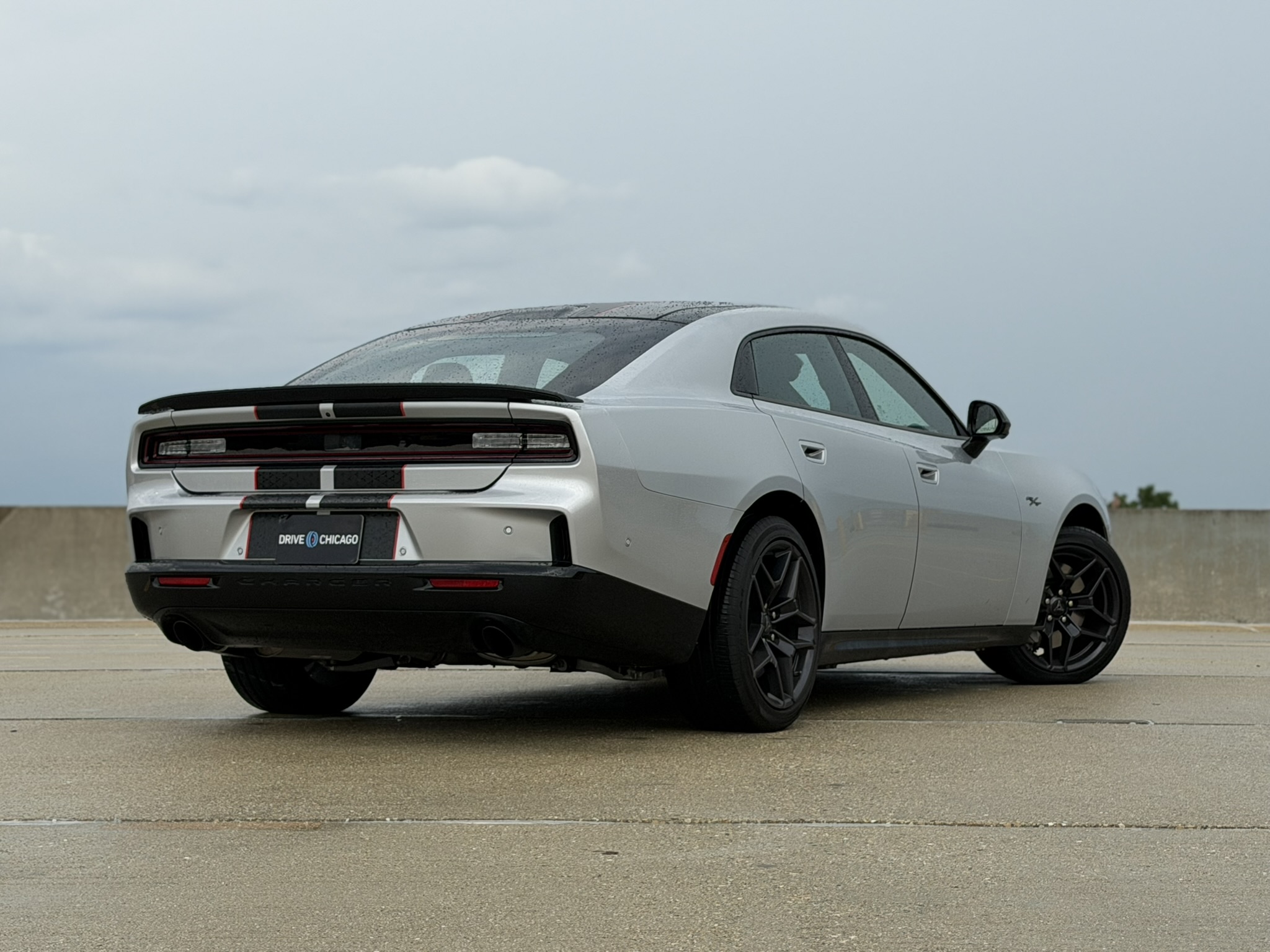
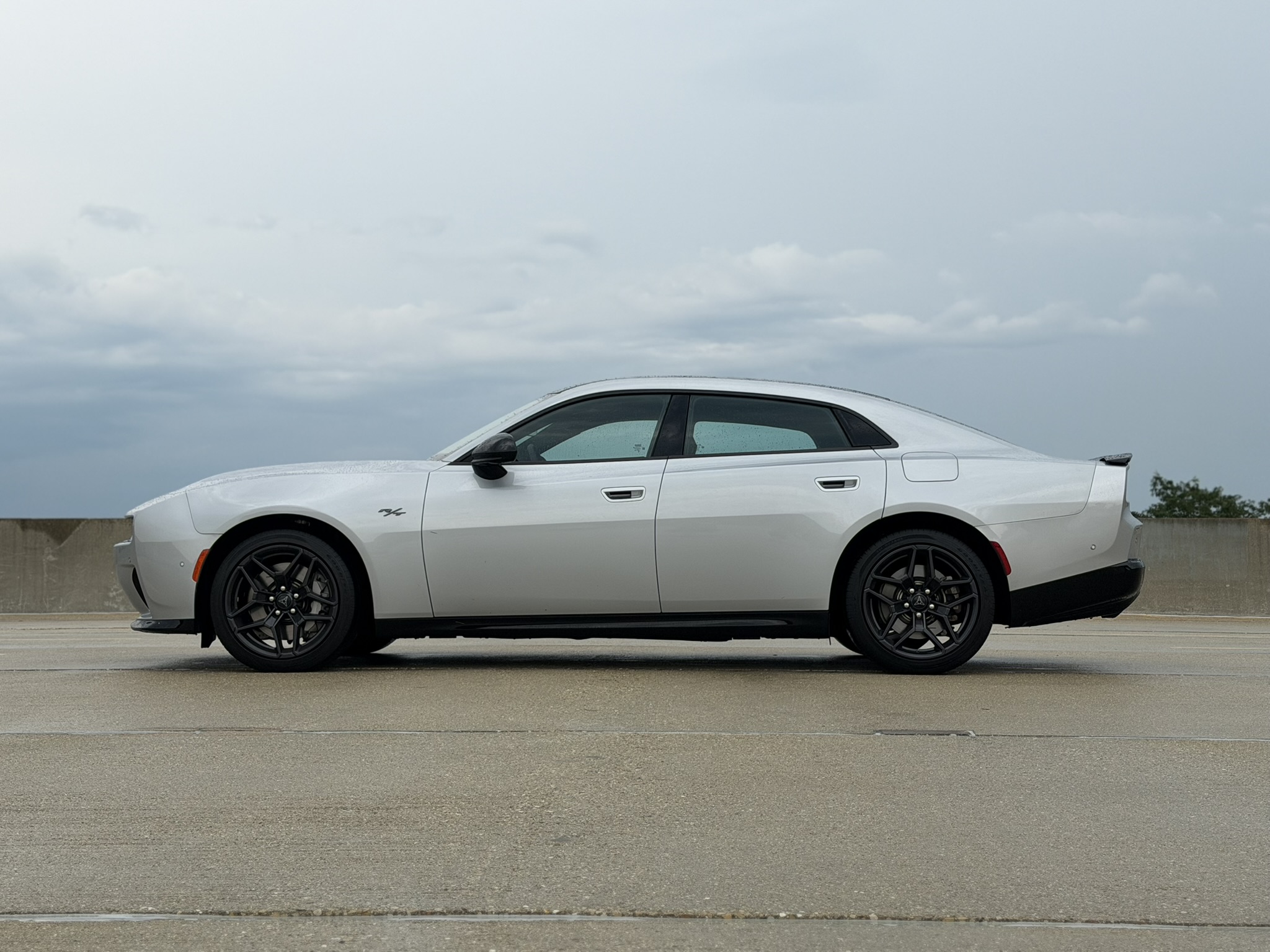
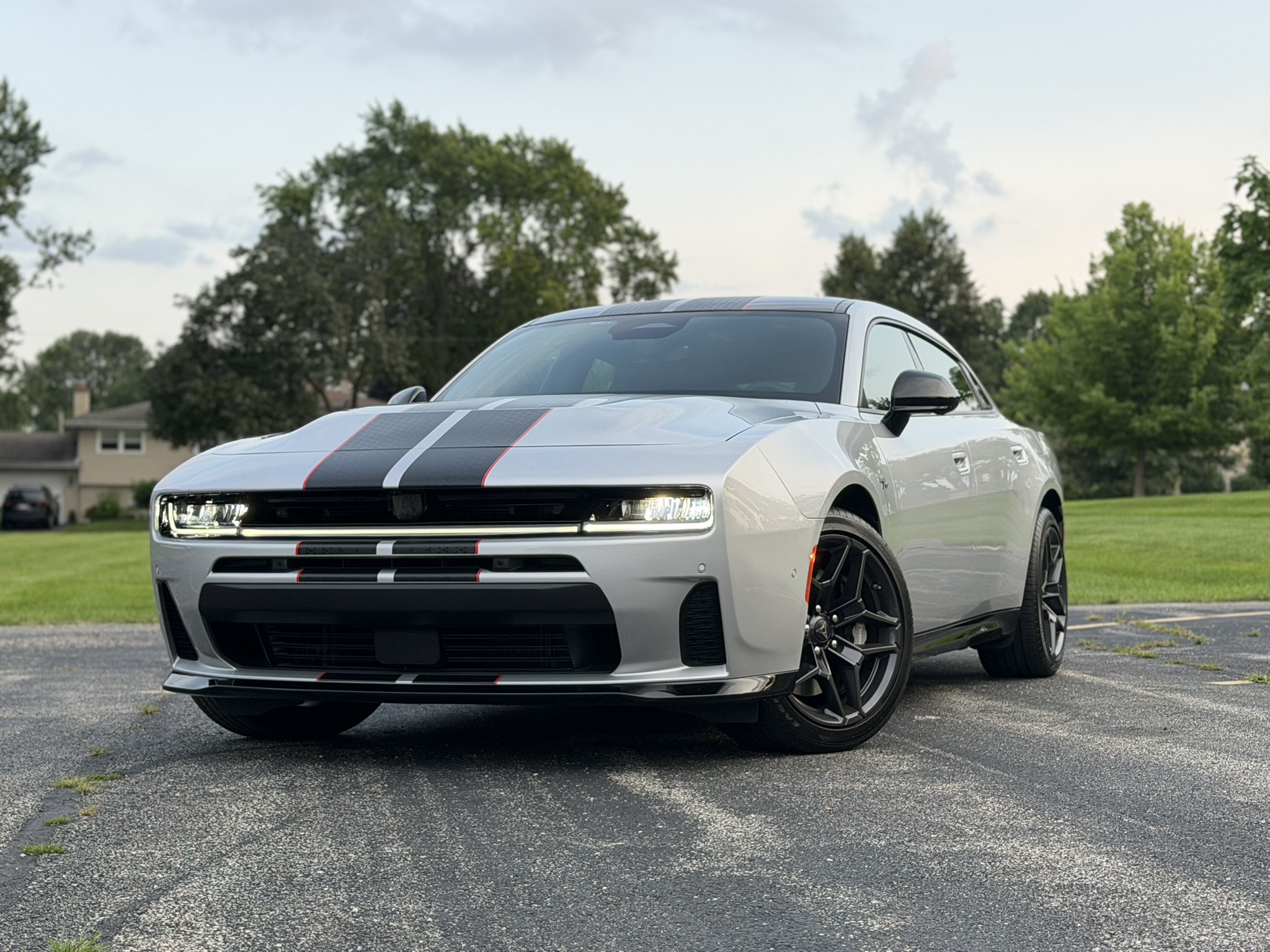
The Charger’s new design is bold and eye-catching. Its fastback profile gives the four-door a sporty look without sacrificing the extra access of rear doors. During the week, several people approached me to ask about the car, a good indication that the styling stands out in everyday traffic.The broad, dramatic shape has plenty of presence, but the design is more than a styling exercise. The sloping roof flows into a large liftback, making the Charger look more like a coupe while offering cargo access closer to what you’d expect from a hatchback. Dodge did an excellent job creating a body style that can easily accommodate two or four doors seamlessly.
The exterior mixes a wide, muscular stance with modern lighting and practical proportions. On the R/T Plus, the details that stand out include the LED headlights and distinctive rear LED taillights that give the car a recognizable lighting signature. The front cross-car running light is available on Plus models, stretching across the fascia while illuminated Fratzog badges add a glowing focal point at the front and rear. Its logo is subtly laser-etched into the headlamps.
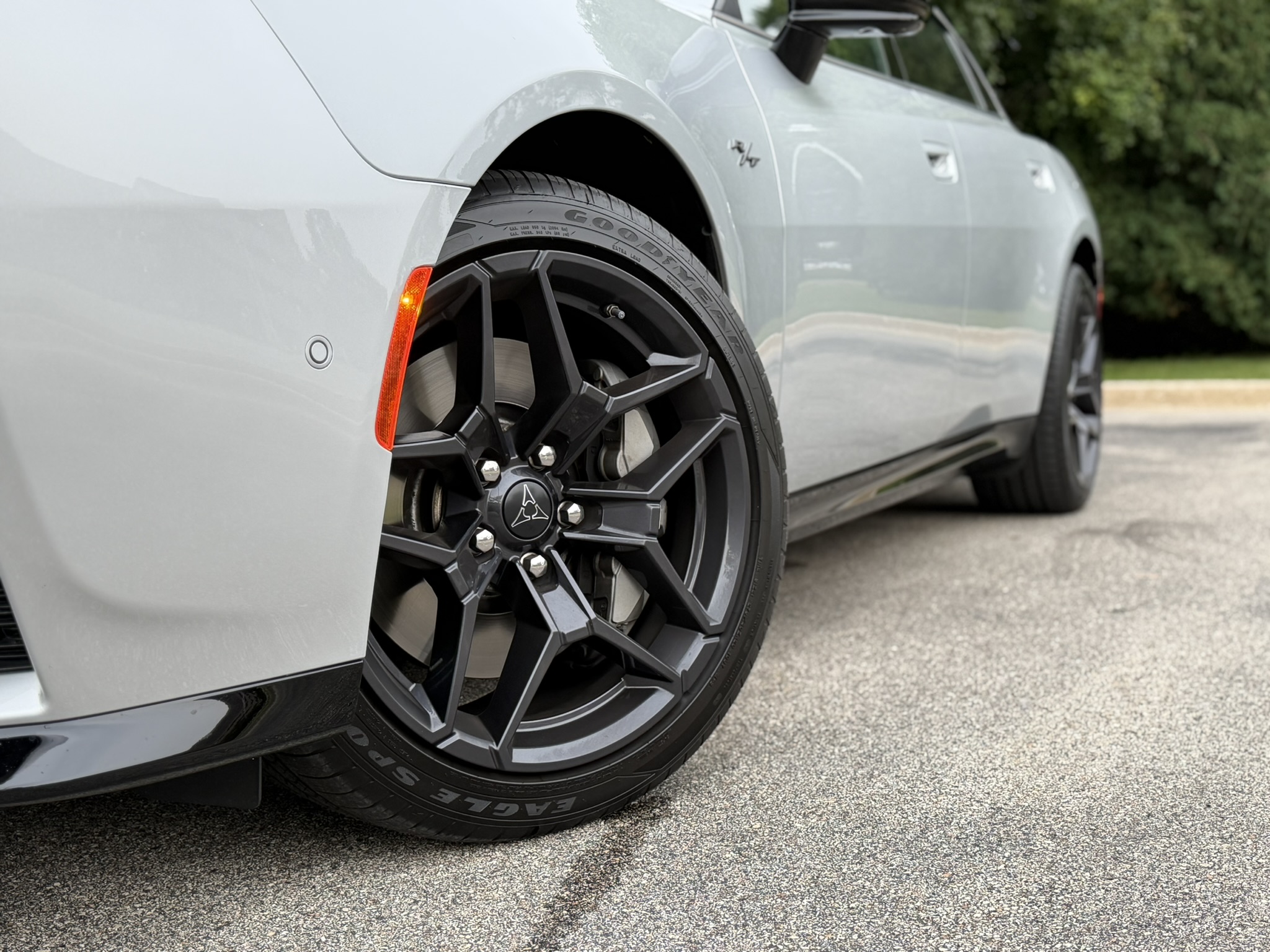
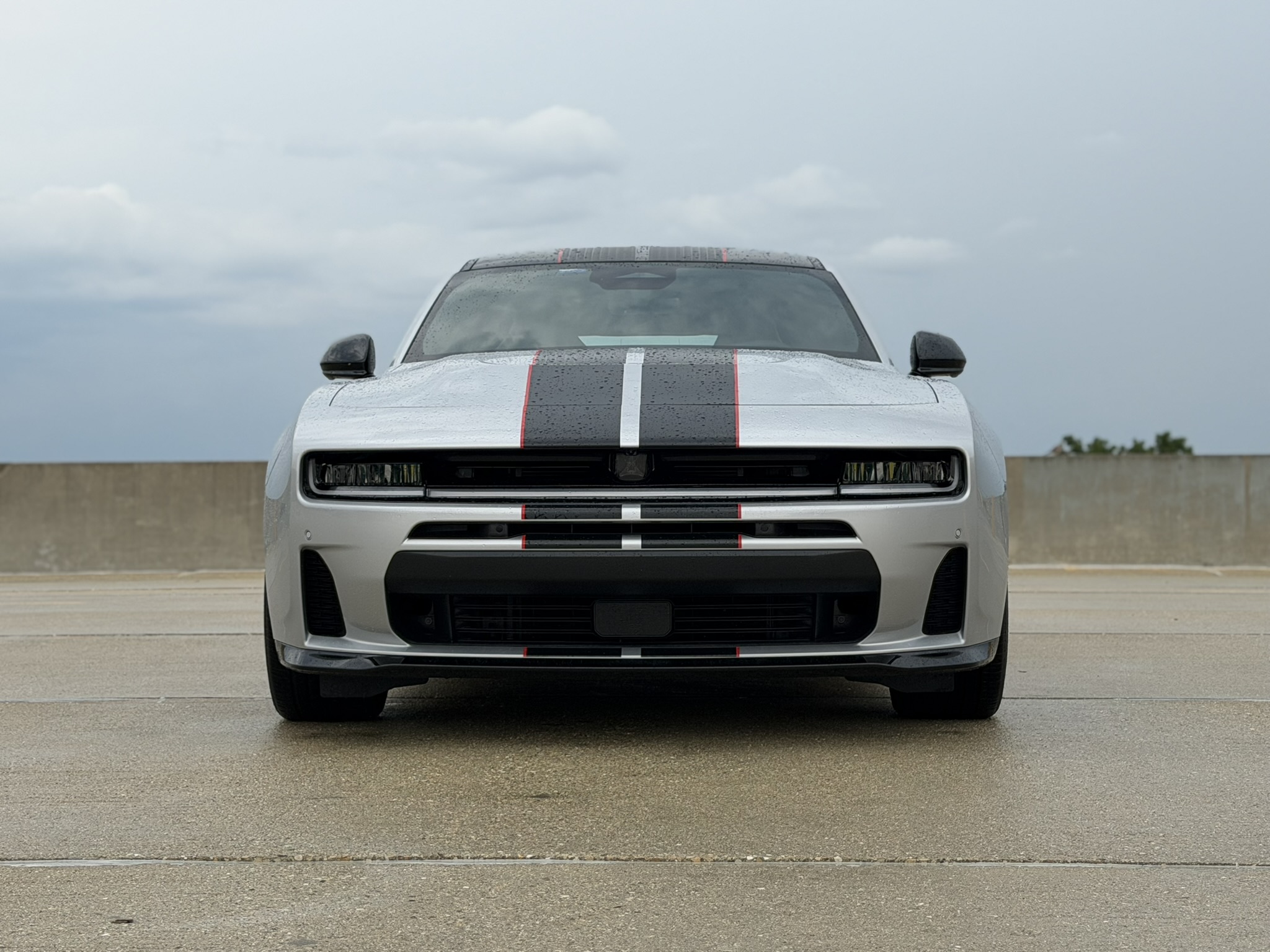
The SIXPACK-specific front end has a performance hood with a sculpted power dome and a grille-style SIXPACK bezel. The front fascia is distinctly different from the electric Daytona’s. There are a variety of wheel and tire combinations available as well, my test car came with 20” Diamond Cut Baltic wheels for the R/T Plus. The available Blacktop package adds black-finish wheels, darker exterior badging and black exhaust tips. And of course this is a car you can easily personalize. Available touches include a fixed panoramic glass roof, Fratzog racing stripes and a Satin Black hood graphic. The stripes use a repeating Fratzog pattern with red accents; the hood graphic emphasizes the raised center section.
Powertrain
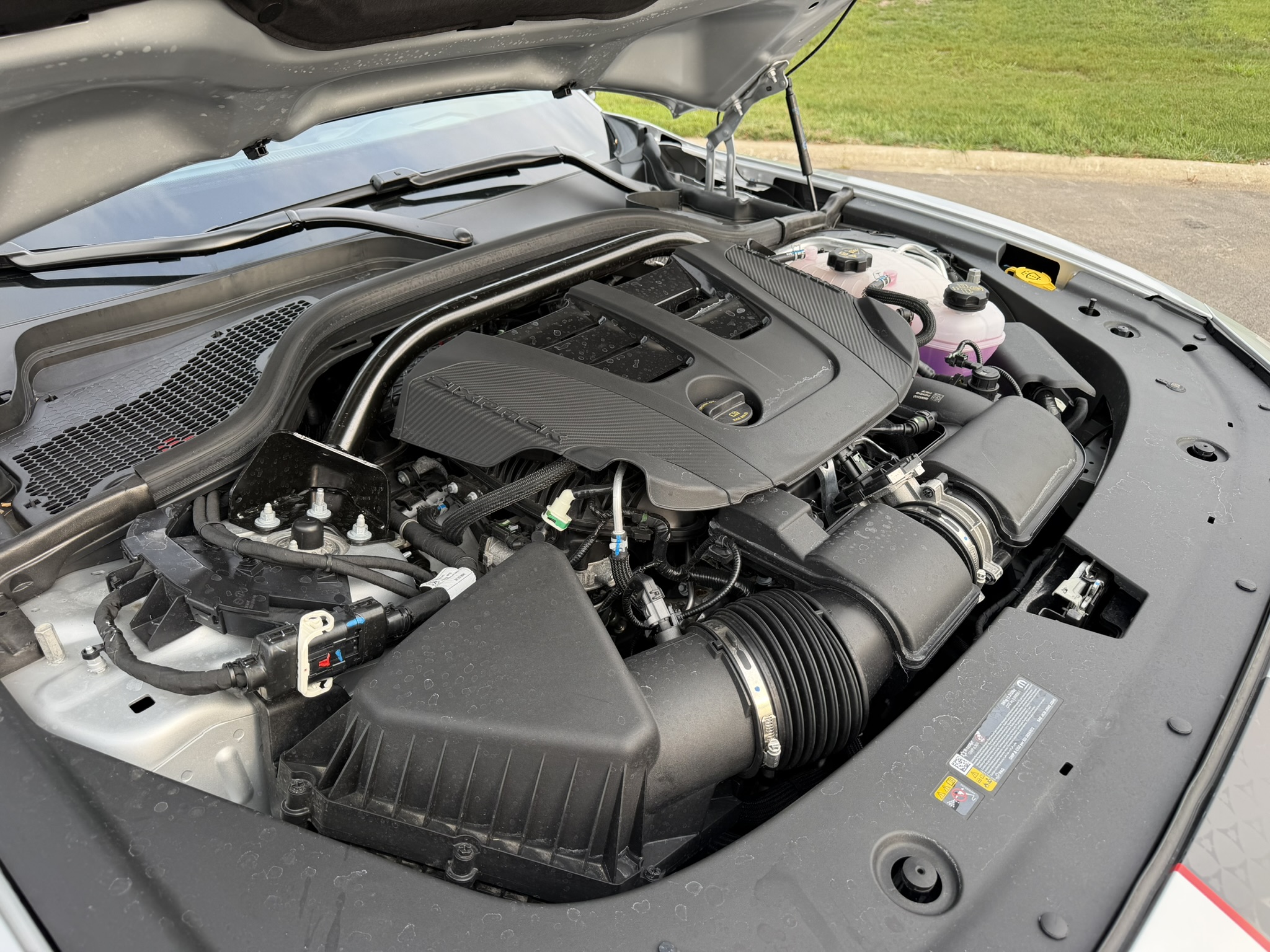
The R/T Plus uses a 3.0-liter twin-turbocharged SIXPACK inline-six, rated at 420 horsepower and 468 lb-ft of torque. An eight-speed automatic sends power to all four wheels. Dodge lists a manufacturer-estimated 0–60 mph time of 4.6 seconds which is on point with my testing.
The missing V8 is hard to ignore, especially for anyone who associates a Charger with that unmistakable rumble. I missed it, too. But the new engine has its own appeal: it sounds good, and its power felt sufficient in the situations I encountered, from suburban streets to highway driving. The Charger still delivers the performance and presence expected of a muscle car, even if its character has changed.
I have also driven the electric Daytona briefly and while it comes with artificial sounds, it’s hard to ignore how competent and fast it actually is. The Charger Daytona Scat Pack replaces the gas Charger’s twin-turbo inline-six with an all-electric, dual-motor powertrain. Its 400-volt system provides 670 horsepower and 627 lb-ft of torque, with standard all-wheel drive. Unlike the gasoline Charger, Daytona has no conventional transmission or gear changes. Electric motors deliver power directly, giving it immediate, uninterrupted acceleration. It will get from 0-60 MPH in 3.3 seconds and the quarter mile in 11.5 seconds.
The Daytona’s powertrain is a sharp contrast to the R/T Plus’s turbocharged six. It trades engine revs and a V8 growl for instant electric response, all-wheel-drive launches and exceptional acceleration. I prefer the V6 on a car like the Charger, but the Daytona is hard to ignore as well.
On the Road Ride & Handling
The R/T Plus felt well suited to everyday driving. There was enough power for around-town use and highway travel, without the car feeling short on performance. All-wheel drive also gives the Charger an added measure of year-round practicality, particularly for drivers who deal with rain or winter weather. It feels more like a confident highway cruiser than a nimble sports sedan. Its standard all-wheel drive helps put the power down, and the car feels capable when accelerating onto the highway or carrying speed through broad bends. On tighter roads, its size and weight become more apparent. The steering response is relaxed, and the body leans more than it would in a smaller sport sedan.
Ride comfort depends noticeably on the suspension setup. With the standard suspension, the R/T is more forgiving over broken pavement. The optional Performance Handling Group sharpens cornering with a sport-tuned suspension but can feel busier over rough roads. The standard setup absorbs poor pavement well, although it can feel firm on rougher surfaces.
My week’s driving was mostly suburban, but I have experienced this on the Road America track in an acceleration lane and it is even more fun there. In ordinary use, the Charger balanced its muscle-car character with the kind of flexibility that makes it easier to live with as a daily driver.
Fuel Economy
When it arrived with a full 17.5-gallon fuel tank that will provide roughly 350 miles of driving range. I averaged about 19 mpg over a week of primarily suburban driving. EPA estimates 17 mpg city, 26 highway and 20 combined. It runs on regular grade 87-octane fuel, but higher 91-octane will allow optimal performance.
Interior
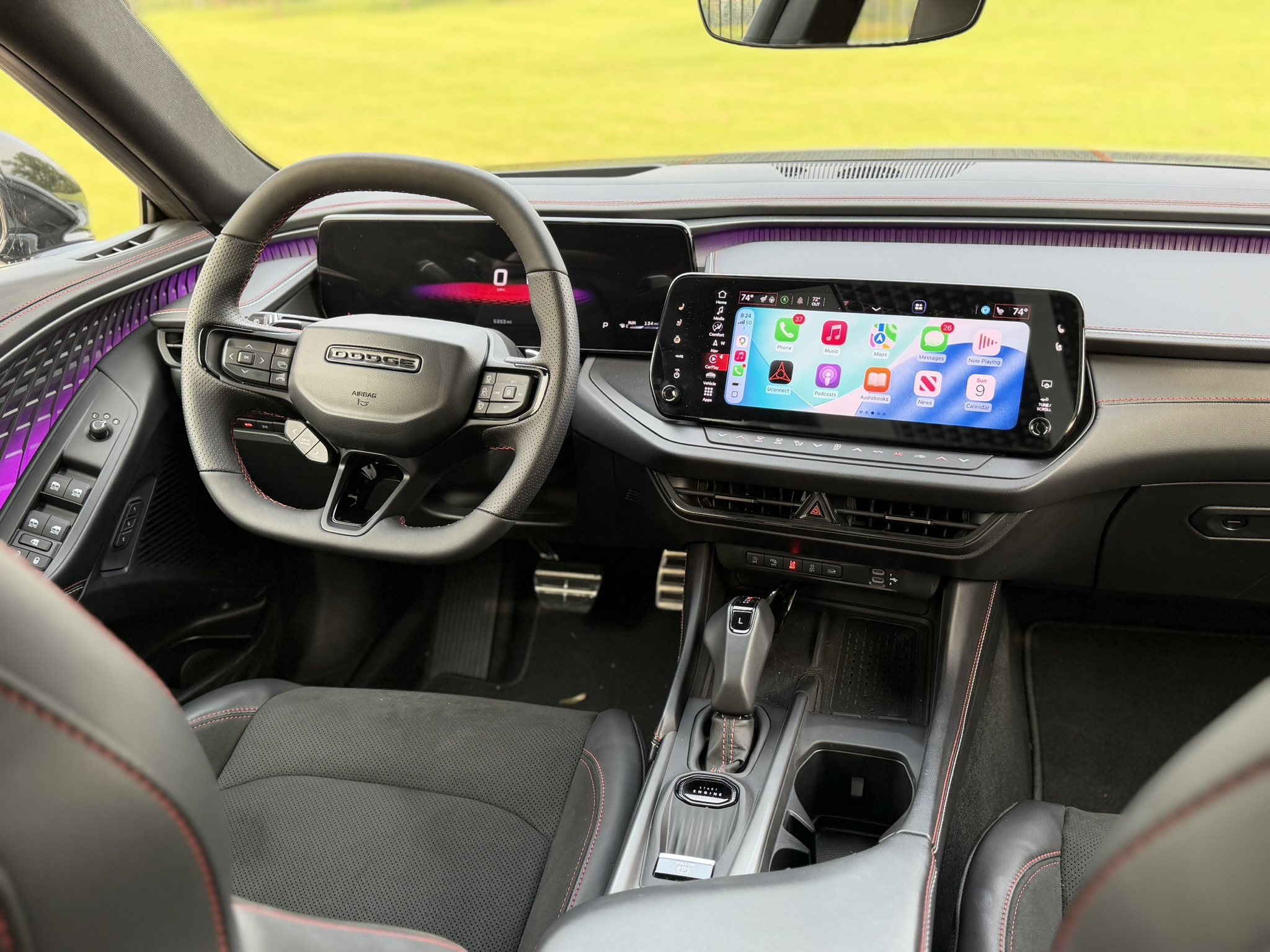
Hopping inside, the Charger has a sporty, tech-friendly feel. The cabin’s modern layout feels like a contemporary performance car rather than a throwback built around its engine alone. Drivers will face a 16-inch digital instrument cluster on the R/T Plus, with a head-up display and a 12.3-inch center touchscreen. The driver-focused dashboard puts digital displays front and center surrounded by mixed materials and lighting features.
The center console features a more traditional gear shifter that looks and feels like you’re driving a fighter pilot. There is ample space for your mobile device, water bottles, and additional storage. The steering wheel follows the trend of many others with a flat top and flat bottom.
The all-glass roof was one of my favorite features. It lets in plenty of daylight and makes the cabin feel more open. The racing stripes continuing across the glass are a particularly nice touch: they connect the roof to the Charger’s exterior design instead of making it feel like a separate feature.
Technology:
The 2026 Charger R/T Plus puts a lot of its technology in plain view. The cockpit is centered around a 12.3-inch Uconnect 5 touchscreen, paired with a 16-inch digital instrument cluster and a head-up display on the Plus trim. Uconnect 5 supports wireless Apple CarPlay and Android Auto, and Dodge’s Performance Pages can show vehicle information such as gauges, timers and G-force data. The R/T also offers selectable drive modes, including Auto, Sport, Eco and Wet/Snow, so the car’s responses can be adjusted to the conditions or the driver’s preference.
dodge.com
The Plus trim adds 64-color ambient lighting, which animates across the doors and dashboard and changes with certain vehicle events. As kitschy as it may be, the various lighting altered the vibe inside the Charger. It’s easy to adjust and mixed with the various textures and design elements, it adds to the interior, rather than distracts. Overall, technology is easy to use and navigate. It adds enough modern amenities without being too complicated.
Seating
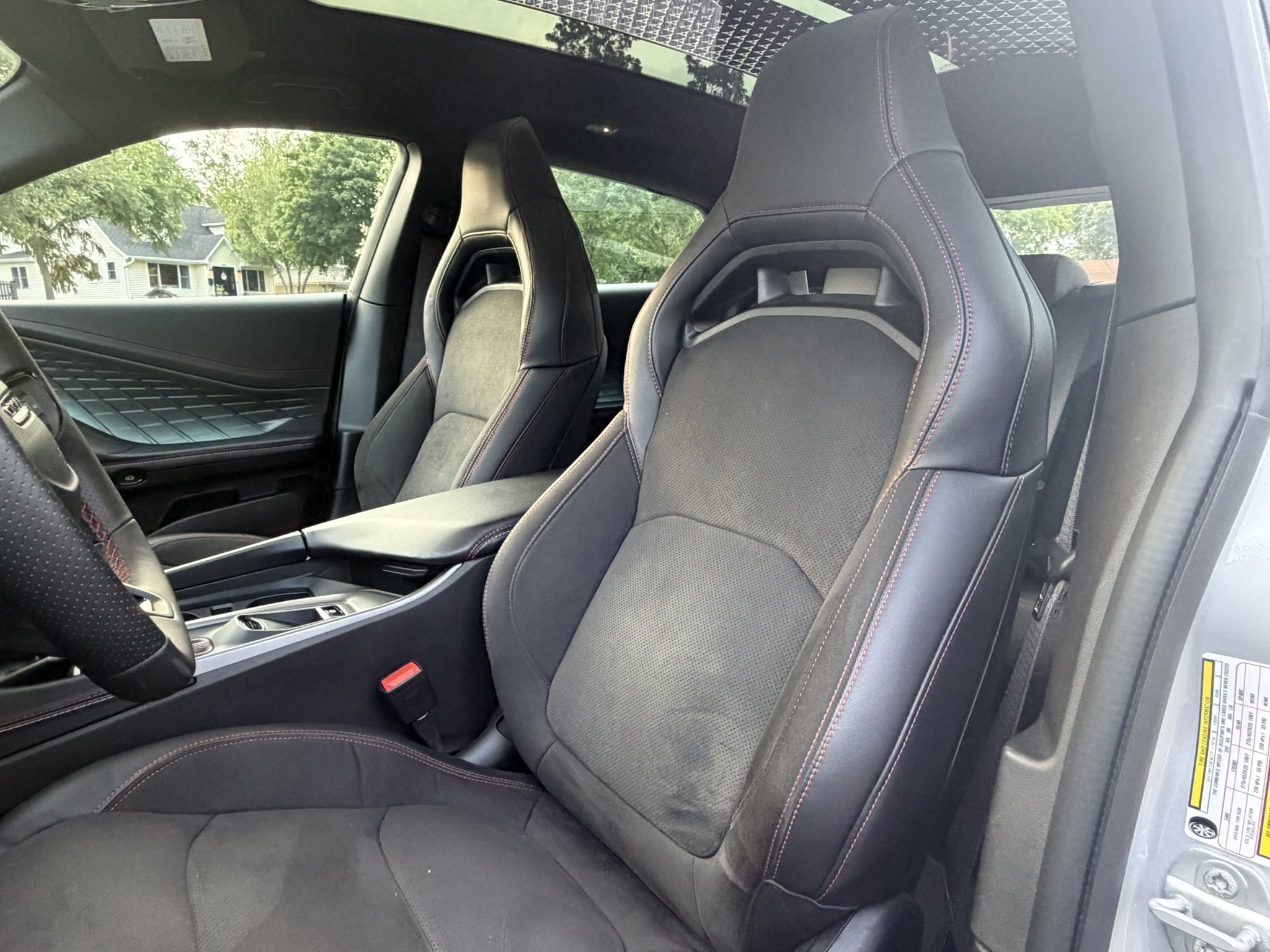
The Charger provides seating for five in both the two or four door variants. The front seats were comfortable and supportive throughout my week with the Charger R/T Plus, and they were easy to adjust to find a good driving position. Standard amenities include cloth upholstery and manually adjustable front seats. Across the broader Charger lineup, seat choices include cloth, vinyl, cloth-and-vinyl, suede-and-vinyl, Nappa leather, and suede/Nappa leather combinations. Premium options can include heated Black or Demonic Red Nappa leather seats, but availability depends on trim and package. Available upgrades include heated and ventilated front seats with power adjustments, heated rear seats and a heated steering wheel.
Rear-seat space is more of a compromise. The fastback roofline makes the back feel a little tight, especially for taller passengers, though my kids were comfortable. The sloping roof adds to the Charger’s sleek exterior, but rear-seat passengers may notice the trade-off.
Cargo Space
The fastback and liftback combination is a major strength. Opening the tailgate gives access to a broader, more convenient cargo area than a standard sedan trunk, making it easier to load and arrange everyday items. There is a sizable 22.1 cubic feet of cargo space behind its rear seats and 37.3 cubic feet of space with the seats folded. Opting for the four-door version increases this space by a negligible 0.6 of a cubic foot. For drivers who want a muscle car but also need practical cargo access, the Charger’s design offers a genuinely useful advantage.
Safety / Driver Assist:
The 2026 Charger R/T Plus has a broad suite of driver-assistance features that are standard across the Charger lineup that include:
- Forward Collision Warning with automatic emergency braking, including vulnerable-road-user detection
- Active Lane Management
- Active Driving Assist
- Adaptive Cruise Control with Stop and Go
- Blind-Spot Monitoring with Rear Cross-Path Detection
- Front, rear and side ParkSense parking assistance
- Traffic Sign Recognition
- Drowsy Driver Detection
The available camera features can also make parking the Charger’s wide body easier. These include a 360-degree surround-view camera, a front tire-to-curb view, and camera activation through ParkSense to show objects in front of the car.
Active Driving Assist will also help with speed and lane positioning, but it is not self-driving. Drivers must keep their hands on the wheel and be ready to take control. Overall, the Charger’s safety technology is a strong everyday asset.
Final Statement
The 2026 Dodge Charger R/T Plus is a capable muscle car with a different soundtrack. Its twin-turbo inline-six provides sufficient power for suburban and highway driving, while the exterior design attracts attention and the fastback liftback adds welcome cargo flexibility. The glass roof is another standout, bringing light into the cabin and giving the interior a more open feel.
There are compromises. The rear roofline makes the back seat a little tight, fuel economy is only middling, and drivers who love the sound of a HEMI V8 may miss it as much as I did. Still, the Charger proved that the V8 is not the only route to a satisfying muscle car. After a week, I appreciated how it combined performance, family usability and distinctive style in one imposing package.