2026 Audi Q3
Bolder style, more power and oozing luxury, the Q3 is finally ready to play with the big boys.
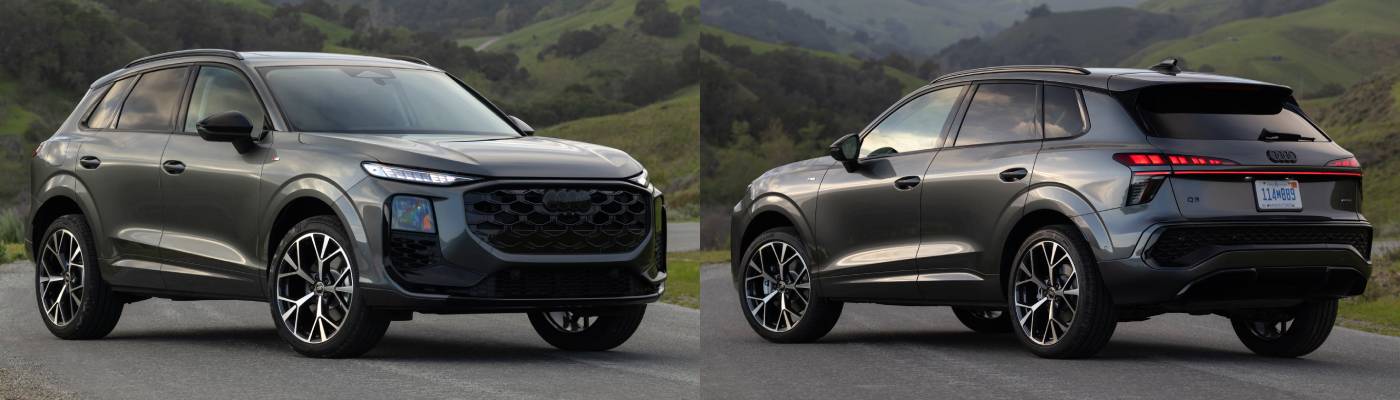
The 2026 Audi Q3 represents a significant step forward for Audi's smallest and most affordable crossover, bringing a complete redesign that addresses many of the shortcomings of its predecessor. First introduced to American buyers for the 2015 model year, the Q3 established itself as the entry point into Audi's expanding crossover lineup. A second generation arrived for 2019, bringing improved technology, a roomier cabin and more substantial styling. For 2026, the Q3 enters its third generation with fresh exterior styling, a completely redesigned interior, more powerful performance and a substantially upgraded technology package. Built on an updated version of Volkswagen Group's MQB platform, the new Q3 is approximately 1.8 inches longer than its predecessor, with a slightly longer wheelbase and greater overall width. The exterior adopts a more muscular appearance, incorporating a broad grille, sharply defined lighting elements and an illuminated rear Audi emblem. The Q3 competes in the increasingly crowded subcompact luxury crossover segment against vehicles including the Acura ADX, BMW X1, BMW X2, Lexus UX, Mercedes-Benz GLA and Volvo XC40. It is offered exclusively as a conventional four-door wagon with two rows of seating. The redesign also brings an expanded cargo area, more sophisticated cabin appointments and additional standard equipment.
Audi has simplified the 2026 Q3 lineup considerably, offering just one model in the United States: the Q3 S line quattro. Traditional Audi trim designations such as Premium, Premium Plus and Prestige are absent, replaced by a single generously equipped model that buyers can customize through several optional packages. Power comes exclusively from a turbocharged 2.0-liter four-cylinder gasoline engine producing 255 horsepower and 273 pound-feet of torque. That represents an increase of 27 horsepower and 22 pound-feet over the previous generation's most powerful engine. A new seven-speed dual-clutch automatic transmission replaces the former eight-speed conventional automatic, while Audi's quattro all-wheel-drive system is standard. The Q3 carries a maximum towing capacity of 1,500 pounds when properly equipped.
Pricing for the 2026 Audi Q3 starts at $43,700 before destination charges, with an initially published delivered price of $44,995, representing an increase of approximately $3,900 over the comparable outgoing model. However, much of the additional cost is offset by a substantially more generous standard-equipment list. Every Q3 includes leather upholstery, heated front seats, a panoramic sunroof, three-zone automatic climate control, an 11.9-inch digital instrument display, a 12.8-inch central touchscreen, wireless Apple CarPlay and Android Auto, wireless smartphone charging and LED exterior lighting. Standard safety and driver-assistance technology includes automatic emergency braking, blind-spot monitoring, lane-departure warning, adaptive cruise control, front and rear parking sensors, and traffic-sign recognition. Available upgrades include 19- and 20-inch wheels, a Black Optic exterior appearance package, a Driver Assistance package with more advanced adaptive cruise functionality and a surround-view camera system, an Infotainment package with a Sonos premium sound system, and a Technology package featuring a head-up display and OLED taillights. Notable features include the unusual steering-column-mounted transmission controls, sliding and reclining rear seats, acoustic front side-window glass, and a distinctive full-width rear lighting arrangement. There is no dedicated high-performance SQ3 or RS Q3 variant in the U.S. lineup for 2026.
ACCELERATION & PERFORMANCE
The most dramatic mechanical improvement to the 2026 Audi Q3 is found beneath the hood. Although the displacement remains at 2.0 liters, the updated turbocharged four-cylinder provides a noticeably stronger power delivery than its predecessor. With 255 horsepower and 273 pound-feet of torque, the Q3 offers more output than the standard versions of several direct competitors, including the BMW X1 xDrive28i and Mercedes-Benz GLA 250. Peak torque arrives at just 1,650 RPM, giving the engine a broad band of useful pulling power at everyday driving speeds. The result is an SUV that feels much less overworked than the previous generation, particularly when accelerating onto highways or climbing grades with passengers aboard. The engine is smooth and reasonably quiet during relaxed driving, although it develops a distinctly mechanical four-cylinder growl when pushed toward its upper rev range. That sound is not particularly sporting, but neither is it unpleasant. The Q3 is no performance SUV, yet its stronger engine makes it feel considerably more substantial than its entry-level position within the Audi lineup might suggest.
Unfortunately, Audi replaced the previous eight-speed conventional automatic with a seven-speed S tronic dual-clutch transmission, a decision that produces mixed results. When accelerating aggressively, the transmission changes gears quickly and efficiently, keeping the turbocharged engine within its productive operating range. However, the gearbox is less convincing during everyday driving. At low speeds, particularly when creeping through traffic or maneuvering into parking spaces, clutch engagement can feel abrupt. There is sometimes a noticeable pause between pressing the accelerator and receiving the expected response, followed by a sudden surge as the transmission engages and the turbocharger builds boost. Downshifts can also be slower than expected, creating an unwelcome delay when attempting a quick passing maneuver.
FUEL ECONOMY
Despite the substantial increase in horsepower, the 2026 Audi Q3 maintains respectable fuel economy for compact crossover with standard all-wheel drive. The EPA rates the Q3 at 22 MPG city, 29 MPG highway and 25 MPG combined. The Q3 is equipped with a 16.4-gallon fuel tank and, importantly, operates on regular 87-octane unleaded gasoline. That is a meaningful financial advantage over competitors such as the BMW X1 and Mercedes-Benz GLA, which specify more expensive premium gasoline. Based on its EPA highway rating and full fuel capacity, the Q3 has a theoretical highway driving range of approximately 476 miles, while the combined-cycle figure works out to about 410 miles.
Real-world fuel economy results suggest that the EPA numbers are actually somewhat pessimistic, although driving habits will make a considerable difference. Drivers who regularly encounter stop-and-go traffic, take frequent short trips or use Dynamic mode aggressively should expect consumption in the mid-20-MPG range. More relaxed suburban commuting and steady highway driving should produce results closer to the 30. Highway economy is exceptional with 35 MPG not out of the question.
ALL-WHEEL DRIVE & DRIVE MODES
Every 2026 Audi Q3 comes with Audi's quattro all-wheel-drive system, providing an important traction advantage without requiring buyers to select an additional package. Unlike the longitudinal-engine quattro systems used in some larger Audis, the Q3 employs an electronically controlled multi-plate clutch arrangement that can send power to the rear wheels as driving conditions require. During routine cruising, the system favors efficiency, but it can quickly increase rear-wheel participation when accelerating, cornering or encountering slippery pavement. This arrangement is particularly valuable on wet roads and during snowy winter driving, where distributing torque among four wheels can improve traction and stability. This particular Quattro AWD system is not suitable for severe off-road use.
Audi drive select provides different operating personalities, including Balanced, Comfort and Dynamic settings that alter throttle response, transmission behavior and steering effort. The third-generation Q3 also incorporates an Offroad Plus setting intended to optimize traction on loose or uneven surfaces. However, the Q3 should not be confused with a dedicated off-road SUV. It has no low-range transfer case, locking axle differentials, specialized off-road tires or additional ground-clearance package.
RIDE QUALITY
Audi has made substantial revisions to the Q3's suspension for 2026, with the goal of delivering a more sophisticated driving experience without compromising the agility expected of compact crossover with sporting intentions. The Q3 employs an independent MacPherson-strut front suspension and a multilink rear suspension, both tuned to provide a balance between responsive handling and everyday comfort. The Q3 uses conventional steel springs and passive dampers rather than the available adaptive suspension systems offered in some international markets. This means the suspension's fundamental firmness does not change when switching between driving modes. Instead, its basic mechanical tuning is intended to provide consistent ride control across different road surfaces. The Q3 is not especially soft or plush, but it generally feels controlled and composed, with a firm underlying character that should appeal to drivers who prefer a European approach to suspension calibration.
Wheel size is probably the most important variable for buyers concerned about ride quality. Standard 18-inch wheels are paired with relatively tall-sidewall tires that provide an additional layer of cushioning between the suspension and the pavement. Optional 19-inch wheels offer a reasonable compromise between appearance and comfort, while the available 20-inch wheels look particularly attractive but come with lower-profile tires. Those shorter sidewalls provide less cushioning over potholes and broken pavement, allowing more impact energy to reach the cabin.
Compared with the previous-generation Q3, the redesigned model feels more substantial and better controlled. Body movements are generally well managed, with less of the loosely sprung character that occasionally undermined the older vehicle's composure. At highway speeds, the new Q3 delivers reassuring stability and seldom requires steering corrections to maintain a straight course.
HANDLING & ROADHOLDING
Handling has traditionally been one of Audi's strengths, and the redesigned Q3 continues that tradition with reasonably precise steering, predictable cornering behavior and reassuring all-wheel-drive traction. Its relatively compact dimensions contribute to a nimble feel, making the vehicle easy to maneuver through crowded streets, shopping-center parking lots and winding suburban roads.
The new progressive steering system is a particularly interesting element of the redesign. Steering response becomes more direct as the wheel is turned farther from center, allowing the vehicle to negotiate sharper corners with relatively modest steering input. Around town, the steering is reasonably light, making parking and low-speed maneuvering easy. At higher speeds, it gains resistance and provides a more substantial feeling of control. Audi also allows drivers to influence steering effort through its selectable driving modes. However, heavier steering does not necessarily translate into better road feedback.
Through corners, the Q3 generally exhibits limited body lean and a predictable response to steering inputs. Its relatively low center of gravity for wagon, independent suspension and standard all-wheel-drive system work together to maintain stability during quick directional changes. The vehicle feels secure when negotiating highway entrance ramps or sweeping curves, and its suspension resists excessive pitching and rolling. The all-wheel-drive system also helps manage power delivery when accelerating out of corners, particularly on slippery surfaces. However, the Q3 is more comfortable maintaining a brisk pace than attacking corners aggressively. The front tires eventually surrender grip in a progressive, predictable manner, and the vehicle's electronic stability systems help maintain control as its limits approach.
Braking performance is another area where the new Q3 falls short of expectations. Four-wheel disc brakes provide appropriate stopping capability for normal driving, but the pedal's response can feel less progressive than expected from an Audi. There is some softness during initial application, followed by stronger braking as pedal pressure increases. In low-speed situations, this can produce slightly abrupt stops, particularly when combined with the transmission's occasionally uneven engagement.
INTERIOR NOISE LEVELS
The redesigned Audi Q3 takes a meaningful step toward delivering the quiet, isolated cabin expected from a luxury vehicle. Audi incorporates acoustic front side-window glass as standard equipment, reducing the transmission of wind and traffic noise into the passenger compartment. Improved body construction, additional insulation and revised exterior aerodynamics also contribute to its more refined character. At typical suburban speeds, the cabin feels well insulated from surrounding traffic, and the engine remains relatively subdued when operating under light loads. On smooth highways, wind noise is generally well controlled, with little disturbance around the mirrors or windshield. The Q3's solid body structure also helps minimize the squeaks and rattles that can make a vehicle feel less expensive than its badge suggests.
INTERIOR DESIGN & MATERIALS
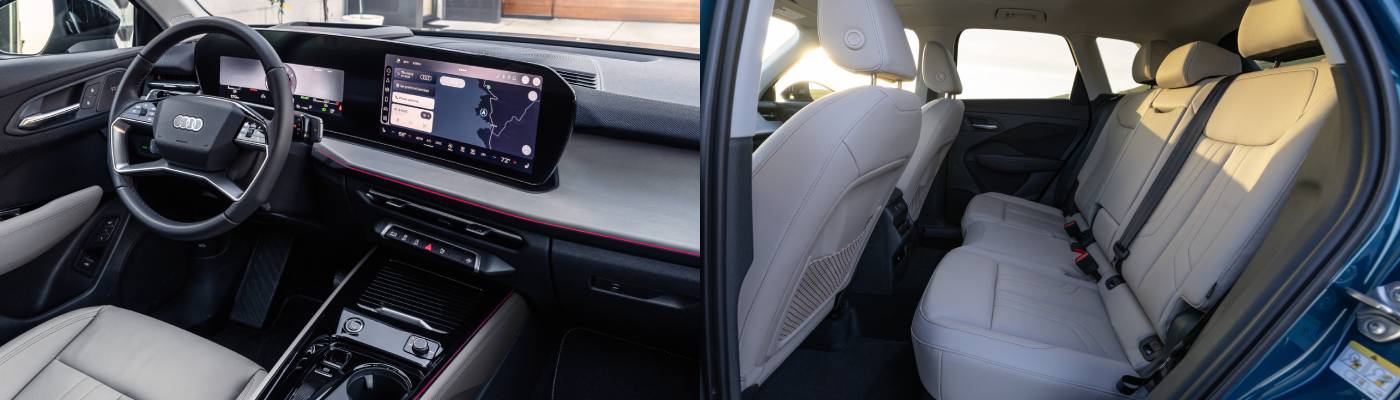
Step inside the 2026 Audi Q3, and the extent of the redesign becomes immediately apparent. The previous model featured a relatively straightforward dashboard with separate instrument and infotainment displays, conventional controls and a somewhat conservative overall appearance. The new cabin adopts Audi's latest digital design philosophy, centered around a broad, gently curved display panel that combines the instrument cluster and central infotainment screen. The arrangement creates a striking visual centerpiece, while the surrounding dashboard has a cleaner, more horizontal appearance. The central touchscreen is angled slightly toward the driver, and the air vents are integrated into the dashboard in a manner that emphasizes its width. The result is an interior that looks considerably more expensive and technologically sophisticated than its predecessor.
Material quality is generally impressive for an entry-level luxury vehicle. Leather upholstery is standard, rather than an expensive upgrade, and Audi offers several interior color combinations that allow buyers to choose between a traditional dark appearance and lighter, more contemporary surroundings. Genuine wood trim stretches across a substantial portion of the dashboard, providing a welcome natural contrast to the surrounding displays and metallic accents. Soft-touch surfaces are used in many areas frequently contacted by occupants, and the stitching and assembly quality are generally convincing. Decorative fabric inserts contribute to the cabin's modern appearance, while available ambient lighting enhances its presentation after dark.
INTERIOR FUNCTIONALUTY & CONTROLS
Audi has relocated the transmission selector from the center console to a compact control assembly mounted behind the steering wheel. This frees up valuable space between the front seats, allowing Audi to provide additional storage, conveniently positioned cupholders and a dedicated wireless smartphone charging area. The arrangement also places the transmission controls close to the steering wheel, reducing the distance drivers must reach when shifting between Drive and Reverse. However, the new control assembly takes some familiarization. Instead of conventional steering-column stalks, Audi uses a fixed arrangement incorporating the gear selector, turn signals, windshield-wiper controls and other functions. The turn signals operate through a compact lever, while the wipers are controlled through a separate rotating mechanism. Drivers familiar with traditional stalks may initially reach for controls that are no longer present or inadvertently operate the wrong function. The new setup is innovative, but whether it represents an actual improvement over conventional controls will depend heavily on individual preferences. 
The infotainment system is more successful. Audi's latest MMI interface is based on Android Automotive technology, providing modern graphics, quick responses and a relatively logical menu structure. The 12.8-inch touchscreen uses large on-screen controls and configurable layouts, allowing drivers to arrange frequently used functions according to their preferences. The 11.9-inch instrument display is also configurable, presenting traditional gauges, navigation information and driver-assistance graphics. Built-in navigation can appear directly ahead of the driver, reducing the need to glance toward the center of the dashboard. Wireless Apple CarPlay and Android Auto provide familiar alternatives for smartphone users, while Audi's voice assistant allows selected vehicle and infotainment functions to be operated through spoken commands.
Climate-control functionality represents a compromise. Rather than providing a full set of physical switches and knobs, Audi integrates many temperature and ventilation functions into the touchscreen. Fortunately, some climate controls occupy a permanent area of the display, and the system responds promptly to inputs. Nevertheless, changing fan speeds or navigating more advanced climate settings still requires visual attention that a conventional rotary knob would not demand.
TECHNOLOGY & SAFETY FEATURES
Technology is one of the strongest selling points of the 2026 Audi Q3. Every model includes the expansive digital display arrangement, modern MMI infotainment system, wireless smartphone integration and wireless charging. The 11.9-inch virtual cockpit offers multiple information layouts, including conventional speed and engine-speed gauges, detailed navigation maps and driver-assistance information. The 12.8-inch central touchscreen provides access to entertainment, navigation, phone connectivity, climate functions and vehicle settings. The system's Android Automotive foundation supports built-in applications and connected services, while the available voice assistant provides a more natural way to interact with certain vehicle functions.
The available 12-speaker Sonos premium sound system with 420 watts of amplification is a gem in the class, providing amazing sound clarity. The available Technology package adds a head-up display that projects important vehicle information onto the windshield, along with OLED taillights featuring distinctive lighting signatures.
Standard safety equipment is extensive. The Q3 includes forward collision warning with automatic emergency braking, pedestrian detection, lane-departure warning, blind-spot monitoring, rear cross-traffic warning, front cross-traffic assistance, adaptive cruise control, a rearview camera and front and rear parking sensors. Traffic-sign recognition can display posted speed limits within the digital instrument cluster, while a driver-attention monitoring system looks for signs of fatigue or distraction. The vehicle also includes multiple airbags, stability control, traction control and four-wheel antilock brakes. The availability of these systems without purchasing an expensive upper-level trim strengthens the Q3's value proposition, particularly for families and commuters who prioritize everyday accident avoidance.
The Driver Assistance package is arguably the most useful optional upgrade. It adds adaptive cruise assist with lane-centering functionality, assisted lane changes, a surround-view camera system, a heated steering wheel and Park Assist Plus.
PASSENGER SEATING & COMFORT
The 2026 Audi Q3 offers seating for five passengers in a conventional two-row configuration. There is no third-row option, and the vehicle's relatively compact dimensions make it better suited to four adults than five. The front seating area is spacious enough for most drivers, with approximately 40.0 inches of legroom, 38.1 inches of headroom and 56.7 inches of shoulder room. The driver's seat provides extensive adjustments, making it relatively easy to find a comfortable position for occupants of different heights. The steering wheel offers both tilt and telescoping adjustment, while the raised seating position provides a commanding view of the road without requiring occupants to climb excessively high to enter the vehicle. Front-seat comfort is generally good, although the seats place greater emphasis on accessibility and long-distance support than aggressive lateral bolstering.
The second row offers approximately 36.1 inches of legroom, 37.6 inches of headroom and 55.1 inches of shoulder room. These measurements are competitive within the subcompact luxury SUV segment, although larger vehicles such as the BMW X1 and Acura ADX provide somewhat greater legroom. Two average-sized adults should find the rear seat reasonably comfortable, particularly with the front seats positioned at moderate distances from the dashboard. Taller passengers may encounter limited knee room when sitting behind an equally tall driver, while rear headroom can feel restrictive for occupants approaching six feet in height. The center seating position is considerably less accommodating because of its narrower cushion, the raised center floor area and the presence of the rear climate-control console.
One of the Q3's most useful features is its sliding and reclining second-row bench. Unlike many competitors that offer a fixed rear-seat position, the Audi allows owners to trade some rear passenger legroom for additional cargo capacity. Moving the seats rearward creates a more generous seating environment, while sliding them forward expands the luggage compartment. The adjustable backrests also allow rear passengers to select a more relaxed seating angle, improving comfort on longer journeys. The 40/20/40 split-folding arrangement provides additional versatility, allowing the narrow center section to fold independently for long items such as skis while retaining seating for two rear passengers. This combination of sliding, reclining and individually folding sections is a particularly valuable feature in a relatively small SUV.
Entry and exit are straightforward thanks to the Q3's relatively upright body design and moderately elevated seating position. The front doors provide a generous opening, and passengers do not have to climb up into the cabin or lower themselves excessively far into the seats. Rear access is also reasonable, although the shorter rear-door opening and relatively limited foot space require more attention when entering or exiting. Rear passengers also benefit from dedicated climate controls, ventilation outlets, charging ports and a folding center armrest. Overall, the Q3 offers a comfortable and flexible passenger environment, but buyers who regularly transport four tall adults may be better served by a larger crossover.
CARGO CAPACITY & INTERIOR STORAGE
The redesigned Q3 provides a useful improvement in cargo capacity without sacrificing its compact exterior dimensions. With the second-row seats positioned for passenger comfort, the rear cargo area provides approximately 25 cubic feet of space. Sliding the rear seats forward expands that figure to roughly 29 cubic feet, giving owners the flexibility to prioritize passenger accommodation or luggage capacity depending on the situation. Folding the second-row seats increases maximum cargo volume to approximately 50 cubic feet. These measurements represent an improvement over the outgoing Q3, particularly when the rear seats are moved forward to maximize luggage room. The rear cargo floor is also height adjustable, providing either a completely flat load floor with the rear seats folded or a couple inches more height but a slightly uneven load floor.
Interior small-item storage is generally well thought out. Moving the transmission selector away from the center console allows Audi to create a more open storage arrangement between the front seats, including two cupholders, a wireless charging area and a covered center storage compartment. The front doors provide useful pockets for beverages and smaller belongings, while the glove compartment accommodates typical personal items. Rear passengers have access to door pockets, seatback storage and a folding center armrest with cupholders. Although the Q3 does not have the numerous hidden storage compartments found in some larger crossovers.
BOTTOM LINE
The completely redesigned 2026 Audi Q3 is a much more convincing entry-level luxury crossoer than its predecessor, combining contemporary styling, strong acceleration, a sophisticated interior and an unusually generous list of standard features. Its turbocharged four-cylinder provides performance that ranks among the stronger offerings in the class, and standard quattro all-wheel drive gives the vehicle the year-round traction that many buyers expect from an Audi. The modern digital cockpit, leather upholstery, panoramic sunroof and comprehensive safety equipment help justify the higher starting price, while the sliding rear seats make the compact cabin more versatile than its exterior dimensions initially suggest. The Q3 also benefits from an impressive balance of everyday practicality and premium presentation, along with the ability to use regular gasoline. However, there are meaningful compromises. The new dual-clutch transmission is not always smooth during low-speed operation, fuel economy trails several direct competitors, and the suspension can feel busy over rough pavement, especially with the optional 20-inch wheels.
For buyers shopping the 2026 Q3, the decision is less about choosing a trim level and more about selecting the right optional equipment. Because every Q3 comes in S line quattro configuration, the standard model already provides most of the comfort, performance and convenience features that buyers are likely to want. The most worthwhile upgrade is the Driver Assistance package, which adds enhanced adaptive cruise functionality, a heated steering wheel, surround-view cameras and automated parking assistance for a relatively modest additional investment. The optional Infotainment package is worth considering for buyers who prioritize upgraded audio and more powerful device charging, but the Technology package's head-up display and OLED taillights are less essential. Likewise, the standard 18-inch wheels are probably the smartest choice for owners who value ride comfort and lower replacement-tire costs over appearance. Choosing the Q3 S line quattro with the Driver Assistance package creates a well-equipped luxury crossover with an as-equipped starting price in the mid-$46,000 range before additional cosmetic options and applicable fees.