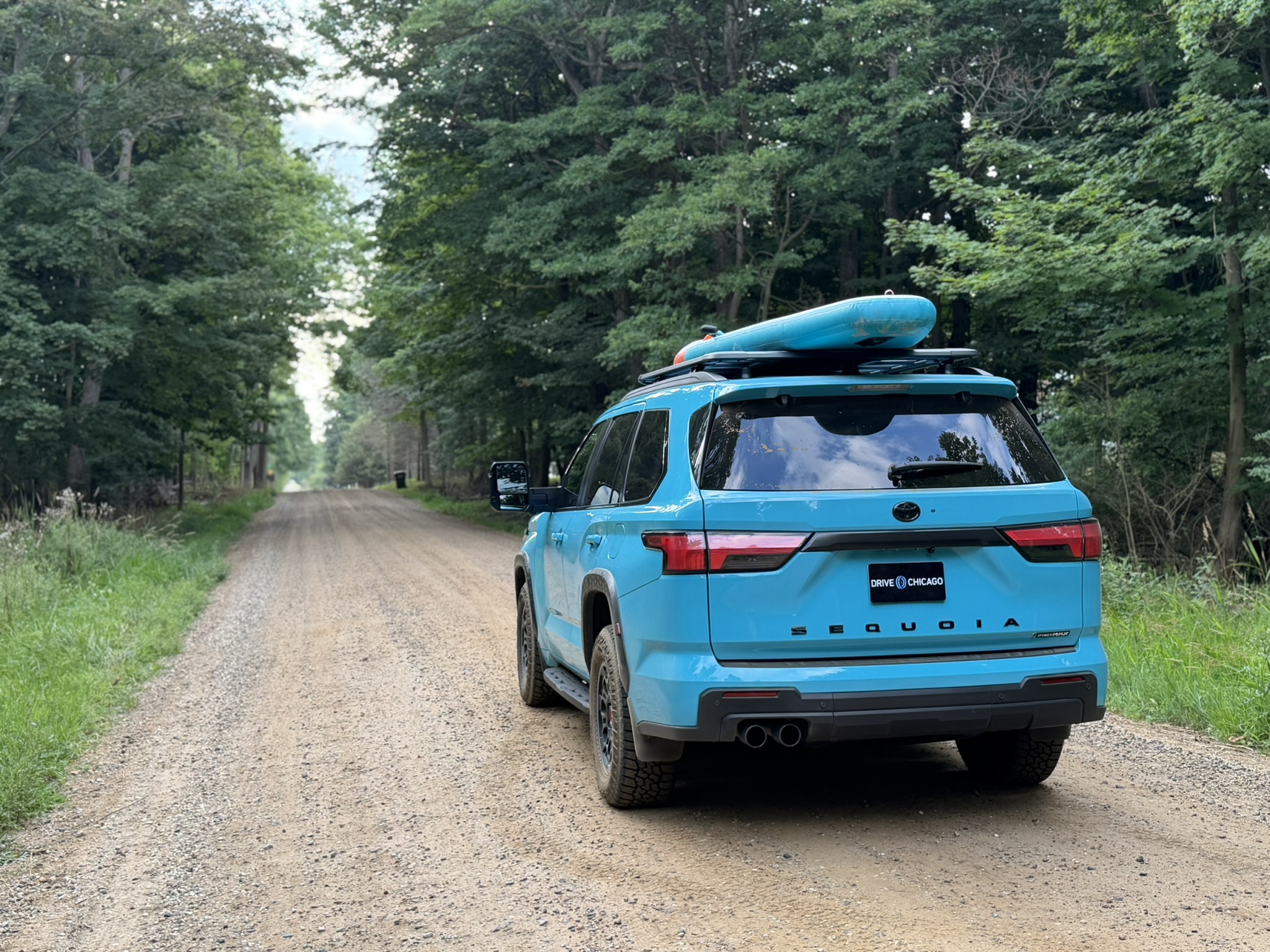
2026 Toyota Sequoia
Big, but is it big enough?
Test Vehicle: 2026 Toyota Sequoia TRD Pro
Powertrain: i-FORCE MAX Twin-Turbo V6 Hybrid
Exterior Color: Wave Maker Blue
Interior Color: Black
Notable Options: Power Extending Tow Mirrors ($290), Paint ($695), Power Tilt/Slide Panoramic Roof ($500), Tow Tech Package ($850), Ball Mount ($87), Wheel Locks ($105), TRD Performance Air Filters ($135)
Price as tested: $86,322 (with destination charge)
Pros: Powerful Hybrid, Off-Road Capability, Towing Capacity, Easy-to-use Technology, Fuel Economy (Compared to Other Large SUVS)
Cons: Minimal Cargo Space, Tight 3rd Row, Expensive
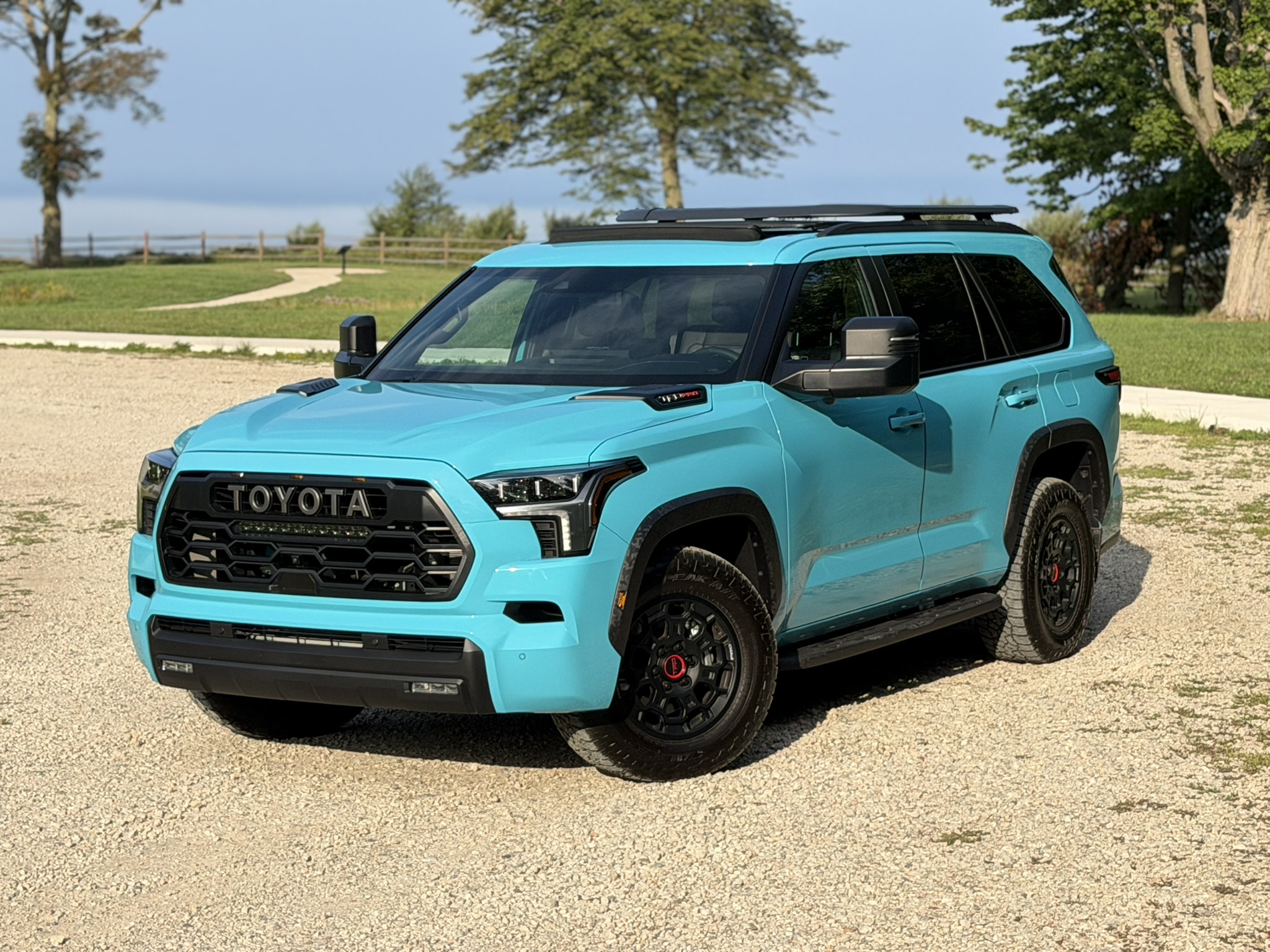
The Toyota Sequoia is a full-size, body-on-frame SUV that has been on the market since 2001. It has seen just three generations with the current one launching in 2023. For 2026 it is available in six grades known as SR5, Limited, Platinum, TRD Pro, 1794 Edition, and Capstone. The Sequoia gets relatively modest changes for 2026. The TRD Pro adds Wave Maker, a bright blue exterior color that gives the off-road model an especially distinctive appearance. Toyota also upgrades the top-level Capstone's interior with new Shale premium textured leather-trimmed seating, while Limited models transition to leather-trimmed seats.
The basic formula remains unchanged, every Sequoia continues to use Toyota's i-FORCE MAX hybrid powertrain, while the TRD Pro retains the hardware that makes it the most trail-focused version of the SUV. Under the hood is Toyota's i-FORCE MAX twin-turbocharged 3.4-liter V6 hybrid, producing 437 horsepower and 583 lb.-ft. of torque. A 10-speed automatic transmission sends power to all four wheels. Maximum towing capacity is 9,500 pounds depending on the configuration. The SR5 and Limited can be ordered with either 2WD or part-time 4WD. The Platinum, 1794 Edition, TRD Pro and Capstone come standard with part-time 4WD.
Prices for the 2026 Sequoia start at $65,725 for the SR5 RWD or $70,920 for the 4WD model. At the other end of the spectrum is the Capstone luxury grade which starts at $86,135 and can easily top $90k with a few options. Competitors include the Chevrolet Tahoe, Ford Expedition, Nissan Armada, GMC Yukon, and Jeep Wagoneer. I spent time in the off-road ready TRD Pro model that checked in at $86,322. I took it on a family road trip and here’s how it fared…
Exterior Styling:
The Sequoia is a good-looking SUV with solid proportions that give it a balanced look. It has a truck-based appearance with a front end that is similar to the Tundra. The front end is probably the Sequoia's most distinctive styling element. The large grille dominates the nose, while slim LED headlights sit higher and farther toward the outside edges. The design gives the Sequoia a wide, planted appearance. On the TRD Pro, the look becomes considerably more aggressive. It gets a black "TOYOTA" heritage grille with an integrated LED light bar and amber marker lights, giving the SUV a clear connection to Toyota's off-road trucks. The TRD Pro also gets a more rugged lower front fascia and skid-plate treatment, visually communicating that this Sequoia is designed to leave the pavement.
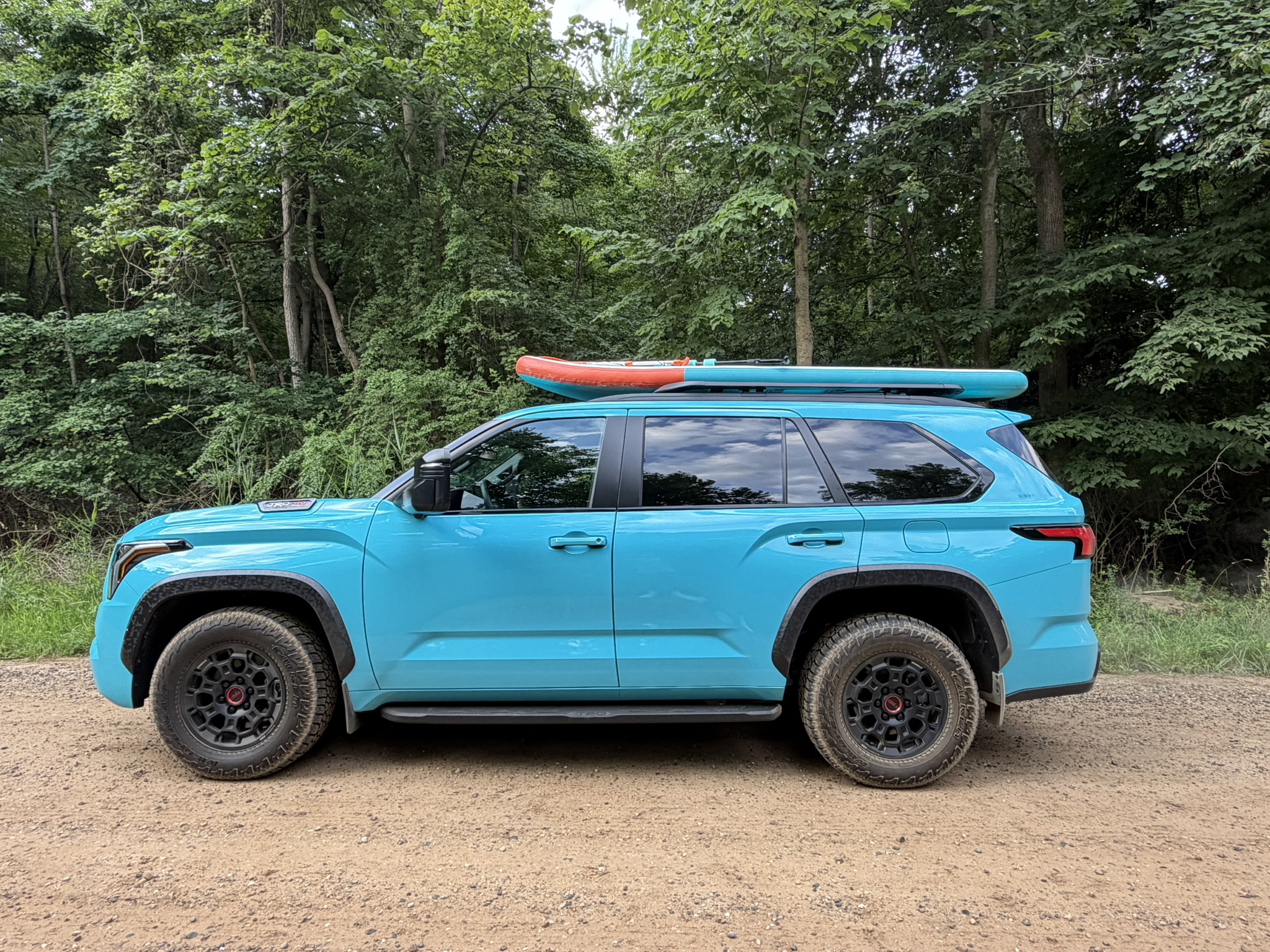
From the side, the Sequoia's size becomes obvious. It has a long hood, relatively upright windshield and a tall, squared-off body. The large wheel openings and pronounced lower body cladding reinforce its tough character. It resembles a larger silhouette of other Toyota SUVs such as the 4Runner and even the new RAV4. Wheel sizes and tires vary with each grade. SR5 models ride on 18” silver alloys and at the other end the Capstone rides on 22” dark chrome/machine finished alloys. In the middle are variations of 18 - 20” wheels to round out the lineup and fill the wheel arches.
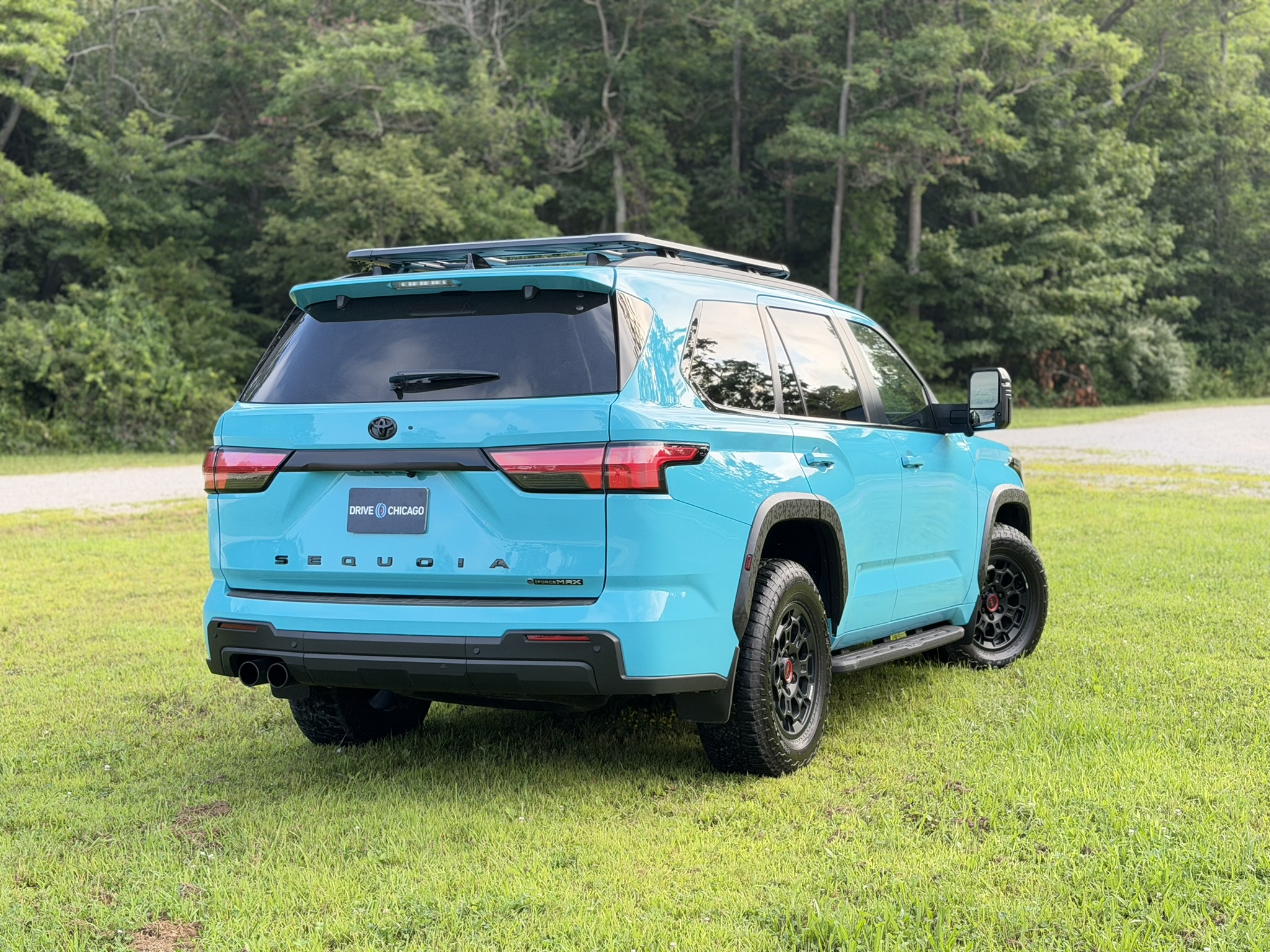
Around back, the rear follows the same squared-off theme as the rest of the vehicle. The LED taillights are relatively narrow and wrap around the rear corners, while the broad liftgate and bumper emphasize the Sequoia's width. Overall, it’s a distinct look that separates it from the competition. The Sequoia looks every bit like a full-size Toyota SUV should; big, bold and unmistakably rugged.
TRD PRO:
The first thing of note on my test TRD Pro model was the Wave Maker blue paint, a TRD Pro exclusive color for 2026. It was bright, bold, and never lost in the parking lot. I received several comments on it with more people liking it than disliking it. Every year Toyota introduces a color adding some exclusivity to TRD Pro models. 2027 will be a Honeycomb golden yellow color for the Sequoia.
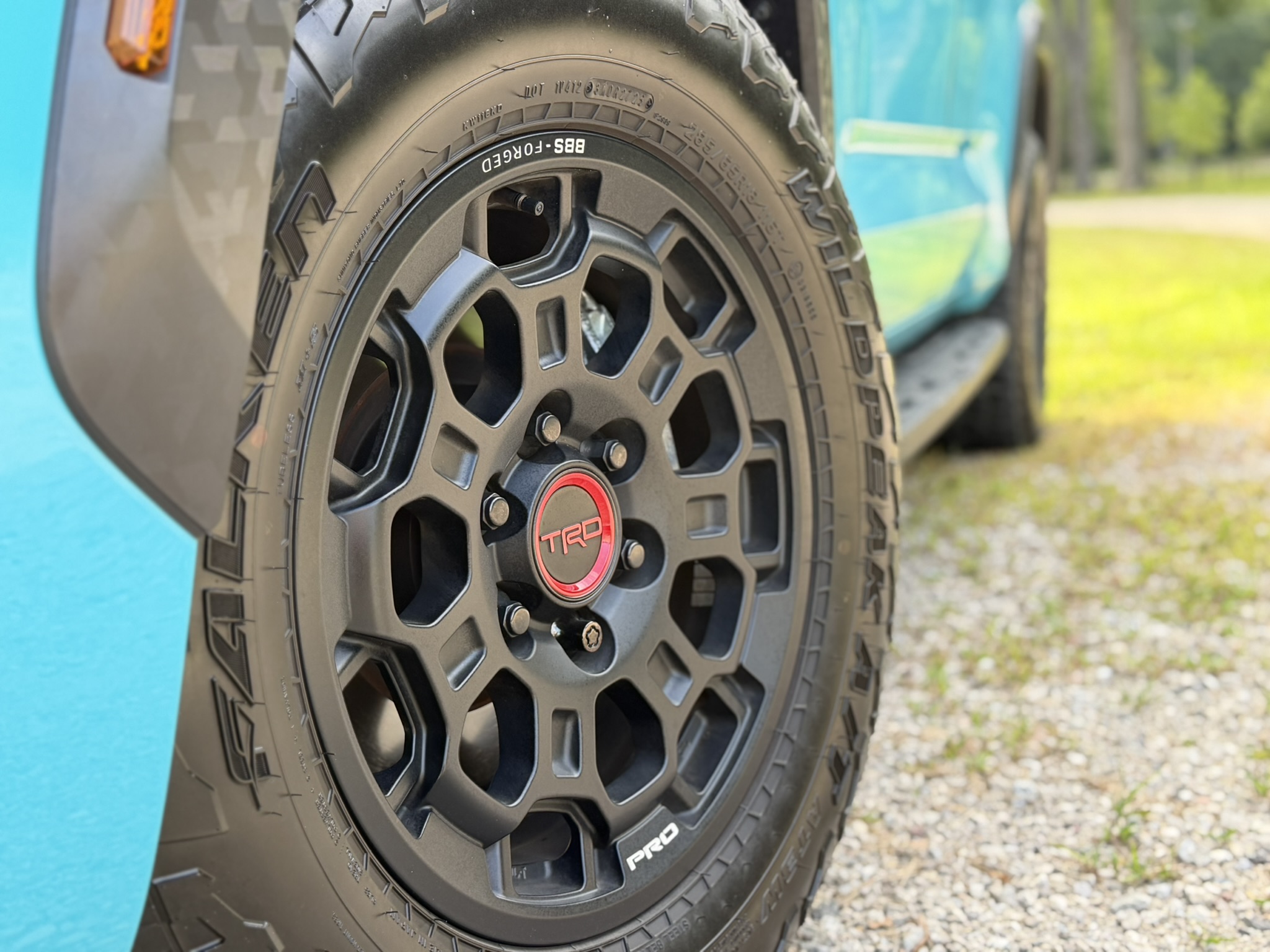
Colors aside, the TRD Pro is the most off-road focused version of the Sequoia. It gets a dedicated TRD suspension, four-wheel drive and trail-oriented hardware. A locking rear differential, Multi-Terrain Select and Crawl Control enhance its off-road capability, while FOX internal-bypass shocks, an aluminum front skid plate and 18-inch matte-black forged BBS wheels with all-terrain tires give the TRD Pro a more aggressive stance and improved performance on rough terrain. While I didn’t take this specific vehicle off-road during my time with it, i have taken the Sequoia TRD Pro through some rough off-road obstacles at the Texas Auto Writers Truck Rodeo and was impressed specifically with how smooth the crawl control system works. It effortlessly traversed muddy hills, rocks, and a water pit. It’s big, but highly capable.
The TRD Pro also stands out visually with a black Toyota heritage grille, integrated LED light bar, amber marker lights, TRD Pro badging and dual-tip exhaust. Inside, it combines its rugged character with plenty of technology, including a 14-inch multimedia touchscreen, 12.3-inch digital gauge cluster, wireless Apple CarPlay and Android Auto, JBL premium audio, heated and ventilated front seats and a Multi-Terrain Monitor.
Powertrain:
Propulsion for the 2026 Sequoia comes courtesy of Toyota’s twin-turbo 3.4-liter V6 i-FORCE MAX hybrid setup, mated to a 10-speed automatic gearbox. Total output stands at 437 horsepower and 583 lb.-ft. of torque, delivering maximum grunt down low at merely 2,400 rpm. This provides swift off-the-line thrust and authoritative highway merging ability for such a substantial SUV. Performance testing reveals impressive quickness, generating 0-to-60-mph times ranging from about 5.6 to 6.2 seconds based on the trim level.
Beyond swift straight-line speed, this setup delivers serious utility. Standard two-wheel drive powers entry grades, though four-wheel drive remains available or standard across the range. Notably, the TRD Pro comes standard with 4WD. Merging immediate electric assist with twin-turbo punch makes this big rig ideal for pulling heavy loads, topping out at a 9,520 pounds trailering limit depending on setup. Ultimately, the i-FORCE MAX package provides the vehicle with traditional full-size muscle while leveraging modern electrification to boost both drivability and fuel savings.
Ride / Handling:
The Sequoia delivers the confident, substantial road manners you expect from a full-size, body-on-frame SUV, although its truck-based character is noticeable. The standard suspension does a good job absorbing bumps and keeping the cabin comfortable, and it feels particularly composed and stable on the highway. Its tall, wide body does produce noticeable body lean in corners, while the light steering and large turning circle can make maneuvering in tight spaces challenging.
The TRD Pro trades some on-road refinement for substantially greater off-road capability. Its TRD-tuned suspension uses 2.5-inch FOX internal-bypass coil-overs up front and remote-reservoir shocks in the rear, helping the Sequoia absorb ruts, rocks and rough terrain while maintaining control of its considerable weight. On pavement, however, the TRD Pro's suspension is firmer and noisier, particularly with its aggressive all-terrain tires. In other words, the TRD Pro is happiest when the road gets rough. Its suspension setup is designed to provide control and durability off-road rather than the plushest possible highway ride. That said, on my drive up to Michigan in the TRD Pro, we found the ride to be more than sufficient on the highway. While the off-road tires and TRD exhaust added a bit more noise, it was a sound I didn’t mind.
Fuel Economy:
When it arrived with a full 22.5-gallon tank, it offered a driving range of approximately 450 miles. For the TRD Pro specifically, the EPA estimated 19/22/20 mpg city/highway/combined rating is respectable considering its 437-horsepower hybrid powertrain, four-wheel drive, larger all-terrain tires and off-road suspension. The hybrid system gives the Sequoia an efficiency advantage over many conventional full-size SUVs, but it’s not ground-breaking at the end of the day. Overall, though, I thought it did well for our trip north. With primarily highway driving, I averaged about 21 MPG.
Interior:
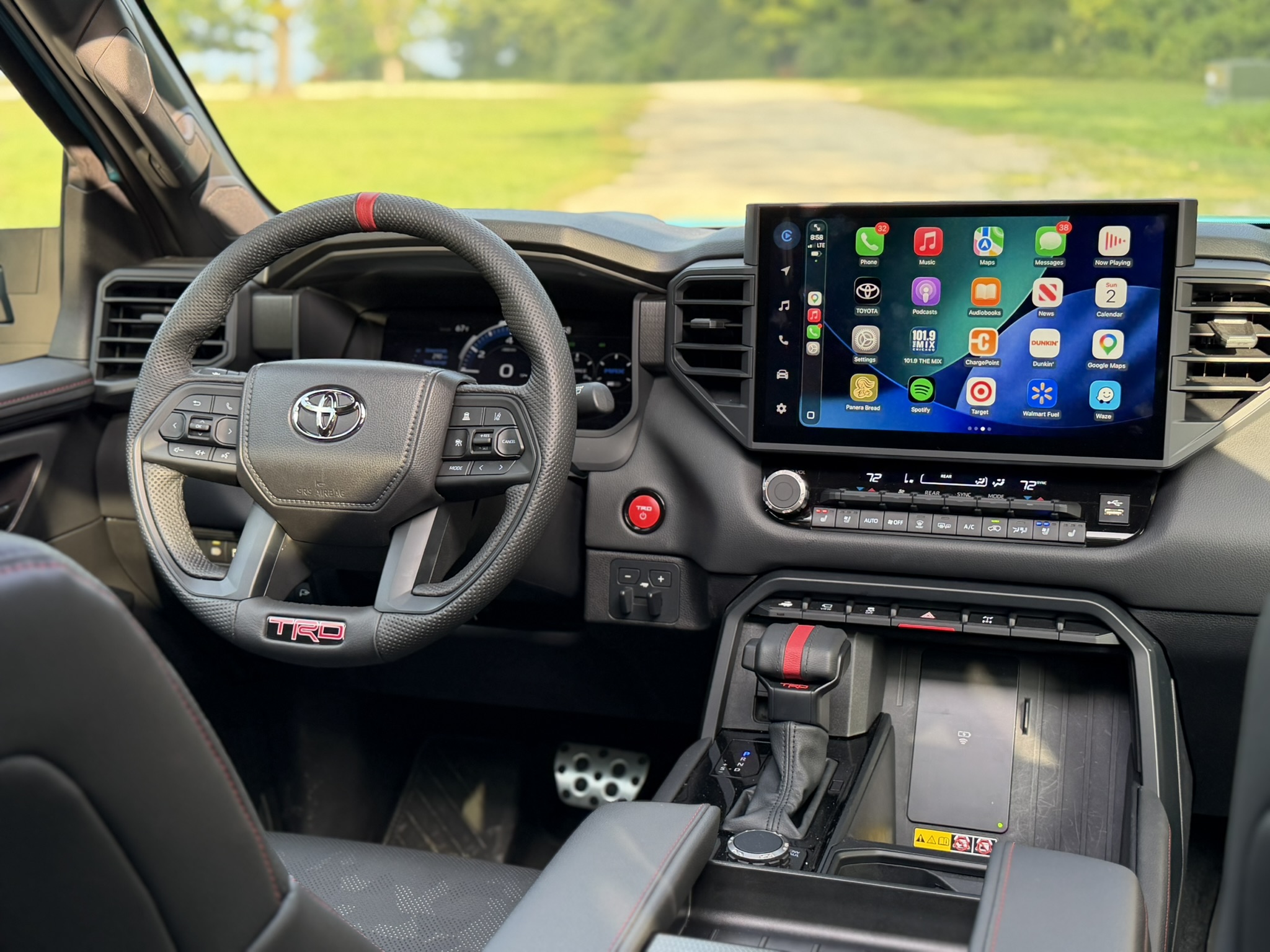
Hopping inside, the Sequoia has a spacious and comfortable front two rows, with a well-organized cabin that blends rugged SUV functionality with increasingly upscale touches. The dashboard has a substantial, truck-like design, while the large center touchscreen and 12.3-inch digital gauge cluster give the cabin a modern feel. Physical controls remain for the climate system, which makes frequently used functions easy to operate. There is a traditional gear selector in the center console adjacent to a wireless phone charger that is well-placed. Toyota uses soft-touch materials across the instrument panel, center console and door surfaces, while higher trims add leather, wood-grain accents and other premium touches. The center console is also home to a large storage compartment which came in handy for our road trip.
A moonroof is standard on the TRD Pro, specifically a power tilt-and-slide moonroof with a sliding sunshade. A larger panoramic roof with a power sunshade is also available on the TRD Pro, giving buyers the option of opening up considerably more of the cabin to natural light. My test model had an upgraded panoramic roof for $500 which I highly recommend if you like the natural light and extra fresh air. The panoramic roof is standard on the Platinum, 1794 Edition and Capstone.
Seating:
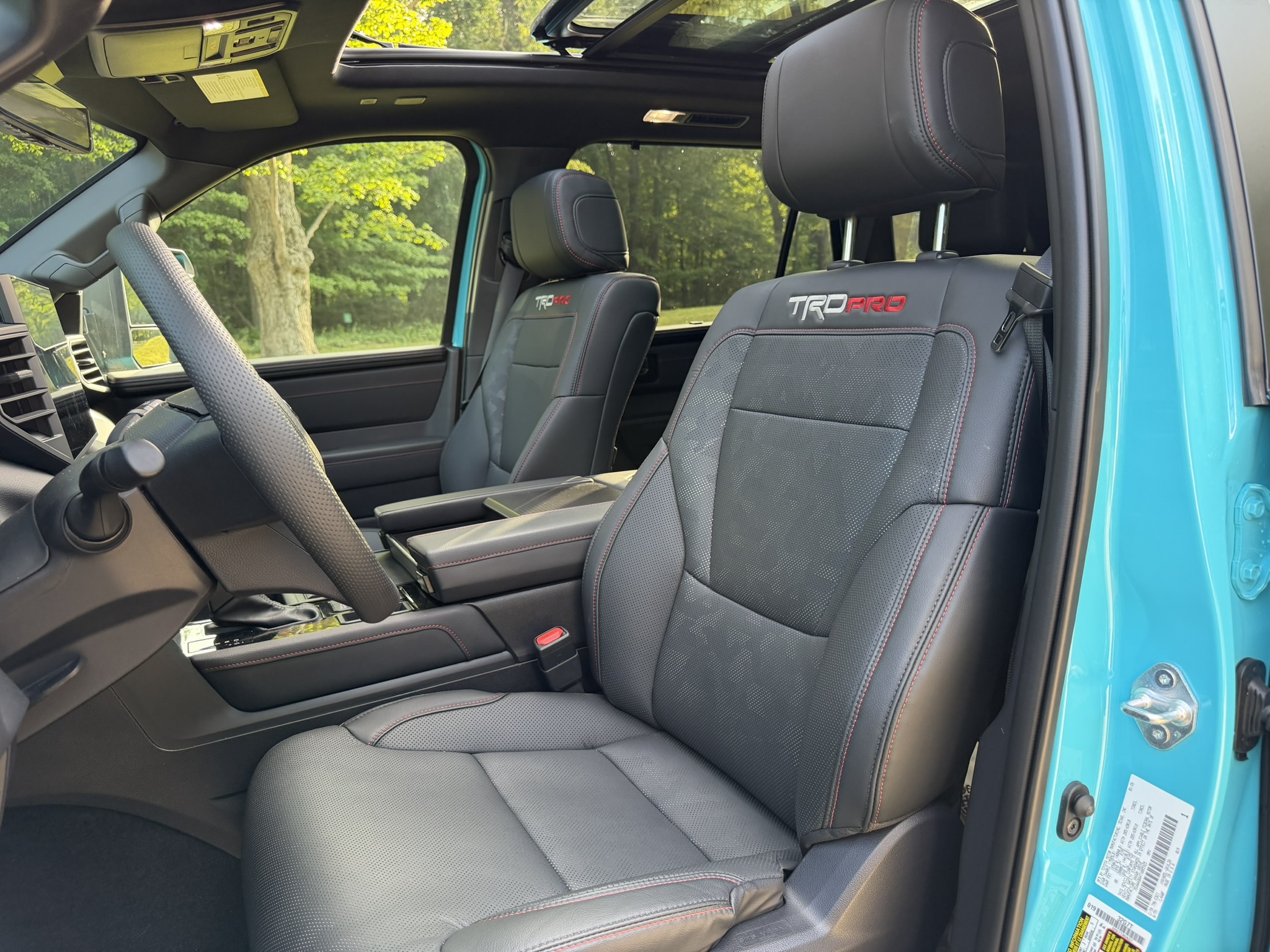
The Sequoia offers seating for up to eight, with a standard second-row bench on the SR5 and available captain's chairs that reduce capacity to seven. Seating materials vary considerably by trim, from fabric on the SR5 to leather-trimmed upholstery on higher grades. Up front and in the middle row, the Sequoia offers excellent comfort. Driver and front passenger seats are supportive for long stretches behind the wheel, while available second-row captain's chairs grant passengers’ ample legroom, recline adjustments, and dedicated armrests.
However, the third row represents a noticeable trade-off. Because of the elevated floor layout, foot and knee space feel somewhat constrained compared to rival full-size SUVs. Toyota does offer six inches of sliding adjustment to yield up to roughly 35 inches of legroom, though pushing the seats back eats into precious rear storage. While taller passengers might feel squeezed back there, kids and smaller adults ought to manage fine on brief drives. For our road trip, we sent the 10-year-old to the third row who generally didn’t complain too much. He did acknowledge that the space in the 3rd row of the Sequoia was much tighter than the space in our 2027 Kia Telluride.
Also worth noting that the TRD Pro takes a different approach inside, emphasizing an adventurous, outdoors-oriented vibe rather than luxury. It features black SofTex-trimmed seats with contrast stitching and technical-camo-pattern inserts, aluminum sport pedals, TRD badging and all-weather floor mats. The front seats are heated and ventilated, while second-row captain's chairs did provide a more open feel between the two seats.
Technology:
Tech is strong in the new Sequoia and it’s easy to use. The driver will face a 12.3-inch digital gauge cluster across the lineup, providing customizable information and making it feel considerably more modern than its truck-based construction might suggest. Higher trims add features such as a 10-inch head-up display and digital rearview mirror, while the TRD Pro benefits from a Multi-Terrain Monitor that provides front, rear and side camera views to help the driver spot obstacles when off-roading.
The SR5 comes with an 8” touchscreen display, while Limited and higher trims, including the TRD Pro, upgrade to a large 14” display. Wireless Apple CarPlay and Android Auto are standard, along with Bluetooth connectivity, USB-A and USB-C ports, and SiriusXM capability. Toyota’s available Drive Connect service adds cloud-based navigation, real-time points-of-interest information and the “Hey Toyota” Intelligent Assistant, allowing drivers to control navigation, audio and certain vehicle functions using voice commands. A 14-speaker JBL premium audio system is also available and standard on several upper trims.
Cargo Space:
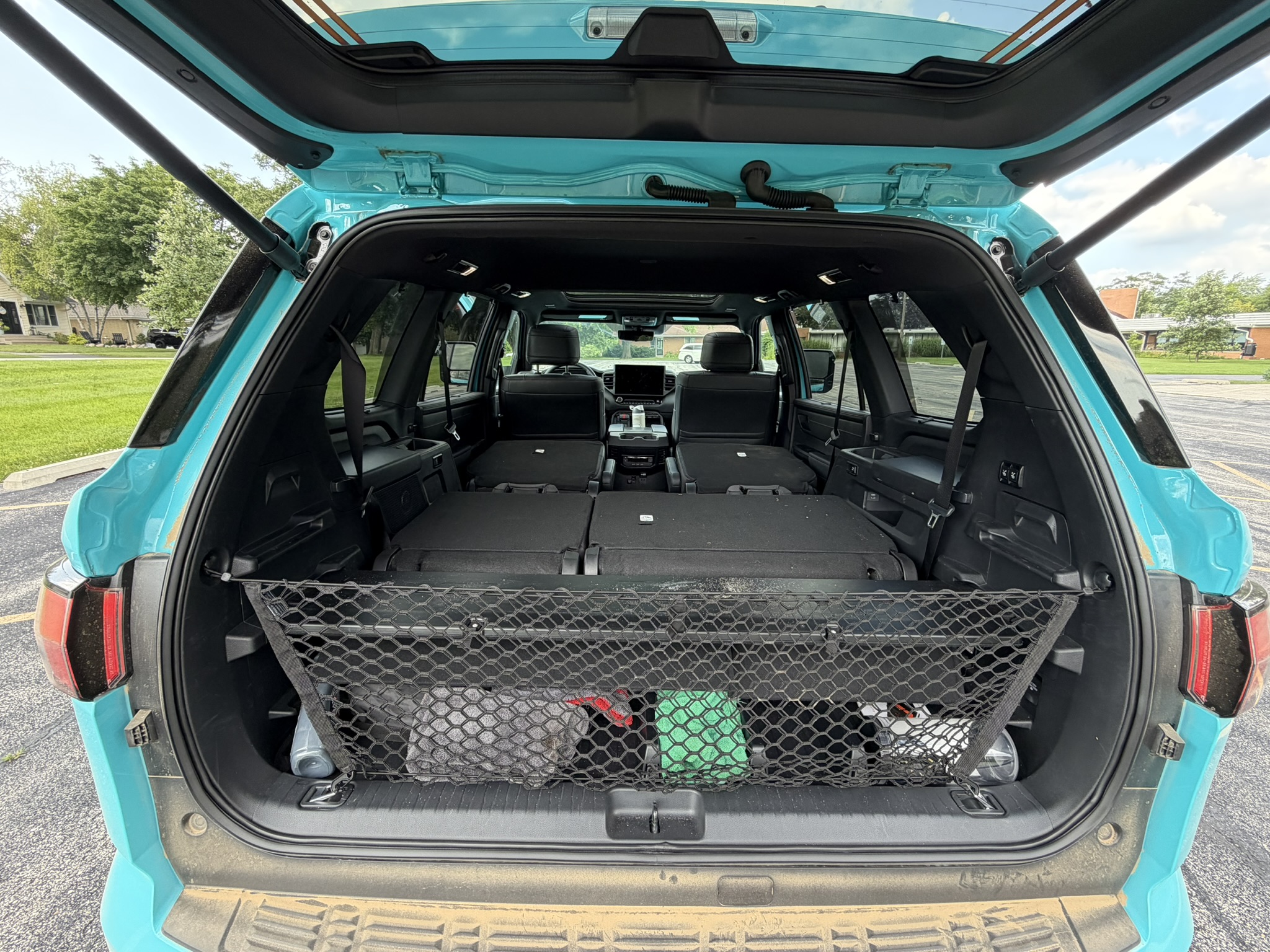
My biggest issue with the Sequoia is the cargo space. For such a large presence of a vehicle, the cargo room is minimal. I, however, anticipated this for our road trip and added a cargo bag to the roof rack to hold most of our things for the drive. Toyota does give it a sliding third row that can move forward or backward to balance passenger room and cargo capacity. With the third row in its most rearward position, there's only 11.5 cubic feet of space behind it; sliding the third row forward increases that area to about 22.3 cubic feet but would crunch my 10 year old’s legs. Fold the third row down and cargo capacity grows to 49 cubic feet, while folding all of the rear seats provides a maximum of 86.9 cubic feet.
Toyota does attempt to add some versatility with a multi-level adjustable cargo shelf system which we did put to use. It allowed for levels and stacking as needed. Also available for 2026, the third row can be power folded from the touch of a button in the back. The hybrid battery is located beneath the cargo floor, which contributes to the raised load floor and prevents the third row from folding completely flat. That can make carrying tall or bulky objects more difficult than in some competitors. This is definitely an area that Toyota could stand to improve for the Sequoia, especially for families that need to use the third row regularly. For perspective, a Chevrolet Tahoe offers 25.5 cubic feet behind its third row and 122.7 cubic feet with the rear seats folded.
Safety / Driver Assist Features:
The 2026 Toyota Sequoia comes standard with Toyota Safety Sense 2.5, so buyers don't have to move up to an expensive trim or package to get the core driver-assistance technology. The system includes features such as:
- Pre-Collision System with Pedestrian Detection
- Full-Speed Range Dynamic Radar Cruise Control
- Lane Departure Alert with Steering Assist
- Lane Tracing Assist
- Road Sign Assist
- Automatic High Beams
The Sequoia also benefits from Emergency Steering Assist as part of the enhanced Pre-Collision System, designed to help stabilize emergency steering maneuvers around certain detected obstacles and help prevent unintended lane departure.
Final Statement:
The Sequoia has been the best option for anyone looking for a full-size body-on-frame SUV from Toyota for a while. It is highly capable on and off the road, has impressive towing capability, and has been updated with all the necessities. Even with the i-FORCE MAX hybrid, it’s still not the most efficient, but it’s definitely better than it used to be. The interior is comfortable and technology friendly. The Sequoia does struggle in terms of cargo space, especially if you need to use all three rows. There is an opportunity for Toyota to build a Sequoia XL to better compete with vehicles like the Suburban or Expedition. In the meantime, this is as big as it gets for Toyota and it is still worthy of consideration.