2026 Lexus ES
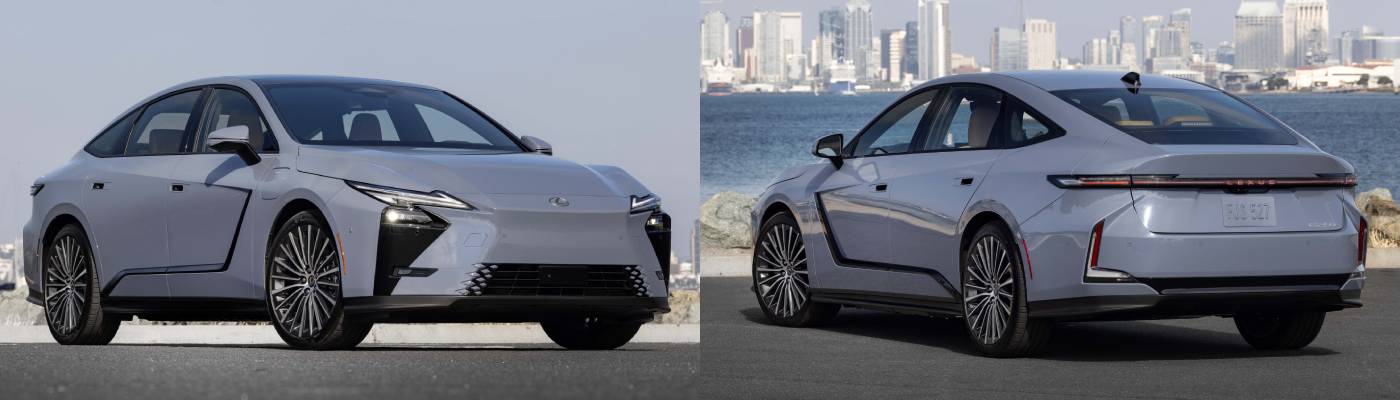
Blending serene luxury with modern electrification, the new ES redefines comfort for the midsize premium sedan class.
The Lexus ES has been a cornerstone of the brand’s U.S. lineup since its debut in 1989, serving as the Lexus’s volume midsize luxury sedan. For 2026, the ES enters a new era with a full redesign and a broadened powertrain strategy that includes both hybrid and fully electric models. The sedan remains a five‑passenger, four‑door midsize luxury offering aimed at buyers prioritizing refinement over sportiness. It competes directly with the Acura TLX, Audi A6, BMW 5 Series, Genesis G80, Mercedes‑Benz E‑Class, and Volvo S90. The 2026 redesign brings updated styling, a more modern cabin, and the introduction of Lexus’s new EV architecture for the ES 350e and ES 500e.
The 2026 ES lineup consists of hybrid and electric variants: ES 350h, ES 350e, and ES 500e. The ES 350h uses a 2.5‑liter four‑cylinder paired with a high‑output electric motor for 244 combined horsepower. It is offered with front- or all-wheel drive. The ES 350e is fully electric, producing 221 hp from a single front motor and using a 74.7‑kWh battery. The ES 500e adds a second motor and Lexus’s DIRECT4 all‑wheel‑drive system, delivering 338 hp and a more performance‑oriented character. The 350e offers an EPA‑estimated 307‑mile range, while the 500e delivers 276 miles. The EVs use a 1‑speed direct‑drive transmission, while the hybrid uses a planetary continuously variable system.
Pricing begins at $48,795 for the ES 350e Premium and rises to over $60,000 for the ES 500e Luxury. Standard features include a 14‑inch touchscreen, Lexus Safety System+ technology, blind‑spot monitoring, and premium audio. Optional features vary by trim but include upgraded interior materials, advanced driver‑attention monitoring, and additional convenience technologies. All trims offer modern connectivity, including smartphone integration, proximity keyless entry, and voice recognition. Special editions for 2026 focus on the EV models, particularly the ES 500e, which Lexus positions as the flagship performance variant.
ENGINE & MOTOR PERFORMANCE
The ES 350h hybrid delivers 244 hp from its 2.5‑liter engine and electric motor combination. Acceleration is modest but smooth, with a manufacturer‑estimated 0–60 mph time of 7.3 seconds. Passing power is adequate for typical commuting, though the hybrid system prioritizes efficiency over outright thrust. The CVT behaves predictably, keeping the engine in its optimal power band without excessive droning.
The ES 350e EV produces 221 hp and 198 lb‑ft of torque from its single front motor. Lexus quotes a 0–60 mph time of 7.4 seconds, which feels appropriate for the car’s mission. Power delivery, if somewhat underwhelming, is linear and quiet, with the typical EV immediacy off the line. While not sporty, the 350e feels more responsive than the hybrid at city speeds thanks to instant torque.
The ES 500e is the performance leader, using dual motors and through-the-road all-wheel drive to produce 338 hp. Its 5.1‑second 0–60 mph time places it squarely in the realm of traditional luxury sport sedans. The added rear motor gives the car a more planted feel under hard acceleration, and the torque distribution system actively adjusts to maximize grip. The 500e feels genuinely quick, with a confident surge of power that makes highway passing effortless.
FUEL ECONOMY & EV RANGE
The ES 350h hybrid is an efficiency champion, delivering an EPA‑estimated 46 mpg combined in FWD form. With a fuel capacity of 14.5 gallons, the ES 350h has an estimated highway range of roughly 600 miles. Real‑world results often match or exceed EPA numbers in hybrid Lexus sedans, especially in suburban driving.
The ES 350e EV achieves 135 MPGe city, 118 MPGe highway, and 127 MPGe combined, with a 307‑mile EPA range from its 74.7‑kWh battery. The ES 500e’s dual‑motor setup reduces efficiency slightly, returning 119 MPGe city, 108 MPGe highway, and 114 MPGe combined, with a 276‑mile range. Real‑world EV range tends to vary based on temperature and driving style, but expect to average about 280 miles per full charge in the 350e and 250 miles per full charge in the 500e.
ALL WHEEL DRIVE & DRIVE MODELS
The ES 350h offers both FWD and AWD, though the AWD system is primarily for traction rather than performance. It uses an electric rear motor that engages when slip is detected. The ES 500e’s DIRECT4 AWD is far more advanced, continuously adjusting torque between front and rear motors for stability and acceleration. Driving modes include Eco, Normal, Sport, and EV‑specific settings for the electric models.
RIDE QUALITY
Ride comfort has always been the ES’s defining trait, and the 2026 model continues that fine tradition. The suspension is tuned for softness, absorbing bumps with a plushness that rivals more expensive sedans. Even on larger wheels, impacts are muted. The hybrid models feel slightly lighter on their feet, while the EVs have a more substantial, planted feel due to battery mass. The 500e’s suspension is firmer to support its performance mission, thankfully the ride never becomes harsh.
HANDLING & ROADHOLDING
As on previous generations, handling remains secure and predictable rather than sporty. Steering is light but accurate, with enough feedback to inspire confidence without encouraging aggressive driving. Body lean is present in the hybrid models during hard cornering, though well‑controlled. The EVs feel more planted thanks to their lower center of gravity, but quick changes of direction upset the chassis. Braking performance is strong across the lineup, with a firm pedal feel and smooth transitions between regenerative and friction braking in the EVs.
INTERIOR NOISE LEVELS
The ES is exceptionally quiet, benefiting from Lexus’s traditional emphasis on NVH reduction. Wind and road noise are minimal, and the EV models are nearly silent at low speeds. The ES is quieter than all competitors by a wide margin.
INTERIOR DESIGN, MATERIALS & FEATURES
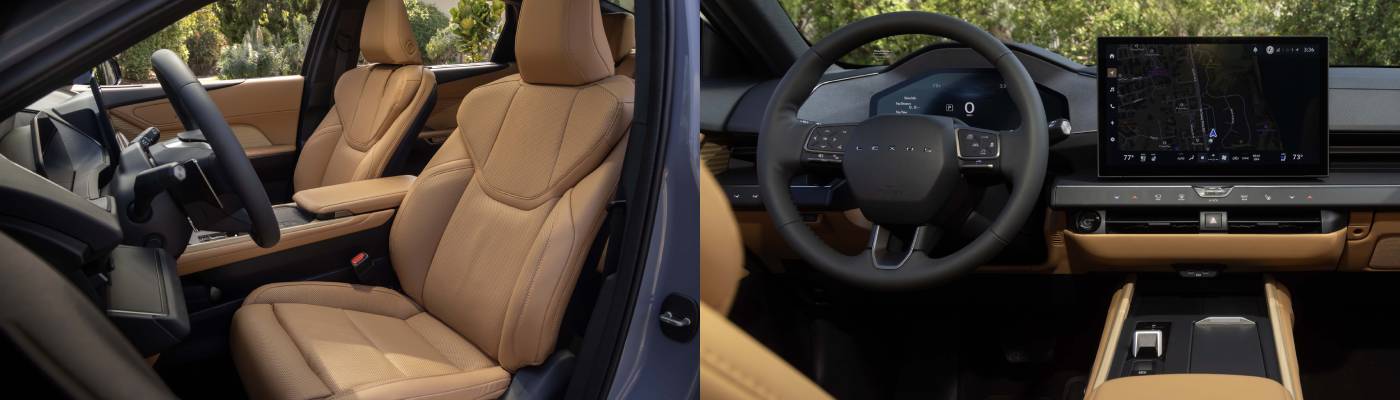
The 2026 redesign brings a more modern cabin with improved materials and a cleaner layout. Leatherette is standard, with higher trims offering upgraded upholstery. The 14‑inch touchscreen dominates the dashboard and has a slightly tacked-on appearance. Fit and finish are excellent, with tight panel gaps and soft‑touch materials throughout. Lexus’s craftsmanship is evident in the stitching, trim choices, and overall sense of cohesion.
INTERIOR FUNCTIONALITY
Controls are intuitive, though climate controls are integrated into the touchscreen rather than given dedicated buttons. The infotainment system is responsive and supports smartphone integration. Visibility is good, and the seating position is comfortable for long drives. Lexus avoids overly complex menus, making the ES easy to operate even for first‑time owners.
TECHNOLOGY & SAFETY FEATURES
All trims include Lexus Safety System+ with blind‑spot monitoring, pedestrian detection, emergency services, and traction control. Driver‑attention monitoring is available or standard depending on trim. Technology features include Bluetooth, premium audio, voice recognition, remote keyless entry, and internet access. The ES’s tech suite is comprehensive and competitive within the segment.
SEATING & COMFORT
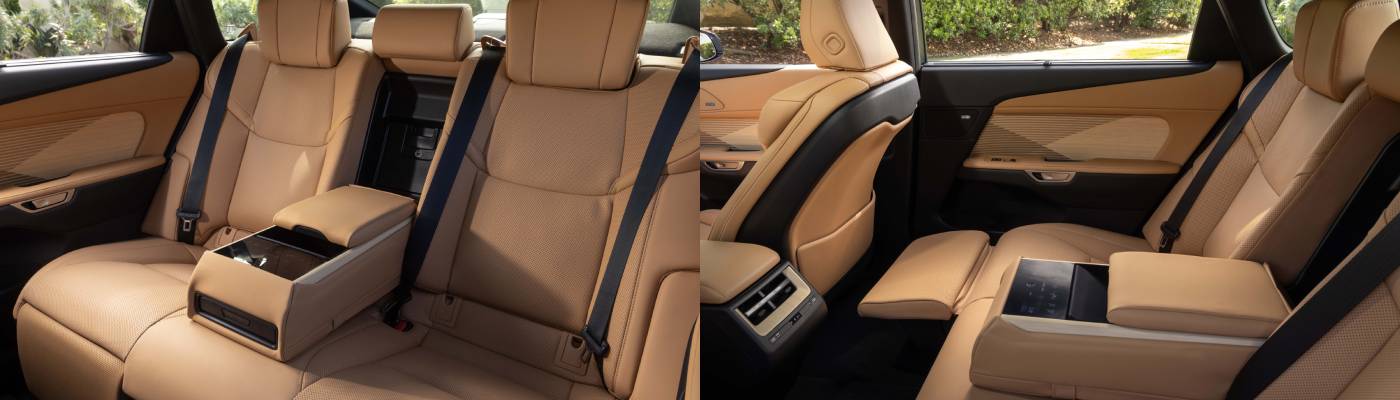
The ES seats five, with generous front legroom (41.9 inches) and supportive bucket seats. Rear seating is comfortable for adults, offering good headroom and legroom for the class. Entry and exit are easy thanks to wide door openings. The ES can be equipped with a premium rear seating package that includes leg rests. Seat comfort is a highlight, with multiple power adjustments and available memory settings.
CARGO CAPACTY & STORAGE
With a traditional trunk, the ES provides a secure storage compartment. Though listed capacity is 13.3 cubic feet, the trunk is wide, deep and tall. Unfortunately, the rear seats don’t fold and there is only a small pass-through. Interior storage is average, with multiple bins and cupholders. USB ports and connectivity options are standard across trims.
BOTTOM LINE
The 2026 Lexus ES stands out for its comfort, refinement, and newly expanded powertrain lineup. Strengths include exceptional ride quality, quiet operation, strong efficiency in the hybrid, and competitive range in the EVs. The interior is beautifully crafted, and the technology suite is comprehensive without being overwhelming. The ES 500e adds a dash of performance, giving buyers a more dynamic option without sacrificing comfort.
Weaknesses include modest acceleration in the hybrid and base EV and handling that remains more comfort‑oriented than sporty. Against competitors, the ES excels in value, comfort, and reliability but trails the BMW 5 Series and Mercedes‑Benz E‑Class in driving engagement. For most buyers, the ES 350h Premium+ offers the best balance of price, efficiency, features, and everyday usability.