2026 Dodge Charger
An anachronism, the Charger offers performance, style and flair in a world of me-too crossovers.
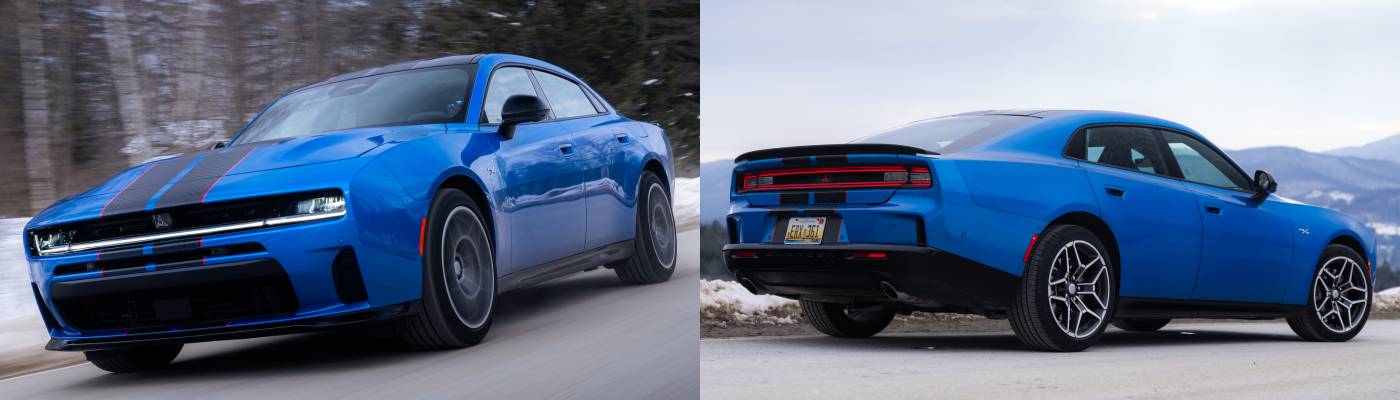
The Dodge Charger returns for 2026 as one of the most dramatic reboots of an American performance nameplate in decades. This time around it not only offers a 4-door, but also a 2-door hatchback and event EV versions. And Dodge wasn't done there, the sedan, it's technically a hatchback, too. Charger retains its muscular, wide‑stance that leans heavily into retro cues but blends in modern engineering and technology. Since its reintroduction in 2006, the Charger has served as Dodge’s full‑size, rear‑drive performance 4-door, evolving through multiple generations of V6 and V8 power while becoming a staple of American streets, police fleets, and drag strips. For 2026, Dodge has reimagined the Charger as a coupe built on the new STLA Large platform, giving it a more athletic profile and a structural foundation shared with Stellantis’ next‑generation performance vehicles. The competitive segment shifts slightly with this redesign: instead of just competing directly with full‑size sedans (of which there are very few), the Charger now also squares off against performance coupes such as the Chevrolet Camaro (in its final ICE form), Ford Mustang, and Nissan Z. Seating is five in the sedan and four in the coupe. As mentioned, this review focuses exclusively on the gas-powered models, Dodge also offers a fully electric Charger Daytona variant for buyers seeking EV performance.
Trim packages for the gas-powered 2026 Charger include the Charger R/T and the Charger Scat Pack, each powered by Dodge’s new “Hurricane” inline‑six engine. The 3.0‑liter Hurricane 6 in the R/T produces 420 horsepower and 469 lb-ft of torque, while in the Scat Pack upgrades bring 550 horsepower and 531 lb-ft of torque. Both engines pair with an eight‑speed automatic transmission. Drivetrain options include standard rear‑wheel drive or available all‑wheel drive, a first for a high‑output Charger coupe and a major differentiator in this segment.
Pricing for the 2026 Charger begins in the mid‑$40,000 range for the R/T and climbs into the mid‑$50,000s for the Scat Pack, with widebody variants adding several thousand dollars depending on configuration. Standard features include LED exterior lighting, a digital instrument cluster, a large central touchscreen running Uconnect 5, and a full suite of driver‑assistance technologies such as automatic emergency braking, lane‑keeping assist, blind‑spot monitoring, and adaptive cruise control. Optional features include upgraded Brembo brakes, adaptive dampers, performance exhaust systems, and interior enhancements such as premium leather, ventilated seats, and a Harman Kardon audio system. Special editions are expected throughout the model year, continuing Dodge’s tradition of limited‑run appearance and performance packages.
PERFORMANCE
The 420‑horsepower Hurricane engine in the Charger R/T delivers a surprisingly refined performance character compared with the outgoing HEMI V8s. Acceleration is brisk, with Dodge estimating 0–60 mph in the mid‑four‑second range when equipped with all‑wheel drive. The engine’s broad torque curve gives the R/T strong passing power, and the eight‑speed automatic responds quickly to throttle inputs, downshifting with minimal hesitation. The R/T feels eager without being unruly, making it a more approachable daily performance car than some of its V8 predecessors. The Scat Pack’s high‑output Hurricane transforms the Charger into a genuinely quick muscle coupe, with 0–60 mph times dipping into the low‑three‑second range when traction conditions are ideal. The added horsepower and torque are immediately noticeable, especially in mid‑range acceleration where the engine pulls with relentless force. Transmission behavior becomes more aggressive in Sport mode, holding gears longer and delivering sharper upshifts and sometimes jolting downshifts. While some purists may lament the absence of a V8 soundtrack, Dodge’s tuning of the Hurricane’s induction and exhaust systems gives the car a distinctive growl that suits its personality.
FUEL ECONOMY
Fuel economy improves significantly over the previous generation’s V8 engines, but only slightly. The R/T’s EPA ratings land in the mid‑20s combined for rear‑wheel‑drive models and slightly lower for all‑wheel‑drive versions, while the Scat Pack’s high‑output engine returns numbers in the low‑20s combined. Highway ratings approach 28 mpg for the R/T and 25 mpg for the Scat Pack, depending on configuration. Both engines run on premium fuel, and the Charger’s fuel tank capacity sits around 18 gallons, giving the R/T a highway range of roughly 450–500 miles and the Scat Pack slightly less. Real‑world fuel economy tends to lag behind EPA estimates, and spirited driving will naturally reduce efficiency. Compared with competitors, the Charger’s inline‑six engines offer a meaningful advantage in both power and efficiency, especially relative to the Mustang’s V8 and the Nissan Z’s twin‑turbo V6.
ALL-WHEEL DRIVE
All‑wheel drive is one of the most notable additions to the 2026 Charger lineup. The system is rear‑biased, preserving the car’s muscle‑car dynamics while providing enhanced traction in poor weather and improved launch performance. Dodge includes multiple drive modes, including Auto, Sport, Track, and Snow. Each adjusts throttle response, transmission mapping, steering weight, and AWD torque distribution. While the Charger is not intended for off‑road use, the AWD system’s Snow mode gives it a level of all‑season usability that traditional muscle coupes lack.
RIDE QUALITY
Ride quality varies meaningfully between trims. Compared to more pedestrian competitors, the standard R/T offers a firm ride, absorbing bumps in a controlled rather than harsh manner. The suspension tuning strikes a balance between daily comfort and performance readiness, making the R/T a viable commuter even on imperfect pavement. The Scat Pack, especially in widebody form, adopts stiffer springs, thicker anti‑roll bars, and available adaptive dampers that sharpen the car’s responses. On smooth roads, the Scat Pack feels planted and confident, but rough surfaces introduce more vibration and impact harshness. Buyers seeking maximum comfort will prefer the R/T, while those prioritizing performance will appreciate the Scat Pack’s more aggressive tuning.
HANDLING & ROADHOLDING
Handling characteristics reflect the Charger’s new platform and coupe configuration. Steering feel is significantly more precise than in the previous generation, with better on‑center stability and improved feedback through the wheel. Body lean is minimal, especially in widebody models where the added tire width enhances grip. The Charger turns in with confidence, and the available AWD system helps rotate the car more naturally through corners. Braking performance is strong across the lineup, with firm pedal feel and consistent stopping distances. Optional Brembo brakes provide additional fade resistance for track use. Compared with competitors, the Charger feels heavier than a Mustang but more planted than the Z, giving it a unique dynamic personality.
INTERIOR NOISE
Interior noise levels are noticeably improved over the outgoing generation. Wind noise is well‑controlled thanks to the sleeker profile, and road noise is reduced through better insulation and chassis rigidity. Engine noise varies by trim: the R/T remains relatively quiet during cruising, while the Scat Pack introduces more induction and exhaust sound, especially in Sport mode. Both engines growl with a noticeable exhaust note in hard acceleration. Against direct competitors, the Charger’s cabin noise levels fall somewhere between the Mustang and the Nissan Z, offering a refined experience without muting the car’s performance character.
INTERIOR DESIGN & MATERIALS
Charger’s interior design blends retro cues with modern technology. The dashboard features a horizontal layout with integrated digital displays, and materials range from durable soft‑touch plastics to optional leather and suede. Fit and finish are improved over previous Dodge interiors, with tighter panel gaps and more premium textures. Features such as ambient lighting, customizable gauge clusters, and performance pages give the cabin a tech‑forward feel. The widebody models add unique interior trim options that emphasize the car’s performance identity.
INTERIOR FUNCTIONALUTY & TECHNOLOGY
Functionality is better than expected for a performance vehicle. Controls are logically arranged, with large physical knobs for climate settings and intuitive touchscreen menus for infotainment. Uconnect 5 remains one of the most intuitive and responsive systems in the industry, offering quick navigation, wireless smartphone integration, and customizable layouts. Visibility is decent for a hatchback only so-so for a sedan. Thick rear pillars and narrow rear window being the biggest offenders. The hatchback opening is extremely wide, and the rear seats fold to expand cargo space, making the Charger more practical than its silhouette suggests.
Technology and safety features are comprehensive. Standard equipment includes adaptive cruise control, lane‑keeping assist, forward collision warning, automatic emergency braking, and rear cross‑traffic alert. Optional features include a head‑up display, surround‑view camera system, and advanced parking assist. Performance technology includes launch control, line‑lock functionality, and detailed telemetry through the performance pages interface. Dodge has made a clear effort to ensure the Charger meets modern expectations for both safety and connectivity.
PASSENGER SEATING & CARGO CAPACITY
The coupe seating area accommodates four passengers, while the sedan offers a three-place rear bench seat for five passenger capacity. In both bodystyles the front seats offering ample room, generous bolstering and long‑distance comfort. The Scat Pack’s performance seats provide additional lateral support without feeling overly restrictive. Rear seating is tighter that you might think given the Chargers generous dimensions. Adults can fit for shorter trips thanks to adequate legroom and supportive cushions, but space is at a premium, especially on 2-door models. Entry and exit require some flexibility due to the frameless-side-glass doors and lower roofline. Access to the rear seats on 2-doors is manageable, though not as convenient as on the sedan.
Cargo capacity is generous performance vehicle. The trunk offers around 14 cubic feet of space, enough for luggage or grocery runs, and the fold‑down rear seats expand usability for longer items. Interior storage includes a reasonably sized center console, door pockets, and multiple cupholders. USB‑A and USB‑C ports are available in both rows, along with a 12‑volt outlet and optional household-style AC power port.
BOTTOM LINE
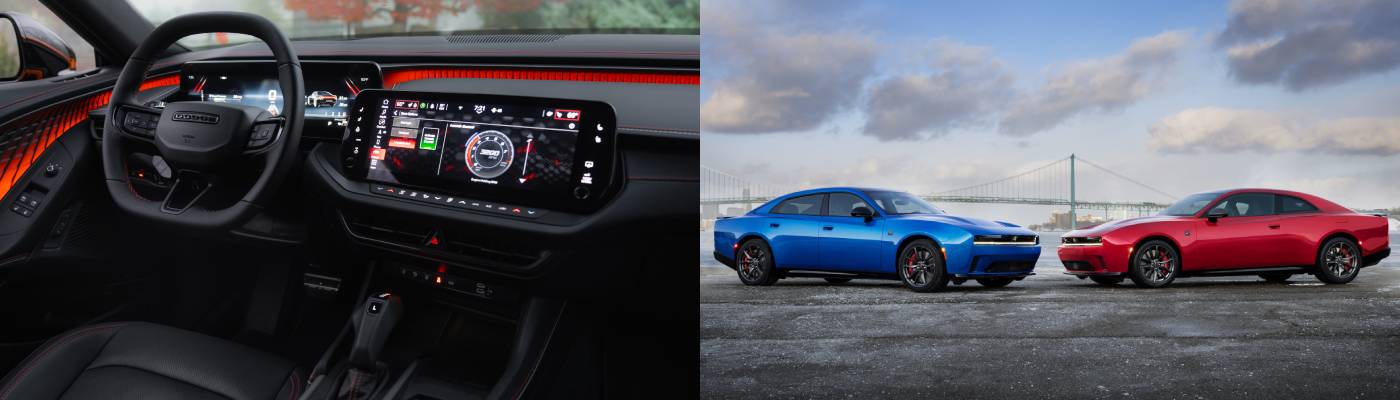
The 2026 Dodge Charger represents a bold reinvention of an American performance icon. Its strengths include powerful and efficient inline‑six engines, available all‑wheel drive, improved interior quality, and a blend of retro styling with modern technology. Weak points include reduced rear-seat space compared with the previous sedan and a ride that becomes firm in higher-performance trims. Unique features such as AWD availability, Hurricane engine performance, and widebody grip help the Charger stand out in a crowded segment. Against competitors, the Charger offers more practicality than the Nissan Z, more refinement than the Mustang GT, and a distinctive personality that blends muscle‑car heritage with modern engineering. For most buyers, the R/T trim provides the best balance of performance, comfort, and value, while the Scat Pack caters to enthusiasts seeking maximum capability.