2026 Subaru Ascent
Safety, space, and all‑weather confidence in a family‑focused package make Ascent a top pick.
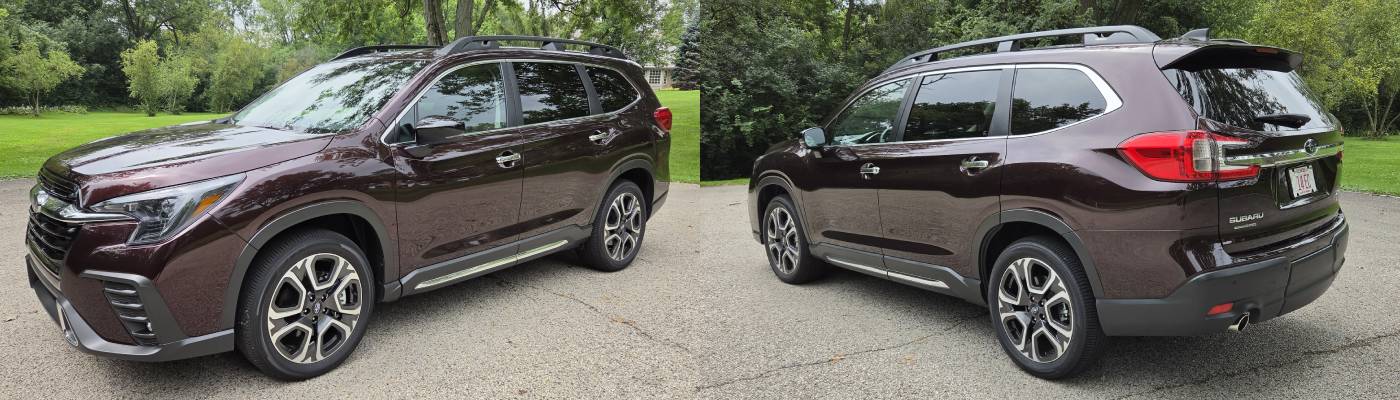
The Subaru Ascent entered the U.S. market in 2019 as the brand’s long‑awaited return to the three‑row segment after the departure of the Tribeca. Built on Subaru’s Global Platform, the Ascent was designed to give loyal Subaru buyers a larger vehicle without abandoning the brand’s core attributes of standard all‑wheel drive, safety, and practicality. For 2026, the Ascent carries forward with modest updates focused on interior materials, infotainment responsiveness, and refinements to driver‑assist calibration. It remains a mid-size, three‑row crossover competing in one of the most crowded segments in the industry, going head‑to‑head with the Chevrolet Traverse, Ford Explorer, Honda Pilot, Hyundai Palisade, Kia Telluride, Mazda CX‑90, Nissan Pathfinder, Toyota Grand Highlander, and Volkswagen Atlas. Seating configurations include seven‑ or eight‑passenger layouts, and the Ascent is offered exclusively as a traditional gasoline-powered crossover with no hybrid or plug‑in variants.
Subaru keeps the trim structure straightforward. The 2026 Ascent is offered in Base, Premium, Onyx Edition, Limited, and Touring trims. All models use the same turbocharged 2.4‑liter horizontally opposed four‑cylinder engine producing 260 horsepower and 277 lb‑ft of torque. The engine is paired with a continuously variable transmission (CVT) tuned to simulate stepped gear changes under heavy throttle applications. Subaru’s Symmetrical All‑Wheel Drive is standard across the lineup, and the Ascent offers a maximum towing capacity of 5,000 pounds when properly equipped.
Pricing for the 2026 Ascent starts in the $36,000 range for the Base model and climbs into the mid‑$50,000s for a fully equipped Touring. Standard features include Subaru’s latest EyeSight driver‑assist suite, a large portrait‑style infotainment screen, tri‑zone climate control, and a generous set of active safety technologies. Optional features vary by trim but include leather seating, panoramic moonroof, upgraded audio, and enhanced exterior styling elements. The Onyx Edition continues to serve as the appearance‑focused variant with blacked‑out trim and unique interior materials. Subaru’s reputation for safety remains a major selling point, with the Ascent offering a full suite of collision avoidance systems and strong crash-test performance.
ENGINE PERFORMANCE
Subaru’s 2.4‑liter turbocharged boxer‑four is the sole engine offered in the Ascent, and it delivers a driving experience that is competent but not particularly thrilling. With 260 horsepower and 277 lb‑ft of torque, the Ascent accelerates with enough authority for everyday driving, merging, and passing. The torque arrives early, giving the vehicle a responsive feel when pulling away from a stop or climbing grades. Ascent reaches 60 mph in the mid‑seven‑second range, which places it squarely in the middle of the segment. It is neither slow nor quick, but it is consistent and predictable.
The continuously variable transmission is tuned better than many competitors’ CVTs, especially under moderate throttle. Subaru’s programming simulates gear changes to reduce the “rubber band” sensation that can plague CVTs, and the transmission generally keeps the engine in its optimal torque band. Under heavy acceleration, the CVT can still drone, and the engine note becomes coarse, but this is characteristic of Subaru’s turbo boxer engines rather than a flaw unique to the Ascent. Passing power is adequate, though not abundant; drivers will notice that the Ascent performs best when the turbo is fully spooled and the CVT responds quickly to throttle inputs. Overall, the powertrain is functional, efficient, and well‑matched to the vehicle’s mission, though it lacks the refinement and smoothness of some six‑cylinder competitors.
FUEL ECONOMY
Fuel economy for the 2026 Ascent remains competitive for a three‑row crossover with standard all‑wheel drive. EPA estimates place the Ascent at 20 mpg city and 26 mpg highway, with a combined rating around 22 mpg. Because Subaru does not offer a front‑wheel‑drive version, these numbers apply across the lineup might appear to lag slightly behind front-drive-equipped competitors. The Ascent uses regular unleaded fuel, and its tank capacity of 19.3 gallons gives it a highway range of roughly 500 miles under ideal conditions.
Real‑world fuel economy tends to align closely with EPA estimates. Owners frequently report combined averages in the low‑to‑mid 20s, with highway trips occasionally exceeding 27 mpg when cruising at steady speeds. The turbocharged engine’s efficiency varies depending on load; towing, steep grades, and aggressive acceleration will reduce economy noticeably, but this is typical for forced‑induction engines. Compared to rivals, the Ascent’s fuel economy is better than V6‑powered competitors like the Explorer and Pilot, but behind hybrid offerings such as the Toyota Grand Highlander Hybrid.
ALL-WHEEL-DRIVE & DRIVING MODES
Subaru’s Symmetrical All‑Wheel Drive system is one of the Ascent’s defining features. Unlike competitors that use part‑time or front‑biased AWD systems, Subaru’s setup is always engaged and continuously distributes torque to all four wheels. This gives the Ascent a planted, confident feel in poor weather and on loose surfaces. The vehicle includes X‑Mode, a terrain‑management system that optimizes throttle response, traction control, and AWD behavior for slippery conditions. Snow/Dirt and Deep Snow/Mud modes help drivers maintain control in challenging environments.
While the Ascent is not an off‑road vehicle in the traditional sense, it does offer more capability than many crossovers in its class. Ground clearance is generous, and the Onyx Edition adds a bit of rugged flair with its blacked‑out trim and water‑repellent interior materials. Subaru does not offer locking differentials or low‑range gearing, so the Ascent’s off‑road abilities are limited to mild trails and adverse weather rather than true backcountry exploration.
RIDE QUALITY
Ride quality in the Ascent is one of its stronger attributes. The suspension tuning strikes a near-perfect balance between comfort and control, absorbing bumps and road imperfections without feeling floaty or disconnected. On rough pavement, the Ascent maintains composure and avoids the harsh impacts that plagues most competitors. The Touring trim, with its slightly more premium materials and sound insulation, feels marginally more refined, though the differences are subtle.
The Ascent’s chassis benefits from Subaru’s Global Platform, which provides rigidity and reduces vibration. Even on long highway drives, the vehicle feels stable and relaxed. The suspension does not exhibit excessive rebound or oscillation, and body motions are well‑controlled. While the Ascent does not offer adaptive dampers or air suspension like some luxury competitors, its tuning is well‑executed for the segment.
HANDLING & ROADHOLDING
Though uninspired, handling is predictable and secure. Steering feel is light but accurate, with enough feedback to give drivers a sense of connection to the road. The Ascent does not attempt to be sporty, and body lean is noticeable in tighter corners, but it remains controlled and never sloppy. The vehicle’s wide stance and AWD system contribute to a secure feel, especially in inclement weather. The lack of active or air suspension becomes most noticeable when Ascent is loaded with cargo at the rear. At that point, the steering gets overly light and the vehicle tends to float around corners.
Braking performance is solid, with a firm pedal and consistent stopping distances. The pedal feel is linear, and the Ascent avoids the mushiness that can affect some crossovers with soft brake tuning. Overall, the handling characteristics align with Ascent’s mission: safe, predictable, and easy to drive, rather than athletic or aggressive.
INTERIOR NOISE LEVELS
Interior noise levels in the Ascent are competitive but not class‑leading. Wind noise is well‑managed, and road noise is moderate, though coarse pavement can introduce some rumble into the cabin. The turbocharged engine is audible under heavy throttle, and its boxer configuration produces a distinct note that some drivers may find less refined than a smooth V6. Compared to the Hyundai Palisade and Kia Telluride, the Ascent is slightly louder, but it is quieter than the Ford Explorer and Chevrolet Traverse.
INTERIOR DESIGN, MATERIALS & FEATURES
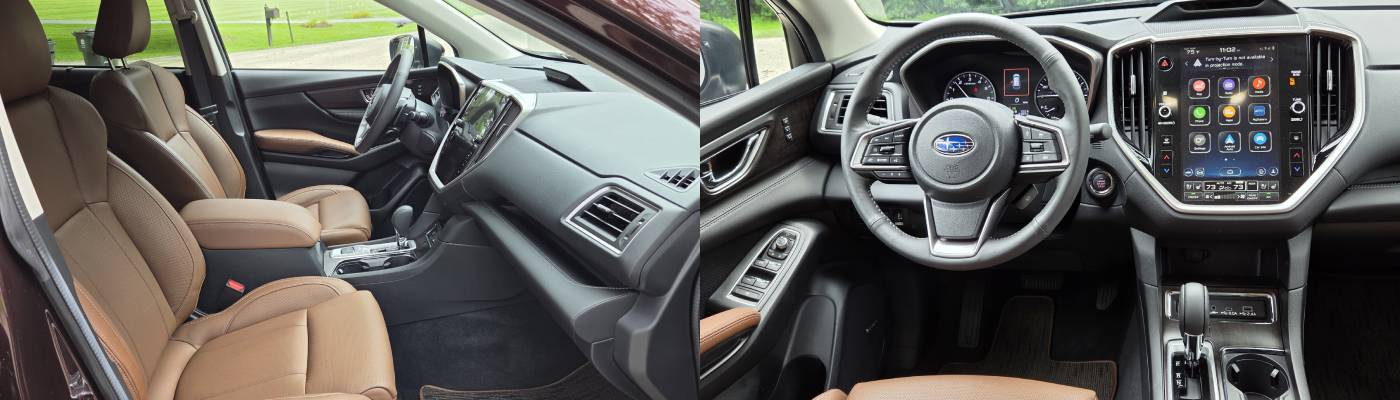
The Ascent’s interior design rightly emphasizes practicality and comfort. Materials improve as you move up the trim ladder, with the Touring offering soft‑touch surfaces, leather upholstery, and attractive stitching. The large portrait‑style infotainment screen dominates the dashboard, and while its graphics are crisp, the interface can occasionally feel clumsy. Physical controls for climate and audio remain, which helps usability.
Storage is abundant, with numerous cubbies, cupholders, and door pockets. The cabin layout is straightforward, and visibility is excellent thanks to Subaru’s traditionally large windows and thin pillars. The Onyx Edition’s water‑repellent StarTex upholstery is a standout feature for families with pets or active lifestyles.
INTERIOR FUNCTIONALITY
Functionality is one of the Ascent’s strongest selling points. Controls are intuitive, and the learning curve is minimal. The infotainment system isn’t as responsive as some competitors, and the touches for the HVAC system are comically small. But the the combination of touchscreen and physical buttons makes daily operation mostly simple. Subaru’s reputation for ergonomic design is evident in the Ascent, with well‑placed controls and thoughtful touches like easily accessible USB ports and large, grippy knobs.
TECHNOLOGY & SAFETY FEATURES
Technology in the Ascent centers around Subaru’s EyeSight driver‑assist suite, which includes adaptive cruise control, lane‑keeping assistance, pre‑collision braking, and lane‑centering. For 2026, Subaru refines the system’s calibration for smoother operation and improved detection accuracy. The infotainment system supports wireless Apple CarPlay and Android Auto, and higher trims offer a premium audio system and additional camera views.
Safety remains a major selling point. The Ascent consistently earns top marks in crash testing, and Subaru’s emphasis on active safety gives buyers peace of mind. Optional features include a surround‑view camera system, blind‑spot monitoring, and rear cross‑traffic alert.
PASSENGER SEATING
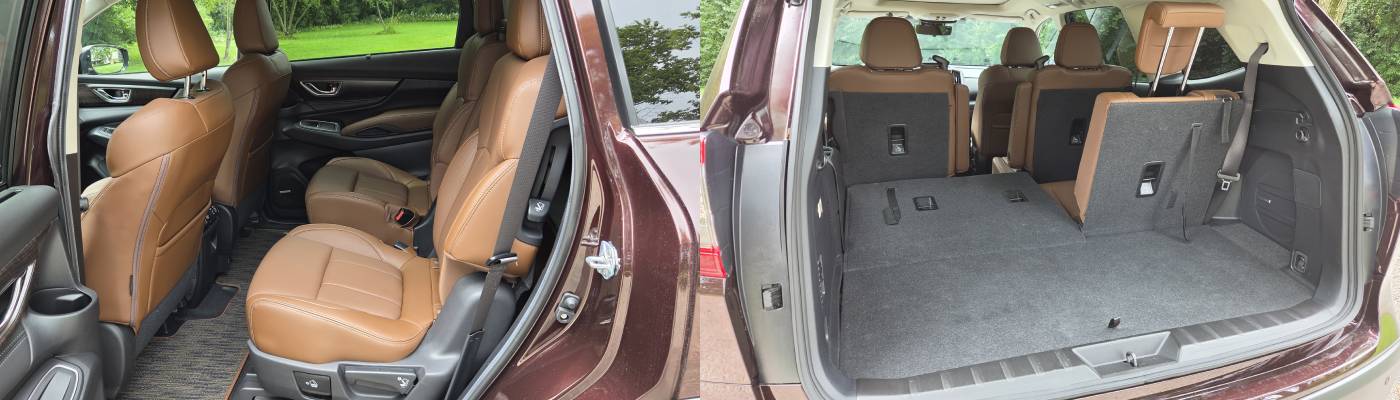
The Ascent offers either a seven‑passenger configuration with second-row captain’s chairs or an eight‑passenger layout with a three-place bench seat. Front seats are supportive and comfortable, with good adjustability and visibility. The second row provides ample legroom and headroom, and the captain’s chairs enhance comfort. Access to the third row is straightforward thanks to wide door openings and sliding second‑row seats.
The third row is mostly usable for adults and comfortable for children. It is not as spacious as the Toyota Grand Highlander or Chevrolet Traverse, but it is competitive with the Honda Pilot and Hyundai Palisade. Overall comfort is strong, and the Ascent’s seating flexibility makes it a practical family hauler.
CARGO CAPACITY & STORAGE
As it should be, cargo capacity in Ascent is generous, though it trails larger competitors. Behind the third row, the Ascent offers 17.8 cubic feet of space, expanding to 47.5 cubic feet with the third row folded. With all seats down, total cargo volume reaches 86.5 cubic feet. These numbers place the Ascent near the top of the segment, though part of that is because of the high roofline. The Kia/Hyundai twins, Chevrolet Traverse and Volkswagen Atlas offer slightly more maximum volume.
Interior storage is excellent, with multiple bins, pockets, and cupholders throughout the cabin. USB ports are plentiful, and higher trims include AC power outlets for added convenience. The Ascent’s cargo area is wide and flat, making it easy to load bulky items. The lack of a wireless charger is conspicuous.
BOTTOM LINE
The 2026 Subaru Ascent remains a strong contender in the three‑row crossover segment thanks to its standard all‑wheel drive, excellent safety ratings, and practical interior. Its turbocharged engine provides adequate performance, and its ride quality is comfortable and composed. The Ascent’s interior functionality, seating flexibility, and cargo capacity make it a compelling choice for families who prioritize practicality over flash. Subaru’s reputation for reliability and safety further enhances the Ascent’s appeal.
However, Ascent faces stiff competition from newer or more refined rivals. Most competitors offer more usable space. Hyundai Palisade and Kia Telluride offer more upscale interiors, while Toyota Grand Highlander Hybrid delivers superior fuel economy. The Ascent’s engine noise and CVT behavior may deter buyers seeking a quieter or more traditional powertrain. Still, for shoppers who value all‑weather capability, safety, and thoughtful design, the Ascent remains a smart and well‑rounded option. The Premium trim offers the best balance of features and value, providing essential upgrades without pushing the price into luxury territory.